Oil and Gas in Gabon: State of Play, Dynamics and Outlook
Oil and gas is, and has always been, the cornerstone of Gabon's economy. As a major Sub-Saharan producer, Gabon's prosperity is tied directly to its hydrocarbon resources.
 By the editorial teamPetrole.Africa
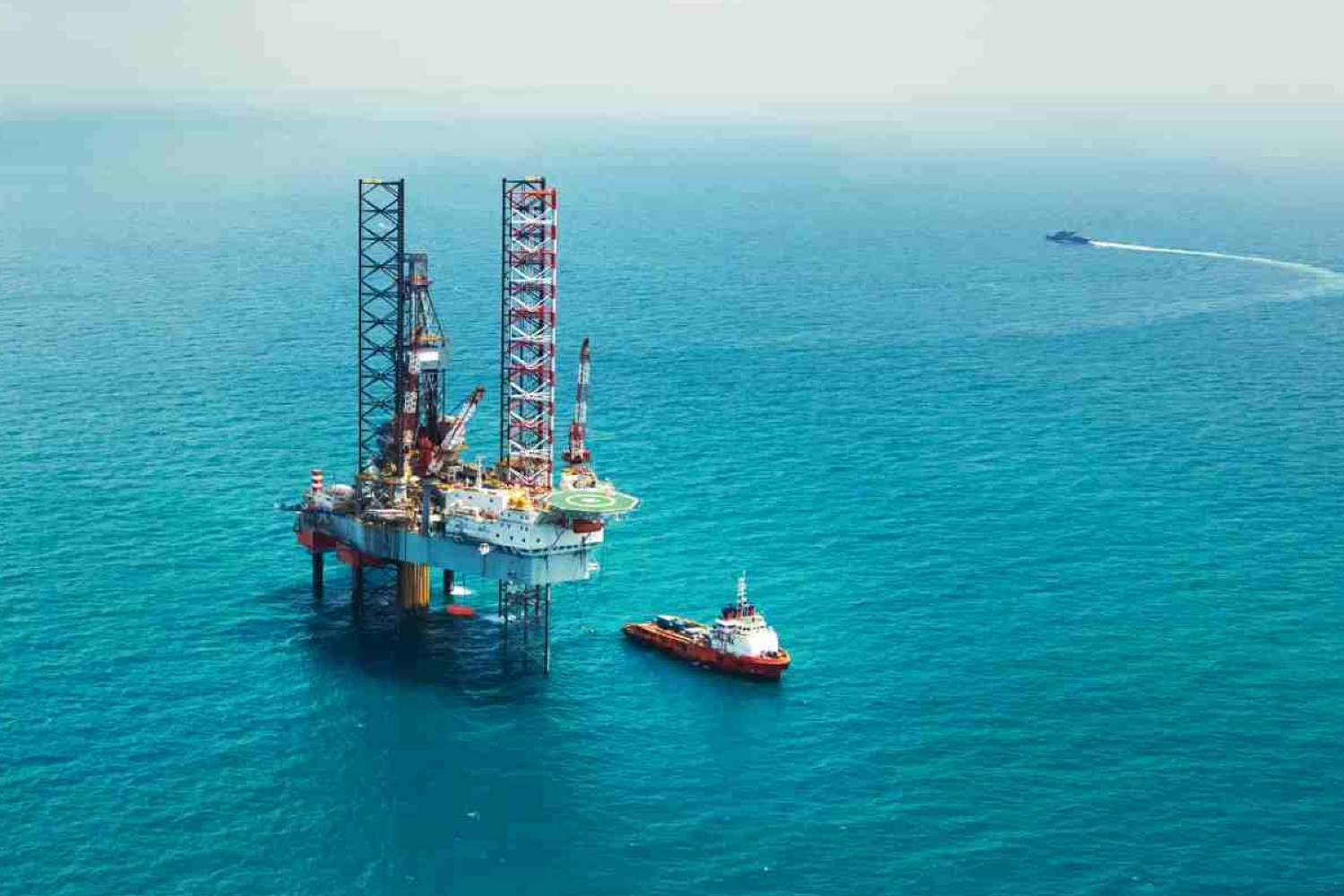
The oil and gas sector is, and has always been, the cornerstone of Gabon's economy. As a major producer in Sub-Saharan Africa, Gabon has seen its prosperity tied directly to the exploitation of its hydrocarbon resources.
Oil is Gabon's main source of public revenue. Historically, between 2010 and 2015, the oil sector accounted for an average of 80% of exports, 45% of GDP and 60% of government revenue. More recently, in 2019, revenue from oil and other liquids represented about 45% of GDP and nearly 74% of total export earnings. Crude oil exports even made up around 96% of exports to the United States in 2010. This concentration of revenue and exports on a single commodity, although it has historically supported growth, exposes the Gabonese economy to significant structural vulnerability. The slightest fluctuation in global oil prices or production volumes can have direct and profound repercussions on fiscal stability, foreign exchange reserves and the government's ability to finance development and public services. This structural dependence is the starting point of any analysis of Gabon's energy sector, underscoring the urgency and strategic necessity of economic diversification, which will be a recurring theme in this report.
Gabon is currently the eighth-largest oil producer in Sub-Saharan Africa, with output of roughly 198,000 barrels per day (bpd). Its ranking has fluctuated: it was the fifth-largest producer in 2014 and in 2019 , and even the third-largest at the end of 2018, behind Angola and Nigeria. In August 2021, it ranked eighth. This variability in Gabon's ranking among Sub-Saharan oil producers is more than a simple statistic; it points to persistent underlying challenges. The fluctuation suggests that Gabon is struggling to maintain stable, competitive production in the face of the natural decline of its mature fields and regional competition. Gabon formally rejoined the Organization of the Petroleum Exporting Countries (OPEC) in July 2016, after a first period of membership from 1975 to 1995. Rejoining OPEC is an attempt to regain influence and stability, but it does not inherently solve production problems. This unstable ranking highlights the need for Gabon to implement more effective investment and modernization strategies in order to consolidate its position and ensure more consistent output, beyond price cycles and operational challenges.
I. Economic Context and Dependence on Hydrocarbons
Gabon, rich in natural resources, has built its economy on the exploitation of hydrocarbons, a dependence that, while it has brought prosperity, has also exposed the country to the vulnerabilities inherent in global market volatility.
Sector contribution to GDP, exports and government revenue
In 2019, the oil and associated liquids sector accounted for roughly 45% of Gross Domestic Product (GDP) and nearly 74% of total export earnings. Oil also contributed about one-third of nominal GDP and 40% of government revenue, as well as more than two-thirds of merchandise exports. These figures underscore the sector's overwhelming importance in generating wealth and revenue for the State.
In 2022, growth in the oil sector (7.1%) was the driver of Gabon's real GDP growth, which reached 3.0%. This growth was fueled by a 45.3% increase in oil prices and a 6.1% rise in oil production. The fiscal balance swung to a surplus of 0.8% in 2022, from a deficit in 2021, mainly thanks to a 51.8% increase in oil revenue. These data strikingly illustrate the direct and immediate correlation between the performance of the oil sector (higher prices and output) and Gabon's overall economic health (GDP growth, budget surplus). This causal relationship shows that the oil sector does not merely contribute to the economy; it is its main regulator, dictating periods of prosperity and hardship. Effective and strategic management of the oil sector is therefore paramount to Gabon's economic stability. This includes not only optimizing production and revenue, but also anticipating and mitigating the risks associated with this heavy dependence.
Economic vulnerability to oil price volatility
Gabon's heavy economic reliance on oil exports makes its short-term economic outlook intrinsically tied to oil production and prices. The country was hard hit by the collapse in crude prices that began in 2014, forcing it to seek support from the International Monetary Fund (IMF) in 2017. Past oil shocks, such as the 2008/2009 global financial crisis, the 2014-2016 commodity crisis and the COVID-19 pandemic in 2020, have had particularly severe impacts on the country's international reserves and public debt ratios.
Paradoxically, high oil prices in 2022, although beneficial for the economy, also led to high fiscal costs because of increased fuel subsidy spending aimed at containing the rise in the cost of living for the population. These subsidies, estimated at more than CFA 100 billion francs (0.7% of GDP) in 2022, represent a significant share of public health and education spending. Gabon faces a complex and potentially harmful dynamic in the face of oil price volatility. When prices are low, the economy suffers directly. But when prices are high, domestic inflationary pressure pushes the government to intervene with fuel subsidies. Yet these subsidies, although socially motivated, are inefficient, benefiting mainly the wealthiest segments of the population , and represent a considerable fiscal burden, diverting funds that could be invested in productive sectors or essential social services. This creates a vicious circle in which oil gains are eroded by unproductive spending, undermining long-term fiscal resilience. Gabon must urgently reform its fuel subsidy policy. The World Bank's recommendations for targeted measures and a temporary price-smoothing mechanism are crucial to free up fiscal resources and strengthen the country's capacity to withstand future shocks, while genuinely protecting vulnerable populations.
Table 1: Economic Impact of the Oil and Gas Sector in Gabon (2019-2022)
| Year | Oil Sector Contribution to GDP (%) | Oil Sector Share of Total Exports (%) | Oil Sector Share of Government Revenue (%) | Overall GDP Growth (%) | Oil-Based GDP Growth (%) |
|---|---|---|---|---|---|
| 2019 | 45% | 74% | 40% | 3.4% | 7.9% |
| 2021 | - | - | - | 1.5% | - |
| 2022 | - | - | 51.8% | 3.0% | 7.1% |
This table clearly and concisely brings together the fundamental economic data on Gabon's dependence on hydrocarbons, which are scattered across several references. By presenting the sector's contribution to GDP, exports and government revenue side by side, along with its influence on overall growth, it offers an overview of the country's economic situation.
II. Production and Reserves
Gabon is a mature oil producer whose output has declined gradually since its peak, but which is seeking to stabilize and potentially increase its volumes through new strategies.
Current and historical production levels
Gabon's oil production peaked at 370,000 barrels per day (bpd) in 1997. Since then it has declined significantly, falling to 250,000 bpd in 2014 and to just 220,000 bpd in early 2016. In 2019, production was about 201,000 bpd , and in 2023 it was about 200,000 bpd. More recently, in January 2025, Gabon's crude oil production was reported at 236,000 barrels per day , a figure stable compared with December 2024.
TotalEnergies EP Gabon, a major player, recorded crude oil production of 16.7 thousand barrels per day (kb/d) in the first quarter of 2025, down slightly by 3% from 17.2 kb/d in the first quarter of 2024. This slight change is mainly explained by the natural decline of the fields, partially offset by better availability of the Anguille and Torpille facilities. Gabon's overall production showed signs of stabilization and slight growth, rising from 195,000 bpd in February 2022 to 215,000 bpd in August 2023. In the third quarter of 2024, oil production increased by 3.1%, thanks to better performance from mature fields and the start-up of new wells.
Proven reserves
Gabon has substantial proven hydrocarbon reserves. In August 2021, the country held 2 billion barrels of proven oil reserves , a figure confirmed for 2023. As for natural gas, Gabon has approximately 900 billion cubic feet (Bcf) of proven reserves , or 26 billion standard cubic meters (bn scm) in 2023 , most of it associated with its oil fields. The untapped potential is significant, particularly in the deepwater basins, which offer considerable growth potential.
Key players in the sector
Gabon's oil and gas sector is dominated by several international and national companies. The top five are Perenco SA, TotalEnergies SE, Maurel et Prom SA, Gabon Oil Company (GOC) and Assala Energy. Other important players include VAALCO Energy Inc. and Petronas Gas Bhd.
- TotalEnergies SE has been a long-standing operator in Gabon for more than 90 years, involved in oil and gas exploration and production, and is also the country's leading fuel retailer with more than 40 service stations.
- Perenco SA is a key player with extensive exploration and production operations, specializing in operating mature assets while minimizing costs. The company is also at the forefront of developing the Cap Lopez LNG terminal.
- Maurel et Prom SA is a leading player engaged in exploration and production activities in Gabon.
- Gabon Oil Company (GOC), the national oil company created in 2011 , is involved in various aspects of the sector. It aims to increase national production and works with international partners. GOC recently acquired Tullow Oil's Gabonese portfolio for $300 million, adding 10,000 bpd of production and 36 million barrels of proven reserves.
- Assala Energy is active in oil production with various operating assets in the country.
- BW Energy and its partner VAALCO Energy signed production sharing contracts for the Niosi Marin and Guduma Marin exploration blocks in 2024, and BW Energy also holds interests in the Dussafu license.
- CNOOC (China) launched exploration drilling on the BC-9 and BCD-10 blocks in early 2023, with potential for 1.4 billion barrels of recoverable resources.
Production challenges
Gabon's oil fields are mature and in decline, with total production having fallen by more than one-third since its 1997 peak. This decline is largely attributed to aging fields and insufficient investment in exploration. Weak oil prices after 2014 also affected investment prospects, with no significant increase in exploration spending since.
Gabon has a limited number of drilling prospects close enough to existing facilities and infrastructure for easy tie-backs. To counter the decline, the country is focusing on rehabilitating mature fields and optimizing existing production, while seeking to attract new investment for deepwater exploration.
III. Regulatory Framework and Government Policies
To revitalize its hydrocarbons sector and attract investment, Gabon has implemented significant regulatory reforms and is developing energy diversification policies.
The 2019 Hydrocarbons Code and its reforms
Gabon modernized its regulatory framework by adopting a revised Hydrocarbons Code in July 2019. This new code, drawn up after extensive consultation with legal, academic and tax experts, aims to make the sector more attractive to international investment.
The main reforms include:
- Reduction of State participation: The State's participation in production sharing contracts (PSCs) can be halved, and the maximum stake the State can acquire in an exploration company is also reduced. This is intended to give prospective investors greater control over operations.
- Tax incentives: The new code introduces more favorable fiscal terms. Royalties for shallow-water blocks fell from 13% to 7%, and for deepwater operations from 9% to 5%. The State's profit share was also reduced, from 55% to 45% for shallow blocks and from 50% to 40% for deepwater. In addition, corporate income tax is now included in the State's production share and payable in kind only, which allows a larger proportion of hydrocarbons to be offset against initial costs. These amendments aim to reduce the potential risk for companies and ease the financial burden of exploration campaigns.
- Market liberalization: The new code is expected to further liberalize the exploration market, generating increased interest from operators not previously established in the country. It seeks to create a more competitive business environment for foreign operators.
These reforms aim to relaunch Gabon's oil market and support licensing rounds, particularly for deepwater and shallow-water blocks.
Energy diversification policies
Aware of its heavy dependence on oil, the Gabonese government is pursuing an energy and economic diversification strategy. The objective is to reduce the country's reliance on oil production while diversifying the hydrocarbons sector and the economy as a whole.
Key initiatives include:
- Natural gas monetization: Gabon aims to monetize its offshore gas reserves in order to reduce gas flaring and diversify its energy output. The flagship project is Perenco's Cap Lopez LNG terminal, a $2 billion development that will introduce a FLNG (Floating Liquefied Natural Gas) vessel to the market, with production expected in 2026. Gabon also plans to use natural gas for power plants and future petrochemical projects.
- Power sector development: The country is seeking to increase access to energy. The Orinko gas-fired power plant, whose construction is expected to begin soon, is a major project that will increase the country's generating capacity by 50%. Currently, gas-fired power plants operated by Perenco supply 70% of Libreville's electricity and 100% of Port-Gentil's. Gabon is targeting universal access to electricity by 2030, eliminating electricity imports.
- Renewable energy: Gabon is committed to developing renewable energy, notably solar and hydropower. A national solar energy plan aims to reach 10 MW of solar capacity by 2025. Solar projects are already under way, such as the 30 MW plant at Ayémé Plaine developed by TotalEnergies and the 50 MW plant at Mouila by Perenco. About half of the electricity consumed in the country comes from hydropower, mainly from the Grand Poubara (160 MW) and Kinguele Aval (70 MW) hydroelectric dams.
- Infrastructure improvement: Gabon plans to expand the capacity of the SOGARA refinery from 1.2 million to 1.5 million tonnes of oil per year, with the aim of achieving self-sufficiency in refined petroleum products by 2030. The government also intends to increase fuel storage capacity to cover up to 90 days of national consumption, as part of its energy security strategy.
These diversification efforts are part of a broader strategy to strengthen and diversify the national economy, increase local processing of raw materials and promote the sustainable development of natural resources.
IV. Exploration Projects and Prospects
Gabon is striving to attract new investment and relaunch exploration, particularly in unexplored deepwater areas, in order to reverse the decline in production and achieve new targets.
Major ongoing and recent projects
Several major projects are under way or have recently been launched, demonstrating the sector's dynamism despite the challenges:
- Cap Lopez LNG terminal (Perenco): This $2 billion project, located at the existing Cap Lopez oil terminal, will introduce an FLNG vessel to monetize the country's offshore gas reserves and reduce gas flaring. Production is expected in 2026.
- Deepwater exploration (BW Energy and VAALCO Energy): In 2024, BW Energy and its partner VAALCO Energy signed production sharing contracts for the Niosi Marin and Guduma Marin exploration blocks, covering an eight-year exploration period with a two-year extension option. They plan to drill one well and conduct a 3D seismic campaign. BW Energy also holds interests in the Dussafu license, which has 14 production wells.
- Exploration drilling (CNOOC): Chinese company CNOOC launched exploration drilling on the BC-9 and BCD-10 blocks in early 2023, with estimated recoverable resource potential of 1.4 billion barrels.
- GOC acquisitions: Gabon Oil Company (GOC) acquired Tullow Oil's entire Gabonese portfolio for $300 million, a transaction that includes 10,000 bpd of production and 36 million barrels of proven reserves. GOC is committed to improving oil production through partnerships with international operators and strategic investments.
- Hylia South West discovery (Perenco): Perenco made the Hylia South West discovery in early 2024, revealing significant oil columns in the Ntchengue Ocean reservoir.
Untapped potential and new frontiers
Gabon has vast untapped potential, particularly in its deepwater sedimentary basins, of which up to 72% remain unexplored. The Ministry of Petroleum and Gas has identified deepwater investment as a strategic priority. It is also estimated that the country's Northern Basin area could hold transformational pre-salt reserves. The government is encouraging exploration of these areas by offering more attractive terms to foreign companies and by stepping up seismic surveys to provide the necessary data to prospective investors.
Production targets and outlook
Gabon has set a goal of increasing its national oil production to more than 220,000 barrels per day (bpd) in the short to medium term. In 2019, the Gabonese government had already set an ambitious target of 220,000 bpd of crude oil production by 2023. The production increase seen in the third quarter of 2024, with oil output up 3.1%, shows that the country is on track to meet these targets, thanks to the performance of mature fields and the start-up of new wells.
The oil and gas market in Gabon is expected to record a compound annual growth rate (CAGR) of more than 0.8% between 2020 and 2025 , and the overall oil and gas market is expected to grow at a CAGR of about 11.5% between 2025 and 2034. These forecasts are driven by growing energy demand, technological advances that provide access to previously inaccessible reserves (such as deepwater), and favorable government policies.
V. Environmental and Social Issues
Gabon's oil and gas sector faces significant environmental and social challenges, which the government is striving to manage through regulations and international commitments.
Environmental impacts and greenhouse gas emissions
Gabon, although a major oil producer, has managed to maintain a low greenhouse gas (GHG) emissions profile. Its vast tropical forests, which cover 88% of its territory, play a crucial role as a "carbon sink," absorbing approximately 140 million tonnes of CO2 each year. The country is even considered one of the most "carbon-positive" countries in the world.
However, gas flaring remains a major concern. The volume of gas flared in Gabon rose from 1.3 billion cubic meters (Gm³) in 2012 to 1.6 Gm³ in 2015, stabilizing at around 1.4 Gm³ in 2022. More than 90% of gas production is reinjected or flared for lack of economic alternatives. Associated gas flaring accounted for 23% of Gabon's direct emissions in 2000.
Environmental regulations and climate commitments
Gabon has put in place a legislative framework for environmental protection and sustainable development. Law 07/2014 on Environmental Protection sets out the principles for the conservation and sustainable use of natural resources and for pollution control, and requires environmental impact assessments for developments likely to harm the environment.
The 2019 Hydrocarbons Code (Law No. 002/2019) stipulates that all petroleum activities must be conducted in accordance with the principles of sustainable development, quality, health, hygiene, safety and environment. The code expressly prohibits gas flaring and venting. Exemptions may be granted at the operator's request and on the advice of the Ministry of Hydrocarbons and the Environment, but they are subject to the submission of a flaring reduction plan. Perenco, moreover, committed in November 2021 to reinject the associated gas produced in its mature fields into Gabon's domestic commercial network.
With regard to international climate commitments, Gabon has submitted its Nationally Determined Contributions (NDCs) to the UNFCCC. The first NDC (2016) committed Gabon to reducing its GHG emissions by at least 50% by 2025 relative to the baseline scenario. The second NDC (mid-2022) unconditionally commits Gabon to remaining carbon neutral through 2050 and beyond. Between 2010 and 2025, the government expects routine flaring reduction measures to cut GHG emissions by 17.3 million tonnes of CO2 equivalent. Gabon also participates in the Global Methane Pledge.
Social and governance challenges
Gabon's oil sector has also been marked by social and governance challenges. A tragic example is the explosion on Perenco's Becuna oil platform in March 2024, which killed six workers. An investigation found that pressure from the Perenco Group's offices in Paris and London to maintain production at all costs allegedly contributed to a toxic work culture and disregard for safety procedures. The families of the African victims were reportedly not compensated, unlike the family of a deceased French employee who reportedly received significant compensation and signed a non-disclosure agreement. These events raise important questions about the accountability of multinational companies and the protection of local workers in Gabon's hydrocarbons sector. Calls have been made for the Gabonese government to set up a task force to investigate the accident and to demand immediate compensation for the victims' families.
Conclusion
Gabon's oil and gas sector remains a central pillar of its economy, generating a substantial share of GDP, exports and government revenue. This dependence, although a source of prosperity, exposes the country to the inherent vulnerability of volatile global oil prices, as past shocks and the burden of fuel subsidies have shown.
Faced with the natural decline of its mature fields and the need to maintain its position as a regional producer, Gabon has undertaken bold regulatory reforms, notably with the 2019 Hydrocarbons Code. These reforms aim to create a more attractive investment environment, particularly for deepwater exploration, which represents the main growth frontier. Ongoing projects, such as Perenco's Cap Lopez LNG terminal and the exploration campaigns of BW Energy and CNOOC, demonstrate a determination to revitalize production and monetize the substantial gas reserves.
At the same time, Gabon is actively pursuing an energy diversification strategy. Gas monetization for power generation, the development of renewable energy (solar and hydropower) and the improvement of refining and storage infrastructure are crucial steps to reduce dependence on crude oil and ensure greater energy security.
However, the path to sustainable development is fraught with obstacles. Environmental challenges, notably gas flaring, are being addressed through strict regulations and ambitious climate commitments aimed at long-term carbon neutrality. On the social front, incidents such as the Becuna platform explosion underscore the need for stronger governance and greater corporate accountability to ensure worker safety and fair compensation.
In short, Gabon stands at a crossroads. The success of its strategy will depend on its ability to balance the economic imperatives of the oil sector, its energy diversification ambitions, its environmental commitments and social requirements. Collaboration with international partners and rigorous resource management will be essential to turn today's challenges into opportunities for sustainable and inclusive growth.
 Sudan
 Uganda