Oil and Gas in Congo-Brazzaville: Current Situation and Strategic Outlook
The Republic of the Congo stands at a strategic crossroads in its hydrocarbon sector. Oil and gas drive its economy, and the country aims to reach 500,000 barrels per day by 2027.
 By the editorial teamPetrole.Africa
Executive Summary
The Republic of the Congo (Congo-Brazzaville) stands at a strategic crossroads with regard to its hydrocarbon sector. As the main driver of its economy, oil and gas account for a dominant share of gross domestic product (GDP), government revenue and exports. The country has considerable ambitions to raise its oil production to 500,000 barrels per day by 2027 and to monetize its vast natural gas reserves, estimated at 10 trillion cubic feet, notably through the Congo LNG project. Significant investments by major international oil companies such as TotalEnergies, Eni and Perenco, as well as by the Société Nationale des Pétroles du Congo (SNPC), are under way to revitalize mature fields and develop new capacity. At the same time, efforts are being made to modernize refining and export infrastructure, with the construction of a new refinery aimed at strengthening national energy security.
However, this expansion comes with major challenges. Heavy dependence on hydrocarbons exposes the economy to global price volatility and production fluctuations. Infrastructure gaps, particularly in the gas sector, have historically led to the flaring of large volumes of gas. Persistent concerns over governance, corruption and transparency, as well as the environmental and social impacts of oil and gas operations, require urgent attention. Faced with these issues, the Congolese government is pursuing an economic diversification strategy and exploring the potential of renewable energy. The success of this trajectory will depend on the country's ability to attract sustainable investment, strengthen its regulatory framework, improve transparency and ensure responsible management of its resources for the benefit of all.
1. Introduction
The Republic of the Congo, often referred to as Congo-Brazzaville, is a Central African nation whose economy is intrinsically tied to the exploitation of its abundant natural resources, particularly hydrocarbons. The country ranks as the fourth-largest oil producer in sub-Saharan Africa , which gives the oil and gas sector a central role in its economic stability and development trajectory.
The importance of this sector to the national economy is hard to overstate. It accounts for roughly half of the country's gross domestic product (GDP) and contributes 80% of its exports. Other analyses indicate even higher contributions, with up to 65% of GDP, 85% of government revenue and 92% of exports coming from the oil sector. In 2020, crude oil alone represented 77% of the value of Congo's exports. This structural dependence highlights the vital role of hydrocarbons in public finances and in the country's ability to fund its development.
The preponderance of the hydrocarbon sector, while generating substantial revenue, inherently exposes the Congolese economy to significant vulnerability. Heavy reliance on crude oil exports makes the country particularly sensitive to global price volatility. Any fluctuation in oil prices has a direct impact on government revenue, the trade balance and, consequently, the government's ability to finance public services and investment projects. The World Bank has in fact stressed that Congo's economic recovery remains "fragile" because of unstable oil production. This situation shows that, despite periods of growth, the country faces a structural fragility that makes economic diversification not only desirable but imperative for long-term stability.
Faced with this reality, Congo-Brazzaville is adopting a complex strategic approach. On the one hand, the government is actively seeking to attract foreign investment in non-oil sectors such as forestry, agriculture, construction and tourism. A National Development Plan (NDP) for 2022-2026 is focused on economic diversification. On the other hand, the country is pursuing an ambitious policy of increasing hydrocarbon output, with the goal of doubling its oil production to 500,000 barrels per day by 2027 and accelerating gas exploration and production. This dual strategy reflects a pragmatic recognition: the revenue currently generated by the hydrocarbon sector is considered essential to finance the transition to a more diversified and resilient economy. The challenge is to manage this hydrocarbon expansion in a way that minimizes risks and maximizes benefits for the population, while preparing for the post-oil future.
2. Overview of the Oil Sector
2.1 Crude Oil Reserves and Production (2023-2025)
The Republic of the Congo has proven crude oil reserves that underpin its status as a major producer in sub-Saharan Africa. At the start of 2024, proven crude oil reserves were estimated at 1.8 billion barrels, a figure unchanged from the previous year. Another source, dating from 2021, cites reserves of 1.811 billion barrels , while OPEC reported 1.81 billion barrels in 2020. These figures point to significant potential, even though the country faces challenges related to the maturity of certain fields.
Congo-Brazzaville has set ambitious production targets for the coming years. The country aims to double its oil production, from roughly 270,000 barrels per day (bpd) currently to 500,000 bpd by 2027. This target is ambitious, especially considering recent production figures. In December 2023, crude oil production was 271.301 thousand barrels per day (kb/d). Average total petroleum liquids production between 2014 and 2023 was approximately 273,000 bpd. For 2024, although no specific annual figure is available, TotalEnergies investments aimed to add 40,000 bpd to the country's production levels of 267,000 bpd , and Perenco's production was 75,000 bpd. Forecasts for 2025 indicate production of 268 kb/d in May and 270 kb/d in April , with Perenco targeting 100,000 bpd. Historically, production peaked at 347,000 bpd in 2018 , and reached an all-time record of 329.197 kb/d in 2019.
The contrast between ambitious production targets and the reality of Congolese oil fields, which show signs of maturity, is a major challenge. The target of 500,000 bpd by 2027 is far above the historical peak of 347,000 bpd reached in 2018 and current levels of around 270,000 bpd. The EIA explicitly forecasts a decline in total petroleum liquids production owing to "general field maturity and a slowdown in upstream development". This technical analysis directly contradicts government aspirations. Moreover, as an OPEC member , Congo is subject to OPEC+ production targets, which have seen extended cuts through 2025. Although some OPEC+ members have shown "persistent overproduction" , the cartel's framework inherently limits individual members' output. This means that reaching the 2027 target will require not only substantial new discoveries and aggressive development of marginal fields, but also a significant shift in OPEC+ policy or a strategic decision by Congo to systematically exceed its quotas, which could have implications for its standing within the organization.
Despite the general downward trend due to field maturity, the available information highlights significant investments that could reverse this trend. TotalEnergies announced a $600 million investment to strengthen its exploration and production activities. Trident Energy secured a $300 million financing facility. Perenco has committed to a Kombi 2 platform project worth more than $200 million , and the Congolese subsidiary of China Oil Natural Gas Oversees Holding Ltd (Cogo) plans to invest $150 million. These capital injections are explicitly intended to increase production, revitalize mature assets and unlock new reserves. This suggests that the EIA's decline projections could be challenged or even reversed in the short to medium term if these investments translate into successful field developments and improved recovery. The success of these projects will determine whether Congo can actually reverse its production decline and move closer to its ambitious targets.
Table 1: Crude Oil Production in Congo-Brazzaville (2019-2025, in thousand barrels per day)
| Year | Average Annual Production (kb/d) | Main Source(s) | Notes |
|---|---|---|---|
| 2019 | 329.197 | CEIC Data | Recent historical record |
| 2020 | 267 | OPEC | Decline from 2019 |
| 2021 | 267 | OPEC | Stable compared with 2020 |
| 2022 | 261.604 | CEIC Data | Slight decline |
| 2023 | 271.301 | CEIC Data | Average 273 kb/d (2014-2023) |
| 2024 | ~267 (baseline) + 40 (TotalEnergies) | TotalEnergies | Perenco production: 75 kb/d |
| 2025 | 268 (May), 270 (April) | Trading Economics | Perenco targeting 100 kb/d |
| 2027 Target | 500 | Government | Ambitious doubling target |
2.2 Key Players and Major Projects
The oil and gas market in Congo-Brazzaville is characterized by a consolidated structure, dominated by global players with a strong local presence, alongside the national oil company. This configuration combines international expertise with local knowledge.
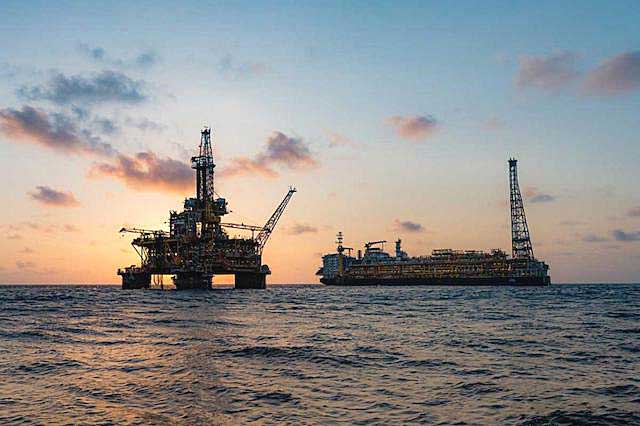
Among the key operators, TotalEnergies stands out as a major player, being the leading oil operator and fuel retailer in the country. The French company operates significant offshore fields such as Moho Nord, Moho-Bilondo, Nkossa, Nsoko II, Yanga and Sendji. TotalEnergies announced a $600 million investment to strengthen its exploration and production activities, aiming to increase oil production by 40,000 bpd from its deep offshore Moho Nord field, which already accounts for roughly half of Congolese oil production (about 140,000 bpd). The company is also focused on exploration in the Marine XX permit.
Eni S.P.A. is another influential participant with a diversified portfolio in the Congolese oil sector, operating several offshore fields, including the Marine XII license. Eni is a key player in gas monetization through the Congo LNG project and is involved in oil exploration in the conventional and deep offshore areas off Pointe-Noire, as well as in the onshore Kouilou area.
Chevron Corporation is an important player involved in various oil and gas projects in the country, with a significant presence in the upstream and midstream sectors. Chevron operates the Lianzi offshore area, which is the country's first cross-border development. Notably, Trident Energy recently completed the acquisition of Chevron's interests in operating fields in Congo, including a 15.75% operated stake in Lianzi.
Perenco S.A. is a notable independent operator with significant investments in local assets and projects. Perenco is involved in hydrocarbon production and processing, operating fields such as Emeraude and Yombo. The company announced a major investment of more than $200 million in the Kombi 2 offshore platform project, currently under construction, which is expected to unlock up to 20 million barrels of oil reserves and recover 7 million cubic feet of gas per day. Perenco aims to reach 100,000 bpd in 2025 through additional investment.
The Société Nationale des Pétroles du Congo (SNPC), the national oil company, founded in 1998, plays a central role in managing national oil resources and the production shares held by the government. SNPC holds interests in numerous fields (for example, Moho-Bilondo, Nkossa, M'Boundi). It is also a partner in Perenco's Kombi 2 project and is responsible for developing the Gas Master Plan.
Other players include the Congolese subsidiary of China Oil Natural Gas Oversees Holding Ltd (Cogo), which plans to invest $150 million to boost oil production. The acquisition by
Trident Energy of interests from Chevron and TotalEnergies is expected to add approximately 30,000 bpd to Congo's production capacity.
Unite Oil & Gas and ARIES Energy launched Bomoko Energy to acquire and develop local hydrocarbon assets. Finally, the independent producer
NewAge is seeking partners for its Marine III contract.
Strategic partnerships and the current investment landscape are key indicators of confidence in Congo's oil and gas potential. The presence of major international companies alongside the national SNPC reflects a diversified yet consolidated operating landscape. Recent significant investments, such as TotalEnergies' $600 million, Trident Energy's $300 million, Perenco's more than $200 million and Cogo's $150 million , testify to renewed interest in and confidence in Congo's hydrocarbon potential, despite the global energy transition narrative. This suggests that the government's efforts to attract investment, notably through forums such as CEIF 2025 and international licensing rounds , are bearing fruit. The emphasis on both new field development and the revitalization of existing, mature assets points to a pragmatic strategy of maximizing current resources while exploring new potential.
A notable element of this investment landscape is the growing role of Chinese investment. The explicit mention of China Oil Natural Gas Oversees Holding Ltd (Cogo)'s $150 million investment and the partnership of the Chinese firm Beijing Fortune Dingheng Investment in the new Atlantic Petrochemical Refinery signal a strategic and growing presence of Chinese entities in Congo's oil and gas sector. This is further reinforced by the fact that China is identified as a leading trading partner and the largest importer of Congolese products. This trend points to a geopolitical diversification of investment sources beyond the traditional European and American majors, potentially giving Congo more leverage or alternative financing options for its energy projects. This development could also lead to increased technical cooperation and market access for Congolese hydrocarbons in Asian markets.
2.3 Refining and Export Infrastructure
Refining and export infrastructure is essential to adding value to Congolese hydrocarbons. The country currently has only one operational refinery, the Congolaise de Raffinage (CORAF), located in Pointe-Noire. This refinery is a subsidiary of SNPC, the national oil company. CORAF has a processing capacity of one million tonnes per year, or approximately 21,000 barrels per day (bpd), and covers roughly 70% of national needs for refined petroleum products. Crude oil for the refinery comes mainly from the Djeno terminal, located south of Pointe-Noire.
To meet growing domestic demand and reduce import dependence, the government launched construction of a new refinery at Fouta, near Pointe-Noire. Known as the Atlantic Petrochemical Refinery (or Pointe Noire II refinery), this project is being developed in partnership with the Chinese company Beijing Fortune Dingheng Investment, representing an investment of approximately $600 million. The first phase of this new refinery targets a production capacity of 2.5 million tonnes per year, focusing on high-quality gasoline and diesel, as well as domestic products such as liquefied petroleum gas (LPG), kerosene and heavy fuel oil. It will also produce petrochemical feedstocks. The refinery is expected to begin operations by the end of 2025. This project is considered crucial for national energy security.
As for exports, Congo exports most of its crude oil production. In 2023, Congo-Brazzaville exported approximately 242,000 bpd of crude oil and condensate. About 75% of these total exports went to the Asia-Pacific region. China was by far the leading importing country by volume, taking approximately 158,000 bpd of Congolese crude oil in 2023. India was the second-largest importer in the Asia-Pacific region by volume, with approximately 13,000 bpd of crude oil imported from Congo-Brazzaville. The Djeno oil terminal, operated by TotalEnergies, is an essential export hub, handling 95% of the country's oil production.
The construction of the new refinery aims to close the gap in domestic refined products and strengthen energy security. The fact that the existing CORAF refinery covers only 70% of national needs for refined products indicates significant import dependence. This dependence exposes the country to international price volatility and supply chain disruptions. The construction of the new Atlantic Petrochemical Refinery, with its significantly higher capacity (2.5 million tonnes/year versus 1 million tonnes/year for CORAF) and an ambitious commissioning target of the end of 2025 , directly addresses this shortfall. This strategic investment aims to improve national energy security by reducing import dependence and ensuring a more stable and sufficient supply of essential fuels for domestic consumption. It also signals a government shift toward adding value to resources within the country rather than simply exporting crude.
The export destinations of Congolese oil have significant geopolitical implications. Data showing that 75% of Congo's crude and condensate exports in 2023 went to the Asia-Pacific region, with China as the dominant importer , highlight a strong and growing economic link with Asian markets. This represents a strategic diversification of export markets, moving away from traditional European or North American buyers. This diversification may give Congo greater resilience to demand fluctuations in specific regions and reduce its geopolitical exposure. The trend is further reinforced by increased Chinese investment in the upstream and downstream sectors , creating a more integrated and mutually beneficial relationship with a key global energy consumer.
3. Overview of the Gas Sector
3.1 Natural Gas Reserves and Production
Congo-Brazzaville has considerable proven natural gas reserves, estimated at 10 trillion cubic feet (Tcf) at the start of 2024, a figure unchanged from the previous year. Other sources mention 3.2 Tcf or 284 billion cubic meters (equivalent to about 10 Tcf) in 2019. These reserves are located mainly in offshore fields such as Litchendjili, Néné, Minsala and Nkala, within the Marine XII license operated by Eni's Congolese subsidiary.
Historically, dry natural gas production averaged about 28 billion cubic feet (Bcf) per year between 2013 and 2022. However, a significant share of this gas has historically been flared (burned) or reinjected into oil fields to aid crude oil recovery, owing to a lack of adequate gas infrastructure. In 2022, Congo-Brazzaville flared approximately 64 Bcf of natural gas, which is more than four times its national natural gas production for the same year.
The presence of large gas reserves (10 Tcf) in contrast with the history of heavy flaring (64 Bcf in 2022, or four times national production) highlights both untapped gas potential and a major environmental challenge. Flaring, which releases greenhouse gases, represents not only a major inefficiency in resource use but also a growing environmental concern. The substantial volume of flared gas indicates a missed opportunity for monetization and value creation. The government's current focus on gas monetization, notably through projects such as Congo LNG and the forthcoming Gas Master Plan, aims directly at turning this "waste" into valuable export revenue and domestic energy supply. This change of course marks a shift toward more responsible resource management and aligns with global environmental pressure to reduce emissions.
Table 2: Natural Gas Reserves and Production in Congo-Brazzaville (2022-2025, in billion cubic feet)
| Year | Proven Reserves (Tcf) | Annual Dry Gas Production (Bcf) | Flared Gas (Bcf) | LNG Export Capacity (Bcf/yr) | Main Source(s) |
|---|---|---|---|---|---|
| 2022 | N/A | 28 (2013-2022 average) | 64 | N/A | EIA |
| 2023 | N/A | N/A | N/A | 29 (Tango FLNG, phase 1) | EIA |
| 2024 | 10 (early 2024) | N/A | N/A | 29 (Tango FLNG) | EIA , Congo Energy Investment |
| 2025 | N/A | N/A | N/A | 115 (Second facility) + 29 (Tango FLNG) = 144 Bcf/yr (Total 3 MTPA) | EIA , Congo Energy Investment |
3.2 The Congo LNG Project and Gas Monetization
The Congo LNG project, developed by energy supermajor Eni, marks a decisive milestone for Congo-Brazzaville as the country's first natural gas liquefaction project. The first phase of the project became operational in late 2023 with the installation of the Tango FLNG floating LNG (FLNG) unit, with a production capacity of 0.6 million tonnes per annum (MTPA). A major milestone was reached in February 2024, when Congo's first LNG cargo left Pointe-Noire bound for Italy.
The second phase of the project involves the installation of a larger FLNG unit, the Nguya FLNG, with a capacity of 2.4 MTPA. Together, these two units are expected to bring total liquefaction capacity to 3 MTPA by the end of 2025. In 2025, Congo is expected to export approximately 4.5 billion cubic meters (bcm) of LNG under the second phase of the project.
Beyond LNG, monetizing the associated gas produced alongside crude oil is a priority. TotalEnergies announced investment plans of $600 million in its Moho Nord field, aiming to increase oil production while monetizing associated gas. Perenco, another key player, is developing the Kombi 2 project, which is expected to recover approximately 7 million cubic feet of gas per day. The Chinese operator Wing Wah is developing the onshore Banga Kayo block to capture flared gas and use it for domestic purposes. The first phase of this project aims to produce approximately one million cubic meters of gas per day, with output expected to increase fivefold in 2024.
Natural gas is also increasingly used for domestic consumption, notably for power generation. Gas-to-power projects are under way, such as the increase in output at the Djeno power plant by the Turkish company Aksa Enerji to 100 MW by August 2024. Pipelines and power generation and transmission infrastructure are also under development. Eni's Centrale Électrique du Congo (CEC) already provides 70% of the country's electricity generation.
The shift from a history of gas flaring to strategic monetization represents a fundamental transformation for Congo. The Congo LNG project and other initiatives are turning gas, once a flared by-product , into a significant export resource and a vital domestic energy source. This evolution not only reduces the environmental impact of flaring, but also opens new revenue streams and strengthens the country's energy security. Congo's ability to export LNG positions it in the global energy market, diversifying its revenue sources beyond crude oil and enabling it to contribute to the energy security of other nations, notably in Europe.
This approach is part of an integrated gas strategy aimed at ensuring energy security and stimulating industrialization. Congo's overall strategy is not limited to LNG exports, but also encompasses the use of gas for power generation, pipeline development and the creation of a new national gas company. The forthcoming Gas Master Plan and the new Gas Code, currently being drafted, aim to provide a clear and attractive regulatory framework for investment across the entire gas value chain. This comprehensive approach should not only guarantee a stable domestic energy supply, but also reduce fuel imports, support industrial growth and create new economic opportunities. By capitalizing on its vast gas reserves, Congo seeks to turn a historical challenge into a lever for sustainable development.
4. Economic and Fiscal Contribution
4.1 Impact on GDP, Government Revenue and Exports
The oil and gas sector is the pillar of the Congolese economy, exerting a preponderant influence on the country's gross domestic product (GDP), government revenue and exports.
In terms of GDP, the oil sector accounts for roughly half of Congo's GDP , with other estimates going as high as 65%. In 2020, crude oil alone contributed approximately 28% of nominal GDP. In the coming years, the Congolese economy is expected to see modest growth, projected at 3.8% in 2025 and an average of 3.2% over 2026-2027, driven by both the oil and non-oil sectors. Growth in the oil sector will be driven mainly by the resumption of investment by oil companies.
The contribution to government revenue is also massive. Oil exports account for 80% of government revenue , and the oil industry made up about 60% of the state budget in 2016. More broadly, extractive industries generate more than half of total government revenue. The share of oil revenue in total government revenue (excluding grants) has evolved as follows: 15.3% in 2020, 21.6% in 2021, 23.2% in 2022, 20.8% in 2023, 20.6% in 2024 and a projected 17.9% in 2025.
As for exports, oil is the main driver. Oil exports account for 80% , 85% or even 92% of the country's export revenue. In 2020, crude oil represented 77% of the value of exports. In 2021, Congo exported $5.785 billion of oil, representing 79.3% of its total net exports of $7.291 billion.
Table 3: Contribution of the Oil and Gas Sector to the Economy (GDP, Revenue, Exports, %)
| Economic Indicator | Percentage Contribution | Reference Year | Main Source(s) |
|---|---|---|---|
| GDP (oil sector) | ~50% | N/A | World Bank |
| 65% | N/A | GlobalEdge | |
| ~28% (crude oil) | 2020 | USGS | |
| Government Revenue (oil) | 80% | N/A | Trade.gov |
| ~60% | 2016 | PwC | |
| >50% | N/A | EITI | |
| Exports (oil) | 80% | N/A | World Bank |
| 85% | N/A | Trade.gov | |
| 92% | N/A | GlobalEdge | |
| 77% (crude oil) | 2020 | USGS | |
| 79.3% (petroleum products) | 2021 | OPEC |
Note: Percentages may vary slightly depending on sources and reference years, reflecting the dynamic nature of economic data collection.
4.2 Economic Dependence and Vulnerability
Congo-Brazzaville's oil wealth proves to be a double-edged sword. While it provides substantial revenue, it also masks underlying economic weaknesses and can, paradoxically, discourage diversification efforts. Heavy reliance on oil exports makes the Congolese economy inherently vulnerable to global crude price volatility. A price drop or unexpected fluctuations have a direct and immediate impact on government revenue, affecting the government's ability to fund development projects and social services and to maintain macroeconomic stability. The World Bank has noted that the country's economic recovery remains "fragile" because of unstable oil production.
This dependence also translates into significant fiscal pressures, particularly in debt management and fuel subsidies. Oil subsidies rose considerably in 2022, reaching 2.4% of GDP, about four times the amount originally budgeted. This policy of keeping domestic prices low, although intended to protect household purchasing power, led to fuel shortages because the private sector had no incentive to import, and diverted public resources that could have been allocated to crucial infrastructure or social service investments. The government is now seeking to reduce these subsidies to create a more market-oriented environment and attract investment in the downstream sector.
Public debt management is another major challenge. Although the debt-to-GDP ratio fell between 2020 and 2022, it rose again to 96.0% at the end of 2023. The World Bank and IMF debt sustainability analysis classified Congo's debt as "in debt distress", making it "highly vulnerable to negative oil price shocks". The IMF has encouraged Congo to continue fiscal consolidation, implement diversification policies and improve debt management to reduce risks and prepare for lower long-term oil production and demand. These fiscal pressures and the need for prudent management are crucial for long-term fiscal resilience. The government's ability to reform subsidies, diversify its revenue sources and manage its debt effectively will determine its capacity to invest in sustainable development and reduce its economy's vulnerability to external shocks.
5. Regulatory Framework and National Policies
5.1 Hydrocarbons and Gas Legislation
Congo-Brazzaville's regulatory framework is constantly evolving to support the development of its hydrocarbon sector and attract investment. The 2016 Hydrocarbons Code was a major reform, reaffirming state ownership of hydrocarbon resources and introducing a competitive bidding process for exploration and production rights, with the aim of increasing transparency and attracting foreign investment. The code also strengthened SNPC's role in oil projects and prioritized local service companies for subcontracting work, requiring that at least 30% of subcontracting capital be held by Congolese nationals. It also required companies to submit recruitment plans focused on training and promoting Congolese workers.
New regulations on share transfers were approved in October 2024. They stipulate that any transfer of an interest in an oil contract is subject to the prior approval of the Minister of Hydrocarbons. Such transfers cannot take place during the first third of the permit term, unless specially authorized by the Minister. The aim is to ensure that transactions align with national interests and to promote a stable investment environment, while increasing transparency in the sector.
A major ongoing legislative development is the drafting of the Gas Code, expected to be adopted in 2025. This code aims to provide a clear and structured legal framework for gas exploration, production and marketing, in order to strengthen investor confidence and streamline regulations for a more competitive industry. A draft text was presented to gas companies in late 2023 and is being finalized. In addition, a
Gas Master Plan was unveiled in November 2024. Developed with World Bank support, this plan aims to regulate the entire gas sector, from aggregation to processing, storage, import and export. Its objective is to enable optimal management of natural gas, establish an investor-friendly legal framework, safeguard national interests and promote sustainable exploitation.
A 2022 update to the Hydrocarbons Code also tightened regulations on flaring and venting, which are now prohibited except for safety, testing or special circumstances. This change aims to promote the use of associated gas and attract investment in gas-utilization projects. To stimulate investment, the government offers various
fiscal incentives, such as corporate income tax exemptions and progressive tax reductions for oil and gas projects, negotiated under Production Sharing Contracts. Companies also benefit from customs incentives, such as the IM5 temporary import regime, which allows duty-free import of equipment on condition of re-export.
The evolution of the regulatory framework aims to create a more attractive environment for investment while ensuring greater national benefits through local content requirements. These legislative changes, notably the new Gas Code and the regulations on share transfers, are designed to increase transparency and predictability for investors. However, challenges remain in the effective enforcement of the 2019 local content decrees, where local employment targets have not yet been fully met and clear compliance mechanisms are lacking. This indicates that, despite legislative intent, practical implementation needs strengthening to ensure that the benefits of the sector's growth fully accrue to the local economy and workforce.
5.2 Local Content Policies
The Republic of the Congo has made promoting local content a priority in its hydrocarbon sector, seeking to maximize national economic benefits from its vast energy resources. This strategy aims to foster job creation, technology transfer and the development of local expertise.
In line with its economic objectives, the government has put in place policies to ensure that the Congolese energy sector benefits local businesses and workers. The Minister of Hydrocarbons recently launched a registration campaign for subcontracting and service companies in the oil and gas industry. This initiative is designed to improve transparency and the integration of local businesses into the industry. The government strategy is anchored in the Hydrocarbons Code, which requires priority for Congolese nationals in the workforce. The law encourages partnerships between foreign oil companies and local firms, with an emphasis on capacity building and knowledge sharing. This regulatory framework is complemented by the development of a comprehensive local content law, targeting several sectors, including hydrocarbons, mining and the digital economy, with the aim of diversifying the economy and fostering the growth of small and medium-sized enterprises.
Private sector companies are also taking proactive steps to promote local content. TotalEnergies, for example, employs about 600 local employees in Congo versus only 40 expatriates, demonstrating its commitment to workplace integration. The company also invests in training and development programs to equip Congolese employees with the skills needed for higher-level roles. In June 2024, TotalEnergies committed to investing $600 million to expand production at the Moho Nord offshore field, with an emphasis on involving local subcontractors and on training programs. Similarly, the Italian multinational Eni is investing in local workforce development; as part of its efforts to prepare for the launch of LNG production last year, the company trained 40 Congolese employees in liquefaction technologies. This initiative helped ensure that Congo has the skilled workforce needed to run LNG facilities and reduce reliance on foreign specialists.
Balancing the attraction of global investment with the achievement of national development goals is a central issue. The government aims to attract foreign capital while ensuring that the economic benefits flow directly to Congolese citizens. However, challenges remain in implementing these policies. Despite the 2019 local content decrees, enforcement remains a problem. The law requires that 70% of management positions be held by Congolese nationals, but it lacks clear compliance mechanisms. Although companies strive to follow the guidelines, enforcement varies in the absence of effective monitoring. Fewer than half of the workforce in the upstream sector is made up of Congolese nationals, indicating that local employment targets have not yet been fully met. Strengthening verification processes is essential for sustainable workforce development in the sector.
5.3 Government Strategies and Investment Initiatives
The Congolese government is taking a proactive approach to attracting and sustaining investment in the hydrocarbon sector, recognizing its pivotal role in the national economy. Several key initiatives have been launched to create a favorable investment climate and stimulate growth.
An international licensing round is planned for March 2025, with the aim of attracting new capital and engaging international companies capable of developing deepwater resources, as well as local or independent operators interested in marginal fields. This initiative aims to ensure a fair and transparent process for awarding production rights, thereby strengthening the country's appeal to investors.
The Congo Energy & Investment Forum (CEIF) is a central platform for these efforts. The inaugural forum was held in March 2025, and a second edition is planned for March 10-12, 2026 in Brazzaville. These events bring together international investors and local stakeholders to discuss investment opportunities, foster partnerships and sign agreements. CEIF 2025, for example, showcased the blocks available across the country and served as a strategic platform for accessing Congolese opportunities.
As part of its gas strategy, Congo plans to launch a national gas company. This entity will play a crucial role in managing and monetizing the country's gas resources. To improve investment conditions, the government has also set up
investment promotion structures, including a Public-Private Partnership (PPP) Agency and a dedicated Ministry of International Cooperation and Public-Private Partnerships.
These initiatives demonstrate a proactive government stance aimed at creating a favorable investment climate, going beyond mere legislative changes to include active promotion and direct engagement with industry players. By organizing forums, launching bid rounds and creating dedicated entities, Congo seeks to reassure investors about the stability and transparency of its business environment, while signaling its determination to fully develop its energy potential. This approach is essential to attract the capital needed to achieve the country's ambitious production and diversification goals.
6. Sector Challenges and Issues
The oil and gas sector in Congo-Brazzaville, despite its economic importance, faces a series of complex challenges that threaten its stability and long-term growth potential.
6.1 Operational and Infrastructure Challenges
The Congolese oil sector faces operational issues related to the maturity of its oil fields. Total petroleum liquids production reversed its downward trend in the mid-2010s to peak in 2018, but current projections indicate a decline due to general field maturation and a slowdown in upstream development. This raises the question of production sustainability without massive and continued investment in exploration and enhanced recovery.
A glaring lack of gas infrastructure is a major obstacle to commercializing the country's vast natural gas reserves. Historically, this has led to the flaring or reinjection of large volumes of associated gas, representing both an economic loss and an environmental problem. Although the Congo LNG project aims to monetize part of this gas, onshore infrastructure remains underdeveloped.
Power infrastructure is also inadequate and inefficient. The country lags behind its peers in terms of generation capacity and electrification. Transmission and distribution losses amount to 47%, more than double best-practice standards, and overstaffing costs are high. Tariffs barely cover half of the cost of service, despite affordability for the population. This inefficiency of the power grid directly affects industries' ability to operate optimally and contributes to high production costs.
In transport, the dilapidated physical condition and precarious financial situation of the fixed-line telephone operator, together with the need to improve the port of Pointe-Noire and the CFCO rail link, constrain economic development. These logistical gaps hinder the movement of goods and people, increasing operating costs for hydrocarbon companies and other industries.
Finally, despite its status as a major producer, Congo experienced significant fuel shortages last year. This was partly due to the limited capacity of the national refinery and to subsidies that discouraged imports by the private sector. These fuel supply problems have direct repercussions on citizens' daily lives and on economic activity. Together, these infrastructure problems create bottlenecks, raise operating costs and limit the full realization of the hydrocarbon sector's potential. The lack of gas infrastructure is directly linked to the flaring problem, underscoring the interdependence of these challenges.
6.2 Governance, Transparency and Corruption
Governance, transparency and corruption represent systemic challenges that undermine the potential of the oil and gas sector in Congo-Brazzaville. Corruption is endemic and widespread in almost every sector of the economy, with a particularly high risk in the extractive industries and public procurement. President Sassou Nguesso's hold on power leaves government institutions vulnerable to political interference and favoritism.
Impunity is commonplace, with officials engaging in corrupt acts without significant consequences. Despite the existence of an anti-corruption regulatory framework, its implementation remains very weak. This situation creates an environment in which investor confidence is eroded and fair business practices are compromised.
A significant lack of transparency is observed, particularly with regard to environmental impact assessments and audits, which are not made public. This opacity prevents NGOs and civil society from playing their oversight role effectively. Authorities and companies also limit the information disclosed after environmental incidents. Reports from the Extractive Industries Transparency Initiative (EITI) have highlighted problems concerning the government's share of oil revenue, owing to renegotiated contract terms that reduced the state's share from 60% in 2013 to less than 30% in 2019, even as production was increasing.
Congo has been a member of the EITI since 2004, but was not found compliant with EITI standards in 2016 and 2019. Although the country publishes production data, individual oil sales and full contracts , the decline in the government's share of revenue relative to companies, despite increased production, raises questions about the effectiveness of the fiscal regime and contract management.
These governance shortcomings have profound economic ramifications. Corruption and lack of transparency deter investment, distort markets and prevent an equitable distribution of oil wealth. The fact that government revenue fell while production rose, as revealed by analysis of EITI data , indicates that the fiscal terms of contracts were renegotiated in favor of companies, reducing the state's share. This highlights the need for stronger oversight and contract negotiation to ensure that the country fully benefits from its resources. The lack of transparency in environmental impact assessments also undermines the accountability of companies and the government to affected communities and the environment.
6.3 Environmental and Social Impacts
The development of the oil and gas sector in Congo-Brazzaville has significant environmental impacts. Cases of oil spills on land and into water sources, notably in the Loubi lagoon and the Loémé River, as well as smoke emissions from industrial activities in the Pointe-Noire and Kouilou regions, have been documented. The Chinese oil company Wing Wah is accused of polluting the Loémé River. These incidents raise concerns about the contamination of ecosystems and natural resources.
A particularly alarming issue is the planned drilling in protected areas. Congo-Brazzaville plans to drill in the Conkouati-Douli National Park (up to a quarter of its area) and other reserves such as Dimonika. This expansion directly contradicts the country's climate commitments made at COP28 in 2023 and its stated biodiversity conservation goals. Environmental advocates warn that it endangers rare and threatened species such as lowland gorillas, hawksbill turtles and Atlantic humpback dolphins.
The lack of transparency of environmental impact assessments (EIAs) is a recurring problem. These studies are often not made public, which hinders the oversight role of NGOs and civil society and prevents affected communities from accessing crucial information about risks to their environment and health.
Gas flaring, although regulations have been tightened to reduce it , remains a major environmental concern because of the associated greenhouse gas emissions.
On the social front, communities living near industrial sites are particularly vulnerable to the effects of these activities on their health and livelihoods. They continue to face deprivation, including water shortages and poor health services. Residents have reported health problems, such as diarrhea, linked to oil spills.
The tension between economic development goals and environmental protection is evident. The government is caught between the need to generate oil revenue for development and growing pressure for environmental sustainability and respect for human rights. The fact that EIAs are not public and that authorities have not investigated the potential damage from past spills raises questions about accountability and the protection of communities. Continued drilling in protected areas, despite international commitments, endangers Congo's unique biodiversity and could have irreversible consequences. Ensuring transparency and accountability is essential so that the development of the hydrocarbon sector does not come at the expense of people's well-being and the environment.
6.4 Economic Stability and Debt Management
Congo-Brazzaville's economic stability is intrinsically linked to the performance of its oil sector, which makes it vulnerable to fluctuations. The country's economic recovery remains fragile, mainly because of the volatility of oil production. This dependence exposes the economy to external shocks, making fiscal planning and development financing uncertain.
Public debt is a major concern. After a period of reduction between 2020 and 2022, the public debt-to-GDP ratio rose again to 96.0% at the end of 2023. The World Bank and IMF have classified Congo's debt as "in debt distress", stressing that it is "highly vulnerable to negative oil price shocks". This means that a sudden fall in oil prices could quickly worsen the debt situation, limiting the government's fiscal room for maneuver and its ability to invest.
International financial institutions, notably the IMF and the World Bank, have encouraged Congo to continue fiscal consolidation, diversify its economy and improve its debt management. These recommendations aim to strengthen the country's fiscal resilience in the face of oil market uncertainties. Implementing structural reforms is considered essential to reduce this vulnerability and ensure more stable and inclusive growth.
Congo's macroeconomic vulnerabilities, stemming from its heavy oil dependence, are reflected in economic instability and persistent debt challenges. The country's ability to manage these risks will depend on its fiscal discipline and its determination to diversify its revenue sources. Prudent debt management, combined with investment in non-oil sectors, is crucial to building a stronger economic base and reducing dependence on commodity cycles. Without these measures, Congo will remain exposed to external shocks, which could jeopardize its long-term development goals.
7. Outlook and Diversification Strategies
7.1 Long-Term Vision for the Oil and Gas Sector
Congo-Brazzaville's long-term vision for its hydrocarbon sector is characterized by an ambition for sustained growth, positioning oil and gas as essential pillars of economic development in the short to medium term. The country has set an ambitious goal of increasing its oil production to 500,000 barrels per day (bpd) by 2027. This target, while significant, is considered achievable through the revitalization of existing fields and the development of new discoveries.
At the same time, there is an increasing focus on natural gas production. The government plans to unlock an estimated potential of 10 trillion cubic feet (Tcf) of gas reserves through the development of a Gas Master Plan and a new Gas Code. These regulatory and strategic frameworks aim to optimize gas monetization, turning it from an often-flared by-product into an exportable resource and a domestic energy source.
Several major projects are under way and demonstrate this ongoing commitment to the sector. Eni's Congo LNG project, with its two phases of floating LNG (FLNG) units, is designed to significantly increase gas export capacity. Perenco's
Kombi 2 project aims to unlock new oil reserves and recover associated gas. Wing Wah's
Banga Kayo project focuses on capturing flared gas for domestic use. These continuing investments and developments signal that, despite global discussions on the energy transition, the Congolese government views hydrocarbon development as a necessary bridge to future growth. The revenue generated by these resources is considered crucial to finance economic diversification initiatives and investments in other sectors. This pragmatic approach recognizes that the transition cannot be immediate and that current resources must be responsibly maximized to support national development.
7.2 Economic Diversification Initiatives
The Republic of the Congo recognizes the urgent need to reduce its historical dependence on the oil sector and has embarked on an economic diversification strategy. The National Development Plan (2022-2026) is specifically focused on this objective, aiming to build a more resilient and inclusive economy.
The government is actively seeking to attract foreign investment in a variety of non-oil sectors. Targeted areas include forestry, agriculture, construction, ecotourism, transport and information technology services. This approach aims to create new sources of growth and jobs, thereby reducing vulnerability to oil price fluctuations.
The development minerals sector (industrial and construction materials such as sand, stone and gravel) is identified as an untapped opportunity to support infrastructure projects. Congo is also rich in untapped mineral resources, including iron ore, copper, gold and potash. Key iron ore projects, such as the Mbalam-Nabeba project and the Mayoko project, have already begun technical work or delivered their first tonnes.
Several new infrastructure projects are under way to support this diversification. Construction of the Sounda dam, a €2 billion project, is expected to generate between 600 and 800 MW of electricity. A €150 million bulk cargo port project in the Pointe-Noire Special Economic Zone (SEZ) aims to strengthen industrial activities related to timber and agricultural products. In addition, an oil pipeline linking Pointe-Noire, Brazzaville and Oyo is under development. These infrastructure investments are crucial to facilitating the development of non-oil sectors and improving connectivity across the country.
Broadening the economic base beyond oil is a concrete strategy to reduce dependence. By targeting specific sectors and investing in the necessary infrastructure, Congo seeks to create an environment conducive to sustainable growth. Developing development minerals, for example, can reduce the cost of building essential infrastructure, while creating jobs and diversifying the economy. This multidimensional approach aims to build a more resilient economy and ensure a broader distribution of the benefits of development.
7.3 Energy Transition and Renewable Energy Potential
Congo-Brazzaville is engaged in a gradual energy transition, seeking to diversify its energy mix beyond hydrocarbons while capitalizing on its renewable energy potential. The country has committed to reducing its CO2 emissions by 32% by 2030, a goal that will require external financial support of approximately $7.1 billion for climate change mitigation and adaptation.
As part of this ambition, Congo plans to double its power generation capacity to reach 1,500 MW by 2030, with a strong emphasis on renewable energy sources. The country has considerable hydroelectric potential, estimated at 27,000 MW, of which only 1% is currently used. Large-scale projects, such as the Sounda dam (600-800 MW), are planned to develop this strategic resource.
The potential of solar energy is also recognized, with an average solar radiation level of 4.5 kWh per square meter per day. A pilot project to distribute solar kits has been launched in remote areas of the Likouala province. In addition, a memorandum of understanding was signed with the Emirati company AMEA Power to develop a 100 MW solar photovoltaic project.
International oil companies are also contributing to this transition. Eni, for example, is involved in creating an "agri-hub" specializing in vegetable oil production for biorefineries, and supports initiatives for access to drinking water, improved health services and primary education, as well as the distribution of improved cookstoves to reduce the impact on forest resources. Eni accounts for 70% of Congo's electricity generation through its power plants.
Congo is taking a dual approach to navigating the energy transition: continuing fossil fuel expansion while developing renewable energy. This pragmatic strategy aims to leverage current resources to finance the building of a more sustainable energy future. The challenge lies in financing this transition, as climate commitments require substantial investment. Congo's ability to attract international financing and implement effective policies for renewable energy development will be crucial to achieving its emissions reduction and energy diversification goals, while ensuring energy access for its population.
8. Strategic Recommendations
For Congo-Brazzaville, managing its oil and gas sector while pursuing diversification and sustainable development goals requires a strategic and coordinated approach. The following recommendations are made for the various stakeholders:
For the Government of Congo-Brazzaville:
- Strengthen Regulatory Enforcement and Transparency: It is imperative to strengthen effective enforcement of existing regulations, notably those relating to local content, transfer taxation and environmental protection. Systematic publication of environmental impact assessments and audits is essential for transparency and accountability. Rigorous monitoring of oil contract terms, drawing on EITI data, is necessary to ensure an equitable share of revenue for the state.
- Accelerate Gas Monetization: Rapid finalization and implementation of the Gas Code and the Gas Master Plan are crucial to unlock the full potential of gas reserves, reduce flaring and create new sources of revenue and domestic energy. Establishing a national gas company can also centralize these efforts.
- Fight Corruption and Improve Governance: Concrete measures and sanctions must be put in place to combat endemic corruption, particularly in the extractive industries and public procurement. Strengthening the independence of judicial and administrative institutions is fundamental to creating a healthy business environment.
- Optimize Fiscal and Debt Management: Gradual rationalization of fuel subsidies is necessary to ease the fiscal burden and free up resources for productive investment. Prudent debt management, with an emphasis on concessional financing and diversification of revenue sources, is essential to maintain fiscal sustainability.
- Invest Strategically in Diversification: Allocate a growing share of oil revenue to targeted investments in non-oil sectors (agriculture, forestry, tourism, non-oil mining, information technology) and in critical infrastructure (electricity, transport) to reduce economic dependence.
- Support the Energy Transition: Actively develop the country's hydroelectric and solar potential through public and private investment. Seek international partnerships and financing to achieve CO2 emissions reduction targets and develop a green economy.
For International Investors and Operators:
- Adapt to the Evolving Regulatory Framework: Understand and comply with new legislation, notably the Gas Code and the regulations on local content and share transfers. Engage proactively with the authorities to clarify expectations and contribute to a stable regulatory environment.
- Explore Gas Monetization Opportunities: The vast gas reserves and LNG and gas-to-power projects offer significant investment opportunities. Prioritize projects that contribute to flaring reduction and local energy security.
- Consider Diversified Investments: Beyond hydrocarbons, explore opportunities in non-oil sectors aligned with Congo's diversification strategy, which can offer new avenues for growth and resilience.
- Adhere to ESG Best Practices: Apply the highest international environmental, social and governance (ESG) standards. Ensure full transparency in environmental impact assessments, engage actively with local communities and put in place effective remediation mechanisms in the event of incidents.
- Assess Risks and Partnerships: Take into account risks related to oil price volatility, infrastructure challenges and governance issues. Establish strong partnerships with SNPC and local companies to navigate the operating landscape and maximize mutual benefits.
Conclusion
Congo-Brazzaville's oil and gas sector is currently in a phase of dynamism and strategic reorientation. The country, heavily dependent on its hydrocarbon resources for economic development, is pursuing a dual ambition: on the one hand, to significantly increase its oil and gas production to maximize short- and medium-term revenue, and on the other, to lay the foundations for long-term economic diversification and energy transition.
Major investments by international companies and SNPC, together with ongoing regulatory reforms, notably the new Gas Code and the Gas Master Plan, demonstrate a firm determination to revitalize the sector and fully monetize the vast gas reserves. The emphasis on local refining and on exports to new markets, particularly Asia, points to a strategy aimed at strengthening energy security and diversifying trade partnerships.
However, the challenges are considerable. Vulnerability to global price shocks, infrastructure gaps, persistent corruption and lack of transparency, and the environmental and social impacts of oil operations are major obstacles. Congo-Brazzaville's future success in the energy sector will depend on its ability to navigate these complexities, implement effective policies, attract responsible investment and ensure transparent and sustainable management of its resources. The key will be to strike a balance between exploiting its current wealth and building a more resilient and diversified economy for future generations.
 Sudan
 Uganda