Oil Refining and Petroleum Products
Understand the technical processes of refining crude oil, the types of facilities involved, the resulting products, and the economic and environmental issues of this industry.
 By the editorial teamPetrole.Africa
🎯 Learning objective
Understand the technical processes involved in refining crude oil, the types of facilities used, the resulting products, and the economic and environmental issues associated with this industrial activity.
I. 🛢️ What Is Refining?
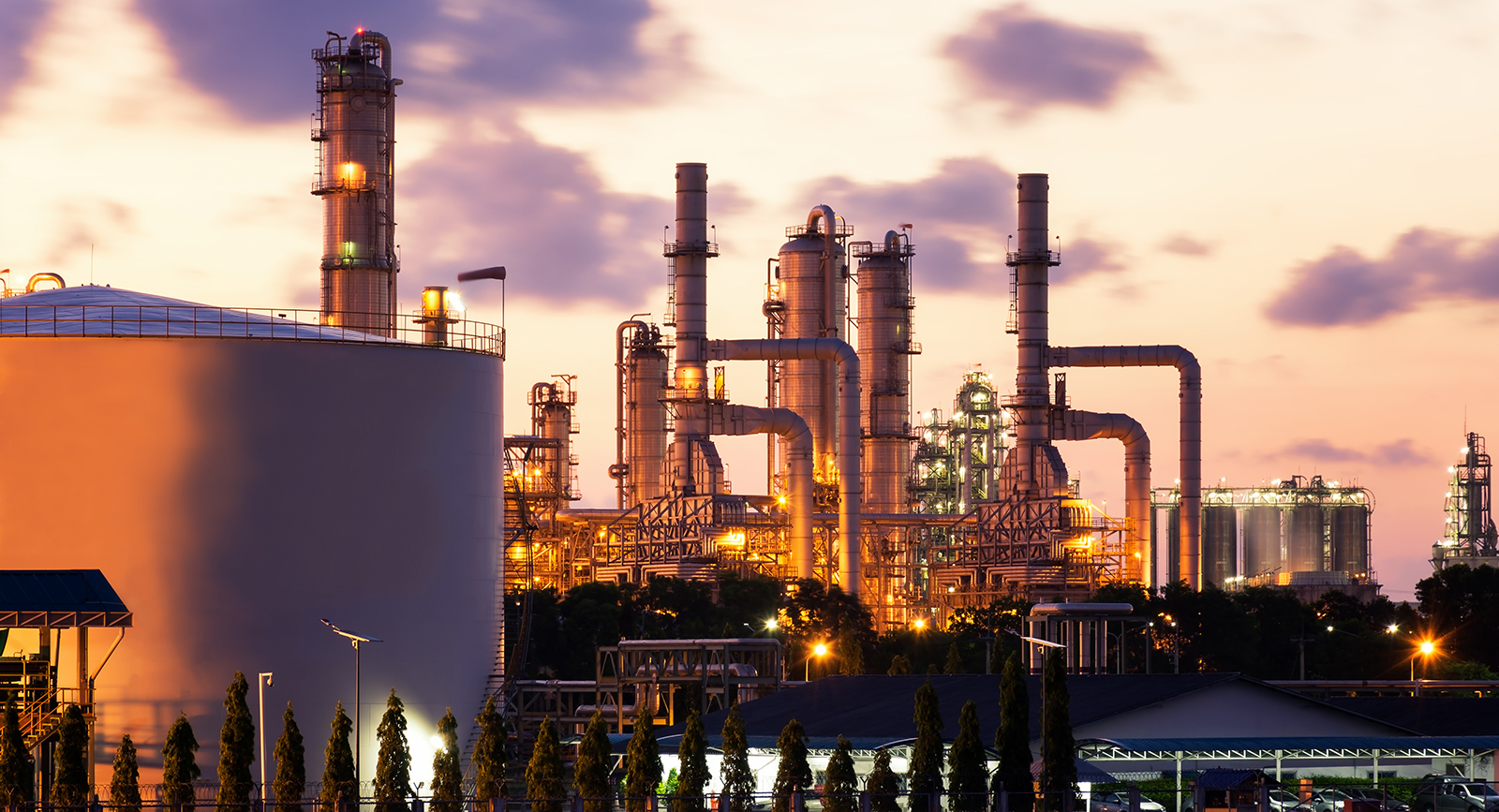
Refining is the set of industrial processes used to transform crude oil into finished products or semi-finished goods for use in industry, transport and everyday life.
The purpose of this operation is to:
- Separate the components of crude by distillation
- Modify the molecular structure to obtain high-value-added products
- Remove impurities (sulfur, nitrogen, metals, etc.)
II. ⚗️ The Stages of Refining
1. Atmospheric Distillation
- First treatment of crude at around 350–400 °C
- Separation by boiling point
| Product | Temperature | Use |
|---|---|---|
| Gas | < 30 °C | LPG, cooking, heating |
| Naphtha | 30–150 °C | Petrochemicals, gasoline |
| Kerosene | 150–250 °C | Aviation fuel |
| Diesel | 250–350 °C | Road transport |
| Residues | > 350 °C | Heavy fuel oil, bitumen |
2. Vacuum Distillation
- Used to process heavy residues
- Yields lubricating oils, paraffin wax and bitumen
III. 🔬 Conversion Processes
| Process | Purpose | Example |
|---|---|---|
| Fluid catalytic cracking (FCC) | Break long chains into lighter products | Gasoline, olefins |
| Hydrocracking | Conversion with hydrogen, yielding cleaner products | Diesel, kerosene |
| Catalytic reforming | Raise the octane number of gasoline | Premium gasoline |
| Alkylation | Synthesis of alkylates for high-performance fuels | Aviation gasoline |
💡 These processes make it possible to maximize gasoline and diesel yields, which are in high demand in Africa.
IV. 🧪 Impurity Treatment
- Desulfurization (hydrotreating): removal of sulfur (a pollutant)
- Denitrification: reduction of nitrogen oxides
- Demetallization: removal of vanadium and nickel
- Hydrogenation: saturation of unsaturated compounds (e.g., aromatics)
These treatments are essential to meet environmental standards (Euro 5, etc.)
V. 🏭 Types of Refineries
| Type | Description | Example |
|---|---|---|
| Topping | Simple distillation, unfinished products | Small-scale topping refineries |
| Hydroskimming | Distillation + basic treatment | SONARA (Cameroon) |
| Complex (full conversion) | Heavy conversion + desulfurization + petrochemicals | SAPREF (South Africa), SIR (Côte d’Ivoire) |
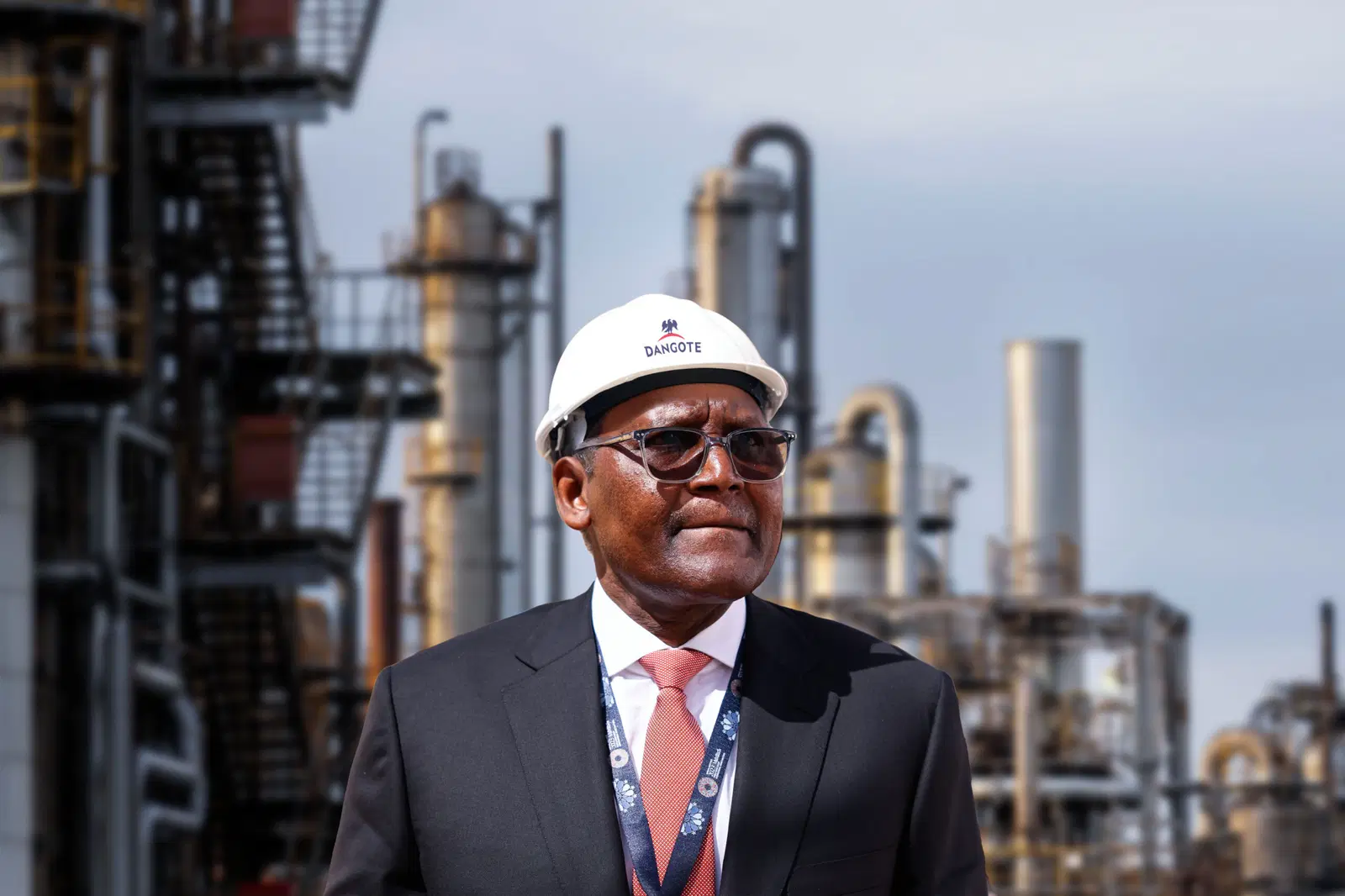
African refineries are often underoptimized, requiring modernization or restart (e.g., the Dangote Refinery in Nigeria – 650,000 b/d).
VI. 🌍 Finished Petroleum Products
| Product | Main use |
|---|---|
| Gasoline | Light transport (cars, motorcycles) |
| Diesel | Heavy transport, generators |
| Kerosene | Civil and military aviation |
| Heavy fuel oil | Industry, ships, thermal power plants |
| LPG | Domestic gas, cooking |
| Bitumen | Roads, roofing |
| Lubricants | Engines, mechanical industries |
| Naphtha | Feedstock for petrochemicals |
VII. 🧪 Petrochemicals: Advanced Value Addition
Petrochemicals transform refining derivatives (naphtha, ethane, propane) into basic chemicals:
- Ethylene, propylene, butadiene → plastics (polyethylene, PVC)
- Benzene, toluene, xylene → solvents, textile fibers (nylon, polyester)
- Ammonia, urea → fertilizers
In Africa, the potential for local petrochemicals remains largely untapped but is expanding (Nigeria, Egypt, Algeria).
VIII. 🌱 Environmental Challenges
- Air emissions: CO₂, NOx, SO₂
- Liquid discharges: polluted process water
- Solid waste: spent catalysts, sludge
Solutions: reduced flaring, deep desulfurization, heat recovery, and green refining based on biomass or hydrogen.
IX. 💰 The Economics of Refining in Africa
| Problem | Consequence |
|---|---|
| Insufficient refining capacity | Dependence on fuel imports |
| Economic losses | Trade deficits and subsidies |
| Aging equipment | Lower yields, pollution |
📌 Developing regionalized refining that is integrated with petrochemicals is a strategic priority for the continent.
🧾 Glossary
- Cracking: Breaking long carbon chains into smaller molecules
- Naphtha: A light fraction of petroleum, used in petrochemicals
- FCC: Fluid Catalytic Cracking
- Desulfurization: Removal of sulfur from crude oil or finished products
- Conversion: Transformation of heavy residues into valuable products
📚 Additional Resources
- 📄 PDF: Simplified Diagram of a Modern Refinery
- 🎥 Video: From Crude to Fuel – A Tour of an African Refinery
- 🔗 Course: IFP School – Advanced Refining Processes
🧠 Key Takeaways
Africa has everything to gain from developing its refining and petrochemical capacity, in order to reduce dependence and create value added locally.
Refining is a highly technical and strategic industry that extracts maximum value from crude oil.
Refined products are omnipresent in our daily lives, well beyond fuels.