Drilling and Production of Hydrocarbons
Understand the stages of drilling an oil or gas well, the associated production techniques, the technical and economic challenges, and modern recovery methods.
 By the editorial teamPetrole.Africa
🎯 Learning Objective
Understand the stages of drilling an oil or gas well, the associated production techniques, the technical and economic challenges, and modern recovery methods.
I. 🔧 Oil Drilling – General Principles
Drilling consists of boring a vertical (or deviated) well until it reaches a reservoir identified by geological and geophysical studies.
A typical well consists of:
- Drill pipe (drill string)
- Bit: rotary cutting tool
- Drilling muds: fluids used to lubricate, cool and carry cuttings to the surface
- Wellhead: surface safety and control equipment
II. 🛠️ Types of Wells
| Type | Description | Example |
|---|---|---|
| Vertical | Straight well down to the reservoir | Conventional onshore wells |
| Deviated / directional | Inclined to reach a complex reservoir | Offshore or near obstacles |
| Horizontal | Well that follows the reservoir layer | Better productivity in thin reservoirs |
| Multilateral | Several branches from a main wellbore | Maximized drainage |
💡 Technology used: guidance by MWD (Measurement While Drilling) and LWD (Logging While Drilling)
III. 🧪 Drilling Fluids and Well Control
1. Drilling Muds
Role:
- Transport of cuttings (debris)
- Hydrostatic pressure (well control)
- Stabilization of the wellbore
Types:
- Water-based muds (WBM)
- Oil-based muds (OBM)
- Synthetic muds
2. Blowout Prevention
- BOP (Blowout Preventer): high-pressure valve at the surface
- Continuous monitoring of bottomhole pressures
IV. 🛢️ Drilling Stages
- Site preparation: platform, access, drainage
- Drilling by section: several diameters, intermediate casing strings
- Casing installation: steel plus cementing to reinforce the walls
- Logging: physical measurement of the formations penetrated
- Completion: installation of production equipment (pumps, valves, packers)
- Production test: estimation of flow rate and pressure
V. ⚙️ Hydrocarbon Production Methods
A. Primary Recovery
- Uses the reservoir's natural energy: pressure, dissolved gas, gravity
- Flowing wells or mechanical lift (beam pumps, ESP)
Primary recovery factor: 5 to 15%
B. Secondary Recovery
- Injection of water or gas into the reservoir to maintain pressure
Methods:
- Waterflooding (water injection)
- Gasflooding (injection of natural gas or CO₂)
Recovery factor: 15 to 35%
C. Enhanced Oil Recovery (EOR)
Tertiary recovery techniques to extract residual oil:
| Method | Principle |
|---|---|
| Thermal | Steam injection to reduce viscosity |
| Chemical | Injection of polymers or surfactants |
| Miscible gas | High-pressure CO₂ injection |
Total possible recovery factor: up to 60%
VI. 🌊 Special Case: Offshore Drilling
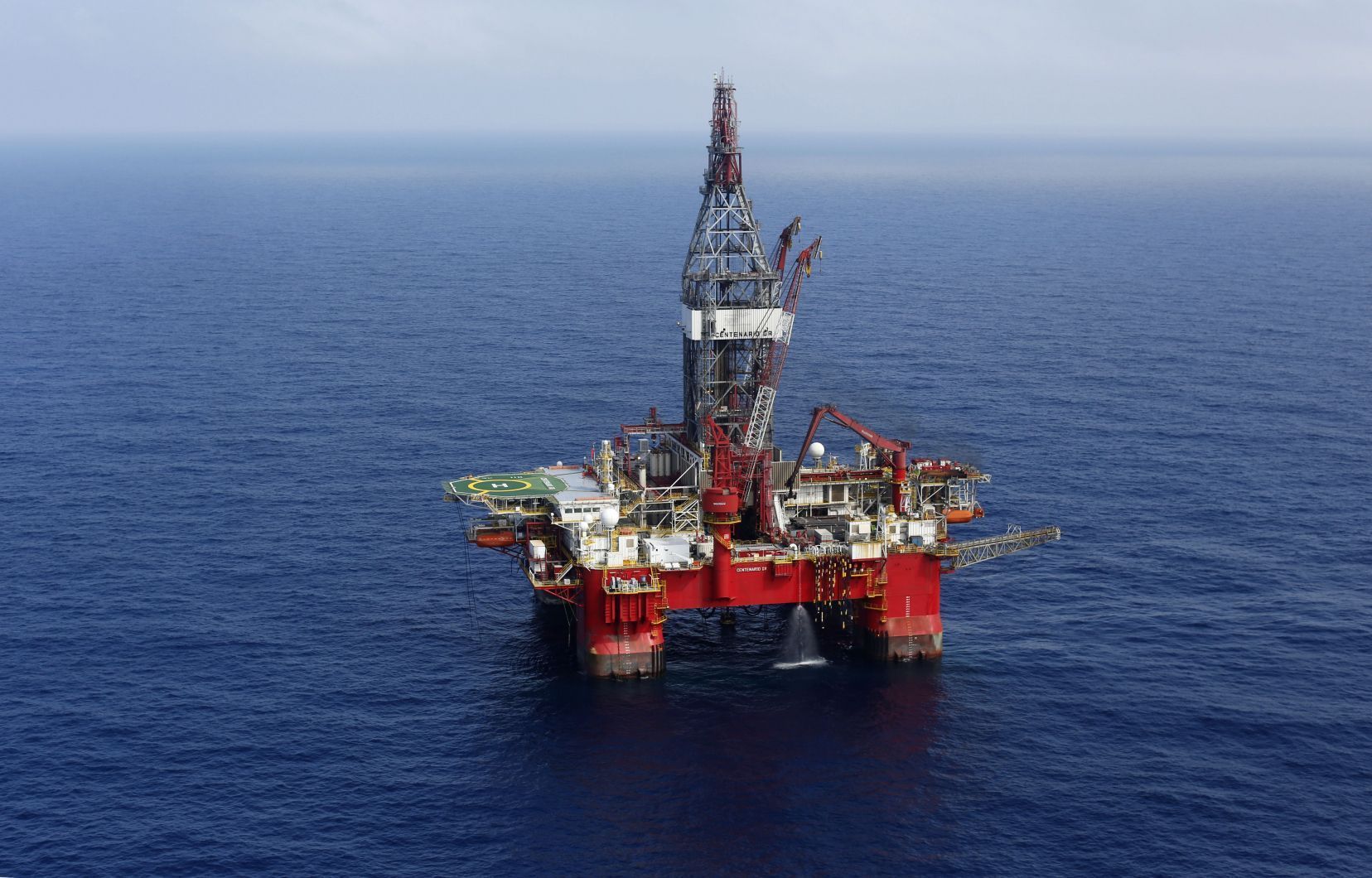
Drilling at sea (offshore) requires specialized equipment:
| Platform type | Water depth | Examples |
|---|---|---|
| Jack-up | < 120 m | Gulf of Guinea coast |
| Semi-submersible | 300 – 1,500 m | Angola, Congo |
| FPSO (Floating Production Storage and Offloading) | Up to 3,000 m | Ghana (Jubilee), Côte d’Ivoire (Baobab) |
Offshore costs are up to 10 times higher than those of onshore operations.
VII. 🧠 Optimization & Digitalization
- Smart wells (sensors, remotely controlled valves)
- Digital twins to simulate production in real time
- AI and big data for predictive maintenance and flow-rate optimization
- Automated production via SCADA and monitoring software
VIII. 💥 Risks & HSE Management
- Uncontrolled blowouts: e.g., Deepwater Horizon (2010)
- Well collapse, corrosion, leaks
- Pollution (oil, gas, muds)
HSE (Health, Safety, Environment) measures:
- Prevention plans
- Emergency drills
- Dual safety barriers
IX. 📌 Case Study: The Djeno Field (Congo-Brazzaville)
- Deep sandstone reservoir (> 4,000 m)
- Deviated drilling + multiphase completion
- Water injection to maintain pressure
- Production > 100,000 b/d with smart management by TOTAL E&P Congo
🧾 Technical Glossary
- MWD / LWD: Measurement of well parameters while drilling
- ESP: Electric submersible pumps
- EOR: Enhanced Oil Recovery
- BOP: Blowout Preventer
- SCADA: Supervisory control and real-time data acquisition system
📚 Additional Resources
- 📄 PDF: The Stages of Oil Drilling Explained
- 🎥 Video: How Does a Wellhead Work?
- 🧪 Interactive demo: Choose Your Optimal Recovery Strategy!
🧠 Key Takeaways
- Drilling is a high-precision engineering discipline, combining mechanics, geosciences and automation.
- Production techniques are evolving toward cleaner, more efficient and smarter methods.
- Africa's potential, especially offshore, requires local mastery of drilling and production technologies.