Natural Gas and Its Uses
Natural gas as a strategic energy resource: its technical characteristics, industrial and domestic uses, and the challenges and opportunities specific to Africa.
 By the editorial teamPetrole.Africa
🎯 Learning Objective
To present natural gas as a strategic energy resource, and to explain its technical characteristics, its industrial and domestic uses, and the challenges and opportunities specific to Africa.
I. 🔍 What Is Natural Gas?
Natural gas is a gaseous mixture of light hydrocarbons, composed mainly of methane (CH₄), along with ethane, propane, butane, nitrogen, carbon dioxide, hydrogen sulfide, and so on.
🔬 Typical composition:
| Component | Percentage |
|---|---|
| Methane (CH₄) | 70–95% |
| Ethane, propane, butane | 5–15% |
| CO₂, N₂, H₂S, helium | 0–10% |
It can be:
- Associated with crude oil (gas cap or dissolved gas)
- Non-associated, found on its own in gas reservoirs
- Biogas produced by the fermentation of organic matter (outside the scope of this article)
II. 🌋 Origin and Formation
Like oil, natural gas results from the thermal transformation of organic matter in source rocks.
Generation zones:
- Dry gas window: > 150°C, depths > 4,000 m
- More often generated from type III kerogens (terrestrial plant matter)
III. 🔁 The Natural Gas Value Chain
| Stage | Activities |
|---|---|
| Exploration & production | Drilling, oil/gas separation, associated gas capture |
| Processing | Removal of H₂S, CO₂, H₂O (sweetening, dehydration) |
| Transport | By pipeline, LNG carrier, LPG cylinders |
| Storage | Underground caverns, tanks, LNG terminals |
| Use | Electricity, industry, household, transport, fertilizers |
IV. ⚗️ Commercial Forms of Gas
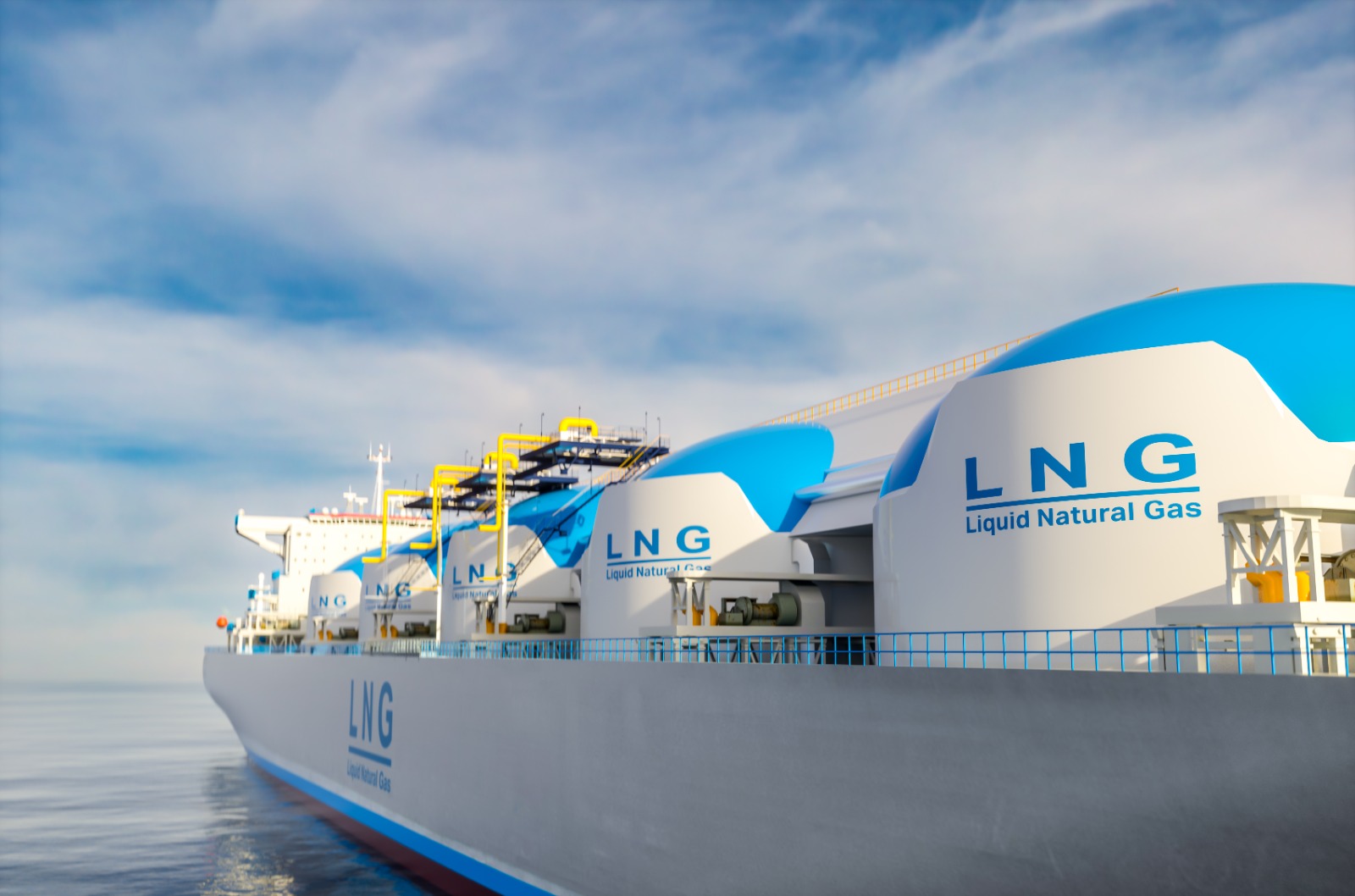
1. LNG – Liquefied Natural Gas
- Cooled to –162°C at atmospheric pressure
- Volume reduced 600-fold
- Transported by LNG carriers (specialized ships)
- Regasified on arrival for distribution
💡 Ideal for long-distance export (e.g., Algeria, Mozambique, Nigeria)
2. LPG – Liquefied Petroleum Gas
- A mixture of propane and butane
- Obtained by fractionation during processing or refining
- Stored in liquid form under pressure
💡 Used for household cooking and heating
3. Compressed Natural Gas (CNG)
- Compressed to 200–250 bar
- Used as an alternative fuel for vehicles (taxis, buses)
- Stored in cylinders or cylindrical tanks
V. ⚡ Uses of Natural Gas
| Sector | Application |
|---|---|
| Energy | Power generation (turbines, combined cycle) |
| Industry | Process heat, furnaces, cement plants |
| Petrochemicals | Feedstock for ammonia, urea, methanol |
| Transport | NGV (vehicles) or LPG (taxis) |
| Household | Cooking, heating, domestic hot water |
🔧 Example: the Azito gas-fired thermal power plant (Côte d’Ivoire) – > 450 MW
VI. 🌍 African Gas Challenges
A. Gas Flaring
- A major problem in Africa (Nigeria, Libya, Angola, DRC)
- Gas is burned off for lack of recovery infrastructure
- Economic losses + pollution
📉 More than 35 billion m³ of gas flared every year in Africa
B. Gas Monetization
- Integrated LNG projects: Nigeria LNG, Coral LNG (Mozambique), GTA (Senegal-Mauritania)
- Regional pipelines: West African Gas Pipeline (WAGP), Trans-Saharan Gas Pipeline (TSGP – planned)
C. Domestic Access
- Low penetration of household gas
- Dependence on wood and charcoal (health problems and deforestation)
- Logistical challenges for LPG distribution in rural areas
VII. 🚀 Opportunities for Africa
- Gas is cleaner than coal or oil (less CO₂, no soot)
- It can serve as an energy transition source
- Investing in the gas value chain makes it possible to:
- Create jobs
- Reduce imports
- Develop a local petrochemical industry
📌 Example: Africa can become a global gas hub thanks to its reserves (Mozambique, Nigeria, Algeria)
VIII. 📐 Case Study: Nigeria LNG
- Established in 1989, in production since 1999
- Capacity > 22 million tonnes per year
- 7 liquefaction trains (an 8th planned)
- Customers: Europe, Asia, the Americas
- Major economic impact: employment, export revenues
🧾 Glossary
- LNG: Natural gas liquefied at –162°C
- LPG: A mixture of propane and butane, stored under pressure
- Flaring: Burning of associated gas that is not monetized
- Sweetening: Removal of H₂S (hydrogen sulfide)
- Combined cycle: Power plant using a gas turbine + a steam turbine
📚 Additional Resources
- 📄 PDF: Natural Gas Processing Chain Explained
- 🎥 Video: How Does an LNG Liquefaction Unit Work?
- 🔗 MOOC: IFP School – LNG and the Economics of Natural Gas
🧠 Key Takeaways
- Natural gas is a strategic, clean and versatile energy source.
- Africa holds major reserves but suffers from underinvestment in gas infrastructure.
- Developing local gas monetization, including for household uses, is an economic, environmental and social priority.