In-Depth Study of Companies Operating in Africa's Hydrocarbons Sector
An in-depth analysis of the national and international oil companies shaping Africa's hydrocarbons sector, with their strategies, challenges and contact details.
 By the editorial teamPetrole.Africa

Executive Summary
Africa's hydrocarbons sector is a major economic pillar, holding substantial oil and gas reserves that account for a significant share of global production. The continent is home to more than 125 billion barrels of crude oil reserves and approximately 850 trillion cubic feet (Tcf) of natural gas reserves. This energy wealth is concentrated mainly in a few key countries, notably Nigeria, Algeria, Angola, Libya and Egypt, which hold most of the reserves and production.
The industry landscape is dominated by a complex interplay between National Oil Companies (NOCs) and International Oil Companies (IOCs). NOCs such as the Nigerian National Petroleum Corporation (NNPC), Sonatrach (Algeria) and Sonangol (Angola) play a crucial role in managing national resources, often in partnership with IOCs for financing, expertise and technology. The major IOCs, including Shell, TotalEnergies, ExxonMobil, Chevron, Eni, BP and CNPC, are essential drivers of exploration, production and infrastructure development, particularly in deepwater projects and liquefied natural gas (LNG) initiatives.
Several trends are currently shaping the African hydrocarbons market. Exploration frontiers are diversifying, with growing interest in East and Southern Africa, notably for natural gas. The market is also characterized by a strategic pivot toward gas as a transition fuel, with significant investment in LNG and gas pipeline infrastructure. At the same time, industry players are increasingly integrating sustainability considerations, such as reducing flaring and methane emissions, and are exploring renewable energy.
However, the sector faces persistent challenges, including high production costs driven by security issues (as in Nigeria), operational inefficiencies in aging infrastructure (as in Congo), economic dependence on oil revenues and financial vulnerabilities (as in Angola and Equatorial Guinea). Despite these obstacles, African governments are implementing policy reforms and expansion strategies to attract investment and maximize the value of their resources. The future of the sector will depend on the ability to balance production growth with the energy transition, operational stability and good governance.
This report provides an in-depth analysis of these dynamics, detailing the activities, strategies and economic impact of the main oil and gas companies operating in Africa. The appendix includes a summary table of these companies' contact details to facilitate access to information.
1. Introduction to the African Hydrocarbons Landscape
1.1. Overview of Oil and Gas Reserves and Production in Africa
Africa is a region of critical importance to the global energy supply, thanks to its vast hydrocarbon reserves. The continent holds proven crude oil reserves estimated at more than 125 billion barrels, accounting for approximately 7.8% of global production in 2020, with daily output reaching 6.9 million barrels. As for natural gas, African reserves are considerable, amounting to approximately 850 Tcf, and production reached nearly 8,200 billion cubic feet (bcf) in 2020, or 6% of global production.
Despite this abundance of raw resources, Africa has a notable peculiarity: it is the only continent in the world that is both a net exporter of crude oil and a net importer of refined petroleum products. This situation highlights a significant gap in the value chain, where most crude oil is shipped to international markets to be refined, then re-imported as more expensive finished products such as diesel, gasoline and LPG. This dynamic implies that African economies are not fully capturing the added value of their own resources, representing a missed opportunity for local wealth creation and for strengthening domestic energy security.
1.2. Main Producing Countries and Their Regional and Global Importance
Hydrocarbon production in Africa is heavily concentrated geographically. Approximately 87% of the continent's oil reserves are located in five main countries: Libya (39%), Nigeria (30%), Algeria (10%), Angola (6%) and Egypt (2%). Nigeria stands out as Africa's largest oil producer, with average production of 1.5 million barrels per day (bpd) in 2025 and 1.4 million bpd in 2023. Angola (1.1 million bpd) and Algeria (1.0 million bpd) follow closely, with these three countries alone accounting for nearly half of the continent's total oil production.
Natural gas production is also dominated by Algeria (39%) and Nigeria (30%), which are Africa's main LNG exporters, with a combined capacity of 75 MTPA.
The economic importance of the oil sector varies considerably from country to country. In 2021, oil rents accounted for 56% of Libya's GDP, 34% of Congo's and 28% of Angola's, underscoring heavy economic dependence. Conversely, despite its status as the largest producer, Nigeria's oil rents represented only 6.2% of its GDP. This disparity in oil dependence highlights differing levels of economic diversification and resilience to oil price volatility. Highly dependent economies are inherently more vulnerable to global market fluctuations and production disruptions, while lower dependence suggests a more robust and diversified economic base.
1.3. Main Hydrocarbon Basins and Emerging Regions
The Niger Delta basin remains the best known, most heavily exploited and richest in hydrocarbons in Africa. However, exploration is now expanding beyond these traditional regions, toward new frontiers in East and Southern Africa.
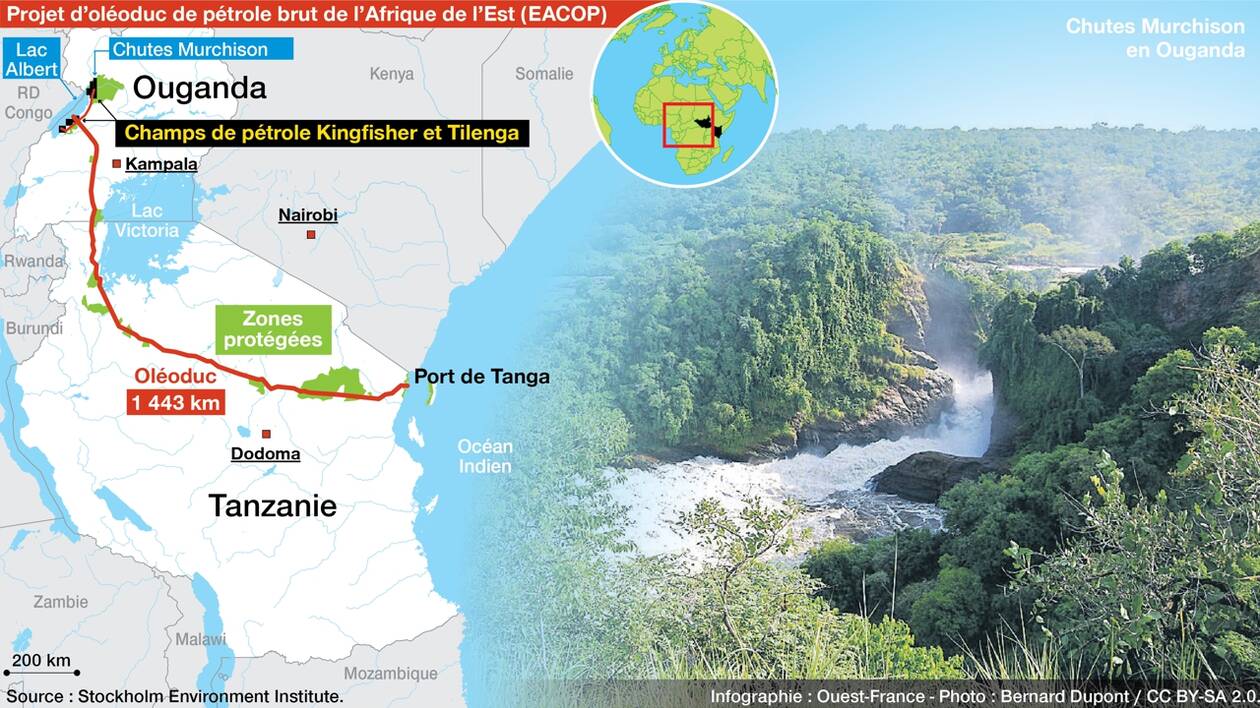
Other significant basins include the East African Rift, the East African coast, the West African transform margin and the West Coast pre-salt. Recent oil discoveries have been made in Uganda and Kenya, with exploration under way in the Democratic Republic of the Congo, Rwanda, Burundi, Tanzania and Ethiopia. Major gas discoveries have been made offshore Mozambique and Tanzania, and geological studies indicate additional resources in Seychelles and Madagascar. Exploration is also active in the deep layers of the offshore basins of Angola, Namibia, Congo, Gabon and Equatorial Guinea.
This geographic expansion of exploration frontiers is a clear indicator of companies' determination to find new, potentially vast and untapped reserves, driven by global energy demand and advances in deepwater exploration technology. This diversification of exploration areas is likely to redraw Africa's energy map and attract new investment flows to countries that were not traditionally major players in the hydrocarbons sector.
2. Key Players in Africa's Hydrocarbons Sector
The African hydrocarbons market is characterized by the coexistence and collaboration of national oil companies (NOCs) and international oil companies (IOCs), each playing a distinct but often interconnected role in the development of the sector.
2.1. National Oil Companies (NOCs): Role, Activities and Strategic Importance
NOCs are public entities that manage the state's interests in the hydrocarbons sector. Their role ranges from simple regulation to full vertical integration from exploration to marketing.
Nigerian National Petroleum Corporation (NNPC)
The Nigerian National Petroleum Corporation (NNPC) is Nigeria's national oil company, and positions itself as the largest energy company and the leading oil producer/supplier in Africa. NNPC is responsible for regulating Nigeria's oil and gas sector and developing its assets, relying heavily on international oil companies (IOCs) for financing and expertise. Most major onshore production operations are carried out through joint ventures, with NNPC as majority shareholder, while the more costly and complex offshore developments are generally organized under production sharing contracts.
NNPC's main objective is to leverage oil and gas to meet energy demand and boost the national economy, with an emphasis on economic and social development. However, the cost of producing crude oil in Nigeria is high, reaching between $25 and $30 per barrel, mainly because of massive investment in security to protect pipelines in the Niger Delta region. Despite this challenge, NNPC has ambitious production targets, aiming for 2.06 million bpd of oil by 2027 (up from 1.63 million bpd in March 2025) and an increase in gas production from 7 to 10 billion cubic feet per day by 2027. The relationship with the Dangote refinery is purely commercial, reflecting a market-driven approach.
NNPC's dual function as both regulator and operator, combined with its reliance on partnerships with IOCs, illustrates the delicate balance that African NOCs must maintain between asserting national control over their resources and leveraging foreign capital and expertise to overcome operational challenges such as security and high costs. NNPC's ability to meet its ambitious targets, despite the constraints, will be decisive for Nigeria's economic trajectory.
Sonatrach S.p.A. (Algeria)
Sonatrach is Algeria's national oil company, which dominates the market through its vast resource ownership and extensive operations, acting as the main operator for exploration and production activities. Sonatrach enjoys a strong international reputation in the global trading of all hydrocarbons, including crude oil, condensate, refined products and LPG. It also manages a fleet of LPG carriers and a very large crude carrier (VLCC) through its subsidiaries.
The company engages in strategic partnerships, as shown by the recent signing of a $1.35 billion, 30-year production sharing contract with Eni for the exploration and development of the Zemoul El Kbar region. This agreement also includes joint programs for gas production, LNG exports to Europe, renewable energy, hydrogen and electricity interconnections.
Sonatrach's role goes beyond that of a simple national producer; it is an integrated entity with significant global trading and shipping capabilities. Its recent strategic partnerships demonstrate a forward-looking approach, in line with global energy transition trends, thereby positioning Algeria as a diversified energy supplier for Europe. Sonatrach's ability to adapt to new market requirements and diversify its energy portfolio is crucial to the longevity of its influence.
Sonangol E.P. (Angola)
Sonangol is Angola's national oil company, whose core activities cover the exploration, production, manufacturing, transport and marketing of hydrocarbons in Angola's subsoil and on its continental shelf. The company aspires to become a regional leader in exploration and production (aiming for an in-house operated production share of at least 10% by 2027), refining, petrochemicals, trading and shipping, as well as in gas and renewable energy.
Sonangol has undertaken a process of privatizing some of its subsidiaries, offering equity stakes. The company faces significant financial challenges, including high indebtedness (the debt of Sonangol and the central government amounted to 89% of GDP in 2019) and profitability problems due to high interest expenses and former fuel subsidies. In 2019, the National Agency for Petroleum, Gas and Biofuels (ANPG) was launched to assume the role of national concessionaire, allowing Sonangol to focus exclusively on its commercial activities.
Sonangol's strategic restructuring, including privatization and the refocusing of its activities on commercial operations, is a direct response to past financial pressures. This move aims to improve the company's financial health and operational efficiency, which is essential to attract new investment and support the sector's growth.
National Oil Corporation (NOC) (Libya)
Libya's National Oil Corporation (NOC) is the entity responsible for promoting innovation, sustainability and excellence in oil and gas exploration. The NOC aims to increase oil production to 2-3 million bpd (up from 1.4 million bpd of oil and 1.5 million barrels of oil equivalent (boe) in total with condensate and gas at present). To achieve these goals, the NOC has put in place nine strategic programs, aimed notably at maximizing oil production, accelerating gas production, developing refined products and petrochemicals, integrating renewable energy and modernizing the company.
The NOC has also launched "Think Tomorrow" initiatives focused on environmental responsibility, such as eliminating oil leaks, using renewable energy, planting one million trees and reducing gas flaring to near zero. Recently, the NOC signed a memorandum of understanding with BP to assess redevelopment opportunities for the giant Sarir and Messla oil fields, as well as the potential of unconventional resources.
Despite a history of challenges linked to political instability, Libya's NOC is pursuing highly ambitious production targets and is actively seeking foreign partnerships for redevelopment and exploration. The integration of sustainability initiatives into its core strategy demonstrates a commitment to modernizing the sector while maximizing production. Libya's ability to attract and retain foreign investment will be crucial to achieving these goals and strengthening its economic position.
Egyptian General Petroleum Corporation (EGPC) (Egypt)
The Egyptian General Petroleum Corporation (EGPC) is the main government entity responsible for all oil exploration and exploitation activities carried out by contractors in Egypt, primarily through production sharing agreements (PSAs). EGPC prepares and processes data for concessions and bid rounds, and handles the storage of geological data (rock samples, seismic data, reports). It also draws up oil drilling and production plans, in collaboration with joint ventures, to maximize production rates, which has a significant impact on the Egyptian economy.
However, Egypt faces significant challenges. Growing domestic energy demand exceeds available supply, and inefficiencies in EGPC's downstream operations, combined with a weakened currency and fuel subsidies, put pressure on the country's fiscal balances.
EGPC's main role is to facilitate foreign investment in Egypt's upstream sector, acting as state concessionaire and data manager. However, the sector's overall economic impact is limited by sharply rising domestic energy consumption and by the fiscal burden of subsidies. This situation highlights a fundamental tension between the country's export potential and its domestic energy security, as well as its fiscal health. For Egypt to fully benefit from its resources, comprehensive policy reforms going beyond upstream production alone are necessary.
Société Nationale des Pétroles du Congo (SNPC) (Republic of the Congo)
The Société Nationale des Pétroles du Congo (SNPC) is a public industrial and commercial institution created in 1998, tasked with managing the Congolese state's interests across the entire hydrocarbons value chain. SNPC operates through specialized subsidiaries, notably SONAREP (exploration and production), SFP (drilling), ILOGS (logistics), SNPC Trading (international marketing), CORAF (refinery) and SNPC Distribution (domestic distribution).
SNPC holds a monopoly on the import of refined petroleum products, and the CORAF refinery meets 70% of the country's needs, although it operates below capacity and faces high production costs due to inefficiencies. The company has taken on oil-backed debt, which is the main source of non-central-government debt, contributing to a high national debt burden (88% of GDP in 2019).
SNPC's extensive vertical integration aims to guarantee Congo's energy independence. However, this ambition is hampered by operational inefficiencies in its downstream assets, particularly the CORAF refinery, and by significant oil-backed debt. This situation poses a considerable fiscal risk for the state, underscoring the challenges inherent in a highly integrated NOC that faces efficiency and debt management constraints.
Gabon Oil Company (GOC) (Gabon)
Gabon Oil Company (GOC) is Gabon's national oil company, 100% state-owned. It is responsible for managing the country's hydrocarbon resources and leads onshore and offshore exploration, production and development activities. The GOC is authorized to acquire up to 15% of the interests in all producing oil blocks, thereby ensuring state participation.
The company is the majority shareholder of the Société Gabonaise d'Entreposage des Produits Pétroliers (SGEPP), which specializes in the storage and conditioning of liquid hydrocarbons and gas, and of Pizolub, a lubricants producer. It also holds a minority stake in the offshore logistics company Bourbon Gabon. The GOC is actively expanding its portfolio through strategic acquisitions, notably the assets of Assala Energy in 2023 (comprising 7 onshore production licenses, 45,000 bpd, pipeline infrastructure and the Gamba export terminal) and the portfolio of Tullow Oil in 2025.
The GOC is pursuing a strategy of directly increasing state control and participation in Gabon's hydrocarbons sector through strategic acquisitions of existing assets. This approach reflects a clear national imperative to maximize revenues and influence over the industry. Gabon, as a mature producer, thus seeks to reverse its production decline through ambitious targets and significant policy reforms (such as the 2019 hydrocarbons law) aimed at attracting international investment.
GEPetrol (Equatorial Guinea)
GEPetrol was created in February 2001 as the national oil company of the Republic of Equatorial Guinea. It manages the state's participation as a shareholder and the rights and obligations arising from production sharing contracts (PSCs). GEPetrol also acts as agent for the sale of the state's share of hydrocarbons and is responsible for promoting open exploration areas.
However, Equatorial Guinea faces a significant decline in its hydrocarbon production, which is expected to fall by 50% between 2023 and 2028, leading to serious economic challenges. The country's real GDP has already declined by 5% per year between 2014 and 2021, and an accident on one of the largest oil platforms in the first half of 2023 caused an 18.9% collapse in real hydrocarbon GDP.
GEPetrol's main role is to manage the state's interests and attract foreign investment. However, the company operates in a difficult environment of declining production. This highlights the limits of a facilitator NOC model when the availability of underlying resources or the attractiveness of investment diminishes. For Equatorial Guinea, the ability to reverse this trend will depend on major discoveries and sustained investment.
Ghana National Petroleum Corporation (GNPC) (Ghana)
The Ghana National Petroleum Corporation (GNPC) is a public entity whose mandate is to explore, develop and ensure the supply of petroleum for Ghanaians. GNPC played a central role in the discovery of the Jubilee fields in 2007 and retains an interest in these key assets, allowing Ghana to benefit from the revenues generated.
Continued discoveries and agreements (for example, with Aker Energy and AGM Petroleum Ghana) are expected to boost the country's oil production considerably. The oil sector has had a positive impact on Ghana's GDP growth, with oil rents contributing significantly. The Ghanaian government is confident in its ability to avoid the typical problems of the "resource curse" through prudent management and corporate social responsibility (CSR) initiatives led by the GNPC Foundation.
GNPC is at the heart of Ghana's emerging oil economy, demonstrating effective state participation in discoveries and asset management. The government's proactive approach to avoiding the pitfalls of the "resource curse" through careful management and CSR initiatives points to a more sustainable development model for hydrocarbons.
2.2. International Oil Companies (IOCs): Main Operators and Their Contributions
IOCs bring capital, technology and expertise to Africa, playing an essential role in developing the continent's resources.
Shell Plc
Shell is a leading global energy and petrochemicals group. Historically, it was one of the largest oil producers in Nigeria, with onshore and offshore operations. Recently, Shell completed the sale of its Nigerian onshore subsidiary (SPDC) to Renaissance Africa Energy Company Limited (RAEC), marking a strategic shift.
Shell's strategy in Africa now focuses on deepwater oil and gas production (for example, SNEPCo pioneered deepwater production from the Bonga field in Nigeria) and on gas distribution (Shell Nigeria Gas). Shell is also active in South Africa (retail network) and in Egypt (upstream activities in the Western Desert and the Nile Delta, gas distribution, CNG conversion). The company has expressed keen interest in re-entering deepwater Blocks 21/09 and 20/11 in Angola, focusing on natural gas.
Shell is committed to reducing its environmental impact, having achieved zero routine flaring in its upstream operations in Nigeria. This strategic reorientation of Shell's African portfolio, which involves divesting complex onshore assets and focusing on less complex deepwater projects and natural gas, is aligned with its global decarbonization and efficiency goals.
TotalEnergies SE
TotalEnergies is a vast energy company with extensive operations across Africa, notably in South Africa, Uganda, Nigeria, Angola and Algeria. The company is active in oil and gas exploration and production, refining and marketing, with a strong focus on deepwater projects and gas.
TotalEnergies is making significant investments in renewable energy and electricity, developing solar projects in South Africa (700 MW portfolio), Uganda (Soroti power plant) and Angola (Quilemba solar plant). The company is committed to sustainability and community engagement, having achieved zero routine flaring in its upstream operations in Nigeria and deploying methane detection technologies. It operates major deepwater and ultra-deepwater oil licenses in Angola (Block 17, Block 32, Block 0) and Nigeria (PML 2/3/4, OML 99, OML 100, OML 102).
TotalEnergies is implementing a multi-energy strategy in Africa, integrating traditional hydrocarbon development with substantial investment in renewable energy and advanced decarbonization technologies. This approach positions the company as a key player in the energy transition on the continent, demonstrating a holistic vision of energy supply.
ExxonMobil Corporation
ExxonMobil is one of the largest publicly traded oil and gas companies in the world, owning vast offshore oil fields and major crude oil export terminals. The company has significant operations in Africa, notably in deepwater blocks in Nigeria (5 blocks), in Angola (3 blocks with potential of approximately 10 billion boe), in Mozambique (25% interest in Area 4, leading LNG facilities) and exploration activities in Namibia (3 offshore blocks).
ExxonMobil emphasizes the use of advanced technologies and efficient resource management. The company has a long history in African countries, with more than 115 years of presence in Nigeria and 120 years in Egypt.
ExxonMobil's consistent focus on large-scale deepwater and LNG projects in key African countries underscores a long-term commitment to developing complex, high-potential hydrocarbon resources. This is indicative of its global strategy of meeting constantly evolving energy needs.
Chevron Corporation
Chevron is a leading American multinational energy company, with significant offshore and onshore oil production in Nigeria, often in joint venture with NNPC. The company maintains extensive offshore operations and partnership agreements in Angola, including Mafumeira Sul, Angola LNG, the Congo River Canyon Crossing pipeline and the Lianzi unitization zone.
Chevron leverages innovation and technology to maximize production from mature fields and discover new resources. It also focuses on energy efficiency, flaring reduction and methane management.
Chevron's strategy in Africa involves applying advanced technologies to optimize production from mature fields and develop gas resources (for example, Angola LNG). This pragmatic approach aims to maximize the value of existing assets while addressing environmental concerns.
Eni S.p.A.
Eni is an integrated energy company, heavily involved in exploration and production in many African countries, including Algeria, Angola, Côte d'Ivoire, Egypt, Ghana, Kenya, Libya, Mozambique, Nigeria, the Republic of the Congo and Tunisia. The company engages in joint ventures to improve oil recovery and gas exploration.
Eni is a pioneer in bioenergy initiatives, notably the development of agricultural feedstocks for biorefineries in Kenya. It is committed to sustainability, aiming for carbon neutrality by 2050 through emissions reductions and investment in renewable energy and decarbonization technologies.
Eni's extensive geographic presence in Africa, combined with a notable strategic focus on natural gas supply security and innovative bioenergy projects, positions the company to capitalize on both traditional and emerging energy opportunities. This diversified approach allows Eni to balance the growth of its traditional hydrocarbons business with a forward-looking energy transition agenda.
BP p.l.c.
BP is an integrated energy company, involved in various production sharing agreements and major oil fields in Angola. It is active in South Africa, supplying petroleum products, lubricants and petrochemicals through a distribution network and a 50% stake in the SAPREF refinery. BP has committed to becoming a net zero company by 2050.
The company is involved in major gas projects in Africa, such as the Greater Tortue Ahmeyim Phase 1 LNG megaproject offshore Mauritania and Senegal, and the development of the Raven gas field in Egypt. BP has also signed a memorandum of understanding with Libya's NOC to assess the redevelopment of giant oil fields (Sarir and Messla) and unconventional potential.
BP is selectively re-engaging in high-impact African projects, particularly large-scale gas/LNG developments, while exploring redevelopment opportunities for mature oil fields. This strategy is consistent with its global net zero ambition, indicating a focus on maximizing the value of existing and new assets with lower carbon intensity.
Equinor ASA
Equinor is a multinational energy company operating in Algeria, Angola, Libya and Tanzania, focusing mainly on exploration and production activities. The company plans to increase its oil and gas production by more than 10% by 2027, while halving its investment in renewable energy due to economic constraints. Equinor withdrew from Nigeria by selling its oil assets to Chappal Énergies.
Equinor is leading a major liquefied natural gas (LNG) project in Tanzania, estimated at $42 billion. The company is strategically adjusting its global portfolio by prioritizing profitable hydrocarbon assets in Africa (for example, LNG in Tanzania) and raising its overall oil and gas production targets, even as it reduces its investment in renewable energy. This approach highlights the persistent tension between energy transition objectives and short- to medium-term profitability for IOCs.
China National Petroleum Corporation (CNPC)
The China National Petroleum Corporation (CNPC) is the third-largest oil company in the world, with oil and gas assets and interests in more than 30 countries worldwide. CNPC engages in partnerships aimed at improving extraction technologies and project execution.
The company is heavily involved in Africa, notably in the construction and operation of the Niger-Benin oil pipeline (1,950 km), the Soraz refinery in Nigeria (60% owned), and various other pipeline, terminal and depot projects in Chad, Tanzania, Namibia, Angola, Ghana, Cameroon and Libya. Chinese development finance institutions (CHEXIM, CDB) provided $52.38 billion in energy loans in Africa between 2000 and 2022, of which 51% went to fossil fuel projects.
CNPC's overall engagement in Africa goes beyond simple resource extraction to include significant infrastructure development across the hydrocarbons value chain. This reflects China's long-term strategic vision of securing its energy resources and expanding its global influence through integrated projects.
2.3. Emerging Players and Local Partnerships
The African hydrocarbons market, although dominated by a small number of large international and national companies, is seeing the emergence of a growing ecosystem of local players and service providers. The presence of various local companies and joint ventures (for example, in Nigeria) bears witness to this dynamic.
New investment from Chinese and French companies is contributing to the revival of production in Chad. South Sudan has attracted Chinese partnerships for the rehabilitation of aging fields and pipelines. Likewise, the Republic of the Congo has benefited from increased foreign investment, notably from Chinese and European companies.
The growing involvement of Chinese companies and other non-traditional European firms, alongside efforts to develop local content and indigenous companies, indicates a diversification of investment sources. It also suggests a gradual strengthening of local capacity within Africa's hydrocarbons sector. This trend is crucial for African countries to maximize the economic benefits of their natural resources, beyond mere extraction.
3. Dynamics of the African Hydrocarbons Market
The African hydrocarbons market is constantly evolving, marked by activity across the entire value chain, innovative trends, persistent challenges and significant growth prospects.
3.1. Upstream, Midstream and Downstream Activities Across the Continent
Africa's oil and gas sector spans the entire value chain, from exploration and production activities (upstream) to transport and storage (midstream), through to refining and distribution (downstream).
Upstream activities dominate the African market, with growing interest in deepwater and ultra-deepwater basins. Major discoveries continue to be made, such as the Zohr gas field in Egypt, considered the largest discovery ever made in the Mediterranean, and the Baleine field in Côte d'Ivoire. This upstream concentration is a key driver of market growth, supported by continued investment in exploration and production.
Midstream operations are crucial to market growth, involving the transport and storage of crude oil and natural gas. Cross-border pipelines such as Chad-Cameroon, SUMED, Tazama and Petrodar are notable examples, and several other projects (LAPSSET, EACOP, AZOP, Niger-Chad) are under study or construction (Niger-Benin oil pipeline). The expansion and modernization of oil and gas infrastructure, including pipelines, storage facilities and refineries, are vital for efficient production and distribution.
Downstream processes encompass the refining of crude oil into usable products such as gasoline, diesel and jet fuel, as well as the marketing and distribution of these products to consumers. However, Africa's refining capacity is limited: African refineries can refine only 3.3 million barrels per day, despite demand of 4.1 million barrels per day in 2020. This gap leads to a situation in which Africa is a net exporter of crude oil but a net importer of refined products. South Africa stands out as the only sub-Saharan African country with significant refining capacity, covering approximately 67% of its domestic demand.
3.2. Key Market Trends and Driving Forces
The African hydrocarbons market is influenced by several trends and driving forces:
- Growth in energy demand: Rapid population growth and urbanization in Africa are driving increased energy demand for residential, commercial and industrial uses.
- Infrastructure investment: Substantial government investment in infrastructure development, including pipelines, refineries and power plants, is creating an environment conducive to sector growth.
- Emphasis on sustainability and social responsibility: The sector is placing increasing emphasis on sustainability and social responsibility. The adoption of advanced exploration and extraction technologies, such as enhanced oil recovery (EOR) techniques and seismic imaging, is on the rise. The growing integration of digital technologies is improving efficiency and safety.
- Shift to natural gas: Demand for natural gas as a cleaner energy source is rising. Algeria and Nigeria are the largest LNG exporters, and major gas projects are under way, such as the Zohr field in Egypt.
- Deepwater and ultra-deepwater development: Exploration and production activities are increasingly shifting toward deepwater and ultra-deepwater basins.
- Supportive policies: Favorable regulatory frameworks, including streamlined licensing procedures and stable tax regimes, attract investment and stimulate growth. Initiatives such as Nigeria's "Industry-Wide Oil Revenue Recovery Initiative" aim to combat crude oil theft and recover lost revenues.
3.3. Challenges and Risks
Despite its potential, Africa's hydrocarbons sector faces significant challenges:
- Security problems and political instability: Security problems, corruption and risks linked to political instability have raised exploration and production costs in some countries, reducing exploration efforts. In Nigeria, for example, production costs are high ($25 to $30 per barrel) because of massive investment in pipeline security.
- Lack of capital and infrastructure: The lack of capital and aging or inadequate infrastructure hinder the sector's full potential. Africa's limited refining capacity and its dependence on imports of refined products are a striking example.
- Decline of mature fields: The decline in production from mature oil fields, as in Algeria and Equatorial Guinea, requires enhanced oil recovery (EOR) techniques to maintain production levels.
- Economic dependence and vulnerability: Many African countries are heavily dependent on oil revenues, making them vulnerable to global price fluctuations. Angola, for example, has seen its profits wiped out by high interest expenses and has faced high debt.
- Gas flaring: Gas flaring remains a major environmental and economic problem. Nigeria, Angola, Congo and Gabon are countries where flaring is significant. Algeria was the sixth-largest gas flaring country in 2023.
- Governance challenges: Corruption and inefficiencies in the management of national oil companies can hinder the profitability and development of the sector, as shown by the problems of Sonangol in Angola or the CORAF refinery in Congo.
3.4. Future Outlook and Opportunities
Despite the challenges, the future of Africa's hydrocarbons sector presents significant opportunities:
- Production growth: Nigeria is targeting 2.06 million bpd by 2027 and Libya 2 million bpd by the end of 2025. Gabon aims to double its production to 500,000 bpd by 2025. These ambitious targets, if achieved, will transform the production landscape.
- Natural gas development: Gas is increasingly seen as a transition fuel. Major projects such as LNG in Tanzania ($42 billion) and the Greater Tortue Ahmeyim (GTA) project offshore Mauritania and Senegal (2.3 million tonnes of LNG per year) underscore the growth potential of gas.
- Foreign investment: Policy reforms aimed at improving investment attractiveness, such as Gabon's new hydrocarbons law in 2019, and Libyan exploration bid rounds, are designed to attract more foreign capital.
- Value chain integration: Countries such as Nigeria are investing in midstream gas infrastructure (OB3, AKK pipelines) to boost domestic production and supply. The development of biorefineries (such as Eni's in Kenya) and the expansion of refining capacity are also opportunities to add value locally.
- Decarbonization technologies: The adoption of carbon capture and storage (CCS) technologies is gaining ground, and companies are committing to reducing flaring and methane emissions. TotalEnergies, for example, has achieved zero routine flaring in its Nigerian operations.
4. Conclusion
Africa's hydrocarbons sector is at a crossroads, facing both immense opportunities and structural challenges. The continent's resource wealth, particularly in oil and natural gas, continues to attract significant investment from NOCs and IOCs. However, the full realization of this potential depends on countries' ability to overcome security problems, modernize infrastructure, improve governance and navigate the global energy transition.
The growing trend toward diversifying investment sources, with a notable Chinese presence, and the emphasis on developing natural gas as a transition fuel, are positive developments. In addition, companies' growing commitment to sustainability, such as reducing flaring and investing in renewable energy, is crucial for the sector's long-term social and environmental acceptability.
To maximize economic benefits and ensure sustainable development, African countries must pursue policy reforms, invest in building local capacity and foster a stable environment for investment. The ability to turn raw resources into refined products and to develop domestic markets is also essential to capture more added value on the continent. In short, Africa's hydrocarbons sector is set to play a central role in the global energy landscape, but its future success will depend on how current challenges are addressed and opportunities seized.
Appendix: Table of Companies and Their Contact Details
| Company | Main Country of Operation | Main Activities in Africa | Main Contact Details | |||
|---|---|---|---|---|---|---|
| National Oil Companies (NOCs) | ||||||
| Nigerian National Petroleum Corporation (NNPC) | Nigeria | Exploration, production, regulation, asset development, partnerships with IOCs, refining, transport, marketing | Website: nnpcgroup.com | |||
| Sonatrach S.p.A. | Algeria | Exploration, production, international hydrocarbon trading, shipping, partnerships (e.g., Eni) | Address: 1st & 2nd Floors, Panton House, 25 Haymarket, London SW1Y 4EN (Sonatrach Petroleum Corporation BVI) | Tel: +44 (0)20 7484 2900 | Fax: +44 (0) 20 7925 1486 | Website: sonatrach.co.uk |
| Sonangol E.P. | Angola | Exploration, production, manufacturing, transport, hydrocarbon marketing, refining, petrochemicals, gas, renewable energy | Address: Rua Rainha Ginga, No 29/31, Caixa Postal 1316, Luanda, Angola | Tel: +244 222 334448 | Fax: +244 222 391782 | Website: sonangol.co.ao |
| National Oil Corporation (NOC) | Libya | Exploration, oil and gas production, refining, petrochemicals, renewable energy, sector modernization | Tel: 0213337141-49 or 0213337151-56 | Email: info@noc.ly | Website: noc.ly | |
| Egyptian General Petroleum Corporation (EGPC) | Egypt | Management of exploration and exploitation activities with contractors (PSAs), geological data storage, production plans | Address: Palestine St., New Maadi, Cairo, Egypt 11742 | Tel: +2(02)2706-6900 | Email: EGPC@egpc.com.eg | Website: egpc.com.eg |
| Société Nationale des Pétroles du Congo (SNPC) | Republic of the Congo | Management of state interests in E&P, processing, trading, refining (CORAF), distribution | Tel: 083 000 1000 | Website: groupesnpc.com | ||
| Gabon Oil Company (GOC) | Gabon | Exploration, production, onshore/offshore development, asset acquisitions, storage (SGEPP), lubricants (Pizolub) | Address: 1586, Avenue Paul Moukambi, Upper Gué Gué PO Box 635, Libreville, Gabon | Tel: (241) 01 48 41 00 or 06 00 80 81/82 | Email: contact@gabonoil.com | Website: theenergyyear.com/energy-company/gabon-oil-company/ |
| GEPetrol | Equatorial Guinea | Management of state participation in PSCs, sale of the state's share of hydrocarbons, promotion of exploration areas | Address: Calle Acacio Mane 39, PO Box 965, Malabo, República de Guinea Ecuatorial | Tel: +(240) 333 093549 (Ministry) | Website: guineaecuatorialpetrol.com | |
| Ghana National Petroleum Corporation (GNPC) | Ghana | Exploration, development, petroleum supply, management of field interests (e.g., Jubilee) | Address: Petroleum House, Tema, Ghana | Tel: (+233)-30-320-6020 | Email: info@gnpcghana.com | Website: gnpcghana.com |
| International Oil Companies (IOCs) | ||||||
| Shell Plc | Multiple (Nigeria, South Africa, Egypt, Angola) | E&P (deepwater), gas distribution, refining, retail, bioenergy | South Africa: The Campus, Twickenham Building, 57 Sloane Street, Epsom Downs, Bryanston, 2021 | Tel: (+27) 11 996 7000 | Website: shell.com.ng, shell.co.za | |
| TotalEnergies SE | Multiple (Nigeria, Angola, Algeria, South Africa, Uganda) | E&P (deepwater, gas), LNG, refining, distribution, renewable energy (solar), methane reduction | Website: totalenergies.com/africa (inaccessible), totalenergies.com/south-africa, totalenergies.com/uganda, totalenergies.com/nigeria, totalenergies.com/angola, totalenergies.com/algeria General contact via the website form | |||
| ExxonMobil Corporation | Multiple (Nigeria, Angola, Mozambique, Egypt, Namibia) | E&P (deepwater), LNG, lubricants, fuels, local content development | Website: corporate.exxonmobil.com/locations/africa-middle-east-region General contact via the website form | |||
| Chevron Corporation | Multiple (Nigeria, Angola, Equatorial Guinea, Rep. of the Congo, South Africa) | E&P (onshore, offshore, deepwater), LNG, methane management | Website: chevron.com/what-we-do/energy/oil-and-natural-gas Angola: Contact via the website form | |||
| Eni S.p.A. | Multiple (Algeria, Angola, Côte d'Ivoire, Egypt, Ghana, Kenya, Libya, Mozambique, Nigeria, Rep. of the Congo, Tunisia) | E&P (gas, oil), LNG, bioenergy (biorefineries), decarbonization | Website: eni.com/en-IT/home.html General contact via the website form | |||
| BP p.l.c. | Multiple (Angola, South Africa, Mauritania, Senegal, Egypt, Libya) | E&P (gas, oil), LNG, refining, distribution, net-zero goals | South Africa: Email: helpdeskmailbox@bp.com | Tel: 0860 222 166 | Website: bp.com/en_za/south-africa/home.html | |
| Equinor ASA | Multiple (Algeria, Angola, Libya, Tanzania) | E&P (oil, gas), LNG, energy transition | Angola: Belas business park, Edifício Luanda 3º andar - Talatona, Luanda | Tel: +244 923 408 521 | Libya: Sidi Abdul Jalil- Janzour, Palm City, Apartment 3B, East Apt 2, Tripoli, Libya | Website: equinor.com |
| China National Petroleum Corporation (CNPC) | Multiple (Algeria, Niger, Chad, Tanzania, Namibia, Angola, Ghana, Cameroon, Libya) | E&P, refining, petrochemicals, oilfield services, infrastructure construction (pipelines, terminals) | Headquarters (Beijing): 9 Dongzhimen North Street, Dongcheng District, Beijing, P.R. China, 100007 | Tel: +86 10 6209 4114 | Email: admin_eng@cnpc.com.cn | African subsidiaries have specific contacts (e.g., Angola: S8, Talatona Do Levita, Luanda, Angola. Tel: +86 13903160246) |
| Other NOCs and Entities | ||||||
| Société des Hydrocarbures du Tchad (SHT) | Chad | Oil and gas operations | Address: N'Djamena, Chad | Tel: (235) 2252 0630 | Fax: (235) 2252 0729 | |
| Nilepet | South Sudan | Technical, operational and commercial arm of the Ministry of Petroleum and Mining | Address: P.O. Box 390, Plot 496-Block no. 3k, Opp. Arkel Restaurant, Off Airport-Ministries Road | Tel: +211955668869, +211 915586488 | Email: info@nilepet.com | |
| Empresa Nacional de Hidrocarbonetos (ENH) | Mozambique | Represents the government in petroleum operations, Area 4, port expansion, gas distribution | Address: Ave. 25 de Septembro n. 270, Time Square, P.O. Box 4787, Maputo, Mozambique | Tel: +258 21 333 490 | Email: info@enh.co.mz | Website: enh.co.mz |
| Tanzania Petroleum Development Corporation (TPDC) | Tanzania | Implements petroleum exploration and development policies | Address: Co-operative Building Lumumba Street Dar es Salaam, P.O. Box 2774/5233 | Tel: +255 22 22-6452 | Email: kajato@tpdc-tz.com | Website: tpdc-tz.com |
| Uganda National Oil Company (UNOC) | Uganda | National oil operations | Address: Plot 15 Yusuf Lule Rd, P.O Box 36316, Kampala, Uganda – East Africa | Tel: (256) 312 444 600 | Email: info@unoc.co.ug | Website: unoc.co.ug |
| National Oil Corporation of Kenya (NOCK) | Kenya | National oil operations | Address: KAWI house – South C, Popo Lane, Off Red Cross Road, P.O Box 58567 – 00200 Nairobi, Kenya | Tel: +254-20-695-2000 | Email: feedback@nockenya.co.ke (customer complaints), ceo@nockenya.co.ke (CEO's office) | Website: nationaloil.co.ke |

 Sudan
 Uganda
 DR Congo