Gas Flaring in Africa: Monumental Waste and a Climate Time Bomb
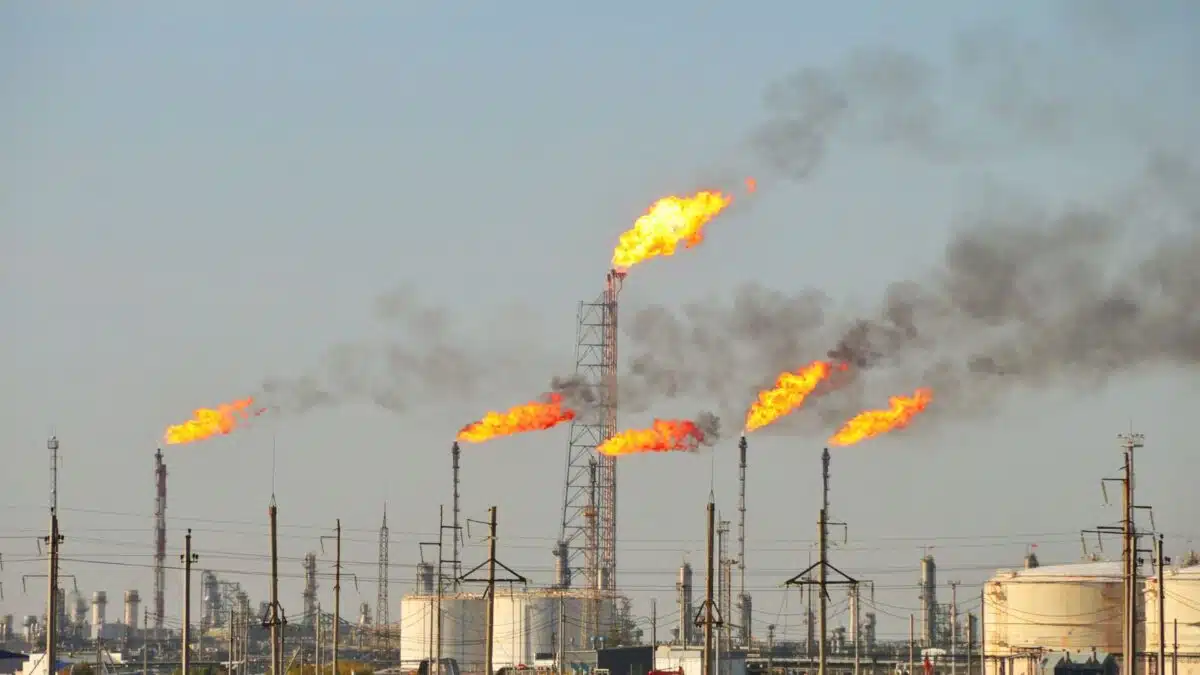
Every year, billions of cubic metres of natural gas are burned in the open air across Africa, in deafening media silence. Flaring is a triple scourge: economic, environmental and health-related.
 By the editorial teamPetrole.Africa
Every year, billions of cubic metres of natural gas are burned in the open air on African soil, in deafening media silence. This practice, known as flaring or gas flaring, is a triple scourge: economic, environmental and health-related.
🔍 1. What is flared gas?
When oil is extracted from the ground, it is often accompanied by associated gas (natural gas present in the same reservoir). In many cases this gas is not recovered but burned on site in the open air by a flare.
The reasons given:
- No infrastructure to capture and transport it
- Perceived lack of profitability in monetising it
- A historical practice seen as simpler and cheaper
📊 2. Staggering figures
According to the World Bank (Global Gas Flaring Reduction), in 2023 more than 140 billion m³ of gas were flared worldwide, of which over 35 billion m³ in Africa, which represents:
- Enough to supply electricity to over 100 million African households
- The equivalent of more than 250 million tonnes of CO₂ emitted
- Economic losses estimated at over $10 billion per year
Main African countries concerned:
| Country | Volume flared (m³/year) | World rank |
|---|---|---|
| 🇳🇬 Nigeria | ~7 billion | #7 |
| 🇩🇿 Algeria | ~6 billion | #9 |
| 🇱🇾 Libya | ~4 billion | #12 |
| 🇦🇴 Angola | ~3 billion | #13 |
| 🇬🇦 Gabon | ~1 billion | #18 |
| 🇨🇩 DR Congo | ~0.7 billion | - |
🏭 3. Why does the practice persist?
❌ Lack of infrastructure:
- Few pipelines or processing units to capture and transport the gas
- Required investments seen as too high
❌ Lack of political will:
- Weak regulatory pressure in some countries
- Implicit tolerance by the authorities or lack of enforcement capacity
❌ Corporate inertia:
- The majors prefer to focus on crude, which is more profitable
- Little interest in developing local gas markets
💣 4. A climate and health disaster
Flared gas releases:
- CO₂ in large quantities (global warming)
- Methane, a greenhouse gas 25 times more powerful than CO₂
- Fine particles, sulphur, benzene…
Consequences:
- Respiratory diseases (asthma, cancers) in exposed areas
- Acid rain, sterilised soils
- Impacts on fishing, agriculture and biodiversity
The Niger Delta (Nigeria) is an emblematic example: near-permanent flaring, heavy pollution and an abandoned population.
⚙️ 5. Solutions exist… but are under-used
🔧 Local monetisation of gas:
- Electricity generation for rural areas
- Conversion into LPG (domestic cooking gas)
- Injection into the gas grid (where one exists)
💡 Innovations:
- Mobile mini-liquefaction units
- Decentralised gas-fired power plants
- Recycling into petrochemicals
🤝 International initiatives:
- ZRF 2030 (Zero Routine Flaring by 2030) – World Bank
- Commitments by companies such as TotalEnergies, Shell and Eni to reduce flaring
- Calls for transparency through the EITI and other platforms
🇳🇬 Case study: Nigeria
- Long among the world’s biggest flarers
- Anti-flaring laws passed as early as 1984… but rarely enforced
- 2021: new associated-gas utilisation programme
- Stated goal: end routine flaring by 2030
- Deployment of gas-fired power plants to supply the country
But results remain uneven: lack of data, ineffective prosecutions, blocked projects.
✅ Conclusion
Gas flaring is one of the most outrageous paradoxes of oil-producing Africa: wasting a precious resource in countries suffering from energy shortages. It is also a slow-burning climate time bomb on a continent already vulnerable to global warming.
Investing in the monetisation of flared gas is an economic, environmental and social emergency. And it is one of the best levers to turn fossil energy into a solution rather than a problem.