The Map of Africa’s Refineries: Status, Projects and Challenges
Africa produces millions of barrels of oil a day yet still imports most of its fuel. The reason: an incomplete, ageing and very unevenly distributed refinery map — a strategic issue for the continent’s energy sovereignty.
 By the editorial teamPetrole.Africa
Africa produces millions of barrels of oil every day, but still imports most of its fuel. This contradiction is explained by an incomplete, ageing and very unevenly distributed refinery map. It is a strategic issue for the continent’s energy sovereignty.
🗺️ 1. A fragmented and unbalanced map
The African continent has roughly 45 to 50 refineries, but not all of them are operational or fully functional. We can distinguish:
- A few major refineries, often in North or Southern Africa
- A majority of small, ageing units
- Several idle refineries or ones running below capacity
Indicative map:
| Country | Main refinery | Estimated capacity (b/d) | Status |
|---|---|---|---|
| 🇩🇿 Algeria | Skikda | 335,000 | Active |
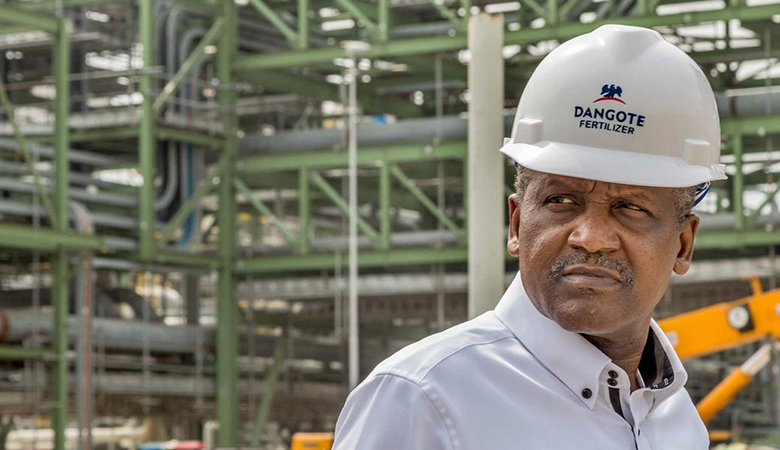
| 🇳🇬 Nigeria | Dangote (Lagos) | 650,000 | Start-up phase |
| 🇪🇬 Egypt | MIDOR (Alexandria) | 160,000 | Active |
| 🇦🇴 Angola | Luanda | 65,000 | Active / Expansion planned |
| 🇨🇮 Côte d’Ivoire | SIR (Abidjan) | 80,000 | Active |
| 🇿🇦 South Africa | Natref (Sasolburg) | 108,000 | Active |
| 🇸🇳 Senegal | SAR (Dakar) | 27,000 | Active / Modernisation |
| 🇬🇭 Ghana | TOR (Tema) | 45,000 | Partially operating |
| 🇨🇩 DR Congo | Socir (Kinshasa) | 20,000 | Reduced capacity |
| 🇬🇦 Gabon | Sogara (Port-Gentil) | 25,000 | Active |
Note: Many producing countries have no active refinery at all (e.g. Chad, Mauritania, Mozambique).
📉 2. Why is so little fuel produced locally?
⚠️ The main causes:
- Outdated infrastructure: some refineries date from the 1960s–70s.
- Poor maintenance: frequent breakdowns, unplanned shutdowns, low yields.
- Lack of investment: projects postponed or abandoned.
- Unstable regulatory environment: corruption, policy changes.
- Fuel subsidies: they undermine the profitability of investments.
- Import dependency that is more profitable in the short term.
🛠️ 3. Projects under way or planned
Africa is nevertheless experiencing a revival in refining, with several major projects:
🔹 Nigeria: the Dangote refinery
- Capacity: 650,000 b/d (the largest in Africa)
- Investment: over $19 billion
- Start-up phase (2024–2025)
- Goal: reduce fuel imports and supply West Africa
🔹 Angola:
- Expansion of the Luanda refinery
- Projects at Lobito, Cabinda and Soyo
🔹 Côte d’Ivoire:
- Expansion of the SIR in Abidjan
- Objective: exports to West Africa
🔹 Senegal:
- Modernisation of the SAR (Dakar)
- Project for a new refinery with Petrosen
🔹 Ghana:
- Ongoing rehabilitation of the Tema refinery (TOR)
Several modular mini-refineries are also planned or under construction (Nigeria, DR Congo, Mozambique), with capacities of 1,000 to 10,000 b/d.
💰 4. Why local refining is strategic
✅ Major advantages:
- Fewer imports and a lower foreign-currency bill
- Creation of skilled jobs (operators, engineers, maintenance)
- Stable local supply
- Greater energy independence
- Local value-added from crude
But this requires:
- Good governance
- Solid partnerships
- A long-term vision that takes the energy transition into account
🌍 5. Persistent challenges
❌ Environment:
- Refineries are often polluting if standards are not met
- Risk of accidents (fires, toxic releases)
❌ Profitability:
- Competition from modern refineries in India, the Middle East or Europe
- A need for strong national or regional demand to make projects viable
❌ Energy transition:
- Investing in long-lived fossil infrastructure raises questions
- Should we already be thinking about bio-refineries, hydrogen or low-carbon refining?
✅ Conclusion
The map of African refineries is changing, but many areas remain dependent on imports. Developing a modern, sustainable and regional refining capacity is key to the continent’s energy sovereignty.
With projects such as Dangote, the modernisation of the SIR and Angolan initiatives, Africa can become a transformation player, and no longer merely a crude exporter.