Gas Flaring in Africa: Monumental Waste and Climate Bomb
Gas flaring in Africa is both a colossal economic waste and a climate bomb. This report examines volumes, economic losses, health and climate impacts, structural drivers and solutions.
 By the editorial teamPetrole.Africa
Introduction: Africa's Dual Gas Flaring Crisis
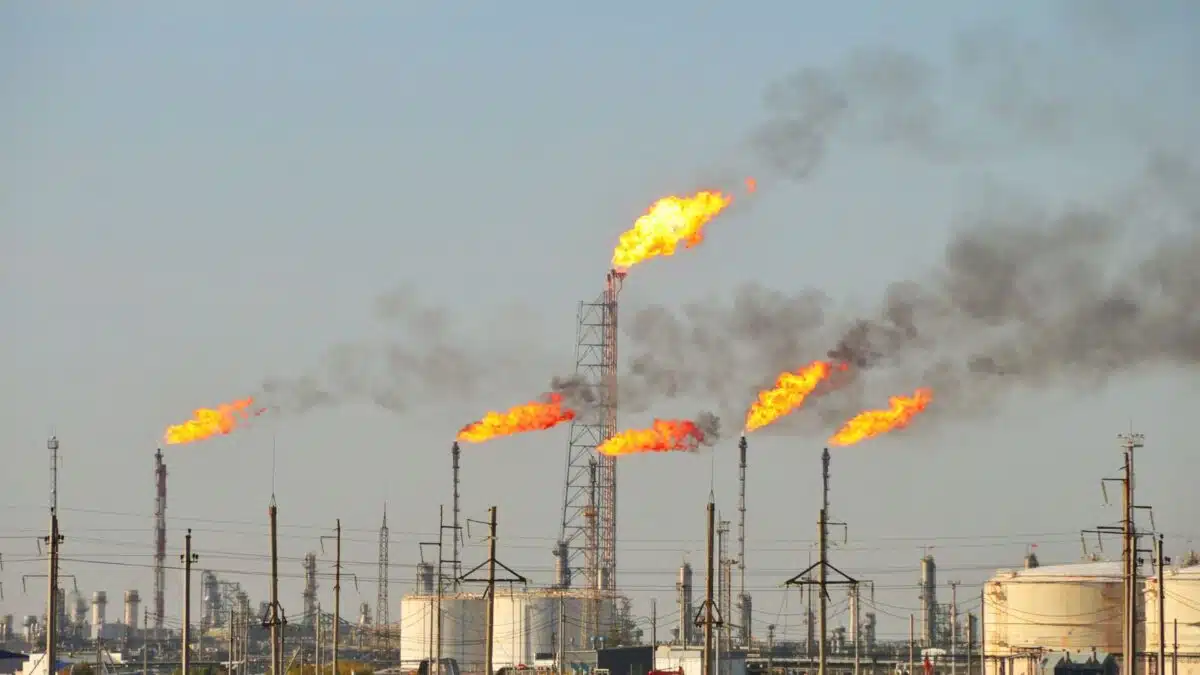
Gas flaring, defined as the controlled and deliberate burning of a combustible gas in a flare without any energy recovery, is a common practice in the oil and gas industry. While it can serve as an essential safety measure in emergencies or during maintenance operations, the vast majority of flaring is so-called "routine" or "production" flaring, which is the continuous and voluntary disposal of gas associated with oil. Associated gas is natural gas dissolved in crude oil that escapes as the pressure drops at the wellhead. This gas is composed mainly of methane, but also contains varying amounts of ethane, propane, butane and other alkanes. The distinction between routine flaring, which is avoidable and represents waste, and emergency flaring, which is necessary for safety, is fundamental to understanding the scale of the problem.
Africa is a major contributor to global flared gas volumes. In 2018, the continent flared approximately 40 billion cubic meters (Gm³) of gas per year, of which 35 Gm³ came from sub-Saharan Africa. This volume represents roughly half of the continent's total electricity consumption. Nigeria, in particular, is a striking example, with about 23 Gm³ of gas flared per year across more than 100 flaring sites, accounting for over 13% of global flaring. More recently, in 2024, Nigeria flared approximately 5.5 Gm³ of gas, or 4% of global flaring. These figures underscore the scale of the problem in Africa and its relevance to the global energy and climate debate.
This report argues that gas flaring in Africa is not a simple, unavoidable operational by-product, but a critical, multifaceted challenge. It represents a colossal economic waste, depriving the continent of valuable resources and hindering its development. At the same time, it acts as a powerful climate bomb, releasing significant quantities of greenhouse gases and harmful pollutants that devastate local environments and public health. Tackling this dual crisis is imperative for a sustainable and prosperous future in Africa.
I. The Monumental Waste: A Colossal Economic Loss
1.1. Flaring Volumes and Trends in Africa
Global flared gas volumes rose in 2023, from 139 Gm³ in 2022 to 148 Gm³, an increase of 7%. This is the highest figure recorded in the past five years, reversing the downward trend observed between 2021 and 2022. Africa is overrepresented among the leading flaring countries. In 2023, three African nations (Algeria, Libya and Nigeria) were among the nine top flaring countries worldwide, which collectively accounted for approximately 75% of global flared gas while producing only 46% of the world's oil.
The specific flared gas volumes in 2023 for these key African countries, based on World Bank data, are as follows:
- Algeria: 8.179 Gm³. Notably, Algeria achieved the largest flaring reduction among the leading countries in 2023, with a 5% (0.4 Gm³) decrease in volumes and a 3% reduction in flaring intensity. This improvement is attributed to the flare gas recovery projects implemented by Sonatrach, the national oil company.
- Libya: 6.801 Gm³. Unlike Algeria, Libya saw a significant 25% (1.4 Gm³) increase in flaring in 2023. This rise is directly linked to an increase in oil production without corresponding investment in gas recovery and utilization infrastructure.
- Nigeria: 5.786 Gm³. Although Nigeria remains a major flaring player, its 2023 volume (and 5.5 Gm³ in 2024 ) reflects a general downward trend from its 9.622 Gm³ volume in 2012.
Besides these three nations, other African countries were also among the top 30 in 2023, notably Angola (1.837 Gm³), Egypt (1.872 Gm³), the Republic of the Congo (1.671 Gm³), Gabon (1.187 Gm³), Cameroon (0.666 Gm³), Ghana (0.509 Gm³), Chad (0.212 Gm³), Equatorial Guinea (0.207 Gm³), Tunisia (0.185 Gm³), Sudan (0.133 Gm³), the Democratic Republic of the Congo (0.113 Gm³), Niger (0.038 Gm³), Côte d'Ivoire (0.036 Gm³) and South Africa (0.030 Gm³).
An analysis of historical trends from 2012 to 2023 reveals a mixed and often inconsistent picture of progress in Africa. Globally, despite increased international attention to reducing greenhouse gas emissions, flared gas volumes have largely stagnated over the past decade, hovering around 144 Gm³. This points to a disappointing lack of sustained global progress.
For African countries, the trends vary:
- Algeria: Flaring volumes have remained significant, ranging from 7.599 Gm³ in 2012 to 8.179 Gm³ in 2023, with a peak of 9.324 Gm³ in 2020. Flaring intensity (gas flared per barrel of oil produced) generally increased from 13.588 m³/bbl in 2012 to 18.942 m³/bbl in 2023, reaching a high of 22.759 m³/bbl in 2020.
- Libya: Flaring volumes fluctuated considerably due to geopolitical instability, falling from 5.945 Gm³ in 2012 to a low of 2.330 Gm³ in 2016, then generally rising to reach 6.801 Gm³ in 2023. Flaring intensity also fluctuated, generally staying between 11 and 16 m³/bbl.
- Nigeria: Nigeria showed a general downward trend in flaring volumes, from 9.622 Gm³ in 2012 to 5.786 Gm³ in 2023. Its flaring intensity remained relatively stable, at around 10-11 m³/bbl.
- Angola: Angola's flaring volume fell from 3.247 Gm³ in 2012 to 1.837 Gm³ in 2023, with intensity stable at around 4-7 m³/bbl.
- Gabon: Gabon consistently posted high flaring intensity, ranging from 16 to 23 m³/bbl throughout the period.
- Cameroon: Cameroon also shows consistently high flaring intensity, generally between 30 and 42 m³/bbl.
- Ghana: Ghana saw a significant increase in flaring volumes (from 0.035 Gm³ in 2012 to 0.509 Gm³ in 2023) and flaring intensity (from 1.241 m³/bbl to 8.716 m³/bbl).
This nuanced historical perspective is crucial for understanding the complex drivers of flaring and for tailoring future interventions. The persistence of high flaring intensity in countries such as Gabon and Cameroon, despite lower absolute volumes, points to underlying inefficiencies in gas management.
The following table presents flared gas volumes, flaring intensity and oil production for the main African countries concerned, providing an overview of trends from 2012 to 2023.
Table 1: Flared Gas Volumes (Gm³), Flaring Intensity (m³/bbl) and Oil Production (kbbl/d) for Major African Countries (2012-2023)
| Country | Flaring Volume 2012 (Gm³) | Flaring Volume 2016 (Gm³) | Flaring Volume 2020 (Gm³) | Flaring Volume 2023 (Gm³) | Flaring Intensity 2012 (m³/bbl) | Flaring Intensity 2016 (m³/bbl) | Flaring Intensity 2020 (m³/bbl) | Flaring Intensity 2023 (m³/bbl) | Oil Production 2012 (kbbl/d) | Oil Production 2016 (kbbl/d) | Oil Production 2020 (kbbl/d) | Oil Production 2023 (kbbl/d) |
|---|---|---|---|---|---|---|---|---|---|---|---|---|
| Algeria | 7.599 | 8.163 | 9.324 | 8.179 | 13.588 | 16.598 | 22.759 | 18.942 | 1218 | 1345 | 1122 | 1184 |
| Libya | 5.945 | 2.330 | 4.630 | 6.801 | 11.375 | 15.688 | 16.608 | 15.206 | 1431 | 408 | 764 | 1238 |
| Nigeria | 9.622 | 7.377 | 6.868 | 5.786 | 10.729 | 10.597 | 10.871 | 10.996 | 2457 | 1904 | 1740 | 1442 |
| Angola | 3.247 | 4.414 | 2.164 | 1.837 | 4.978 | 6.326 | 4.476 | 4.397 | 1787 | 1913 | 1320 | 1144 |
| Egypt, Arab Rep. | 2.668 | 2.296 | 2.062 | 1.872 | 11.391 | 9.943 | 10.231 | 9.088 | 560 | 633 | 566 | 598 |
| Congo, Rep. | 1.104 | 1.258 | 1.579 | 1.671 | 11.649 | 14.129 | 16.140 | 17.472 | 263 | 244 | 268 | 274 |
| Gabon | 1.344 | 1.378 | 1.487 | 1.187 | 16.010 | 17.514 | 23.162 | 15.918 | 230 | 216 | 173 | 186 |
| Cameroon | 0.770 | 0.902 | 0.812 | 0.666 | 33.487 | 33.916 | 30.655 | 33.813 | 63 | 72 | 73 | 54 |
| Ghana | 0.035 | 0.252 | 0.599 | 0.509 | 1.241 | 2.766 | 9.126 | 8.716 | 78 | 200 | 180 | 160 |
| Equatorial Guinea | 0.663 | 0.395 | 0.324 | 0.207 | 6.280 | 4.541 | 4.793 | 6.429 | 289 | 238 | 186 | 88 |
| Tunisia | 0.650 | 0.366 | 0.264 | 0.185 | 28.139 | 36.833 | 23.957 | 15.999 | 63 | 26 | 30 | 31 |
| Sudan | 0.181 | 0.407 | 0.147 | 0.133 | 5.176 | 11.080 | 6.326 | 5.340 | 127 | 100 | 64 | 68 |
| Dem. Rep. of the Congo | 0.113 | 0.116 | 0.115 | 0.113 | 16.301 | 17.525 | 16.592 | 16.301 | 20 | 18 | 19 | 19 |
| Niger | 0.053 | 0.089 | 0.046 | 0.038 | 7.240 | 10.158 | 17.151 | 17.151 | 20 | 24 | 7 | 6 |
| Côte d'Ivoire | 0.107 | 0.071 | 0.046 | 0.036 | 7.716 | 3.992 | 3.330 | 3.330 | 38 | 49 | 38 | 30 |
| South Africa | 0.027 | 0.030 | 0.032 | 0.030 | 27.351 | 31.849 | 30.655 | 67.779 | 2.8 | 2.6 | 2.8 | 0.9 |
Source: World Bank Group, 2024. Data extracted from.
1.2. Lost Revenue and Missed Opportunities
The economic cost of gas flaring is considerable worldwide. In 2018, the practice caused a global economic loss of US$20 billion. More recently, the potential market value of gas flared worldwide in 2023 is estimated at between US$9 billion and US$48 billion. Africa bears a significant share of this loss. For Nigeria, a country where flaring is substantial, PwC estimated a loss of 233 billion naira (US$761.6 million) due to gas flaring in 2018, representing 3.8% of total global costs. Over a five-year period (2014-2018), Nigeria consistently lost nearly one billion dollars a year to flaring. In 2020 alone, the estimated loss amounted to 439 billion naira. Ghana also faces considerable financial losses, estimated at about US$100 million worth of natural gas per year because of flaring activities.
The opportunity cost of flared gas is particularly striking in Africa, given its energy deficit. The quantity of gas flared each year worldwide (about 148 Gm³ in 2023) could, if captured and used in power generation facilities, supply the whole of sub-Saharan Africa. In 2020, 142 Gm³ of flared gas was enough to power the entire sub-Saharan continent. For Nigeria in particular, studies indicate that using only a portion (18.27 Gm³) of its annually flared gas could increase national electricity generation by 7,500 MW, potentially raising daily output from 4,358 MW to about 12,000 MW. The Nigerian Gas Flare Tracker (NGFT) reported that approximately 188,000 GWh of electricity was lost to gas flaring in Nigeria between January 2019 and December 2024. In 2024, the 5.5 Gm³ of gas wasted in Nigeria could have generated 30 billion kWh of electricity, potentially saving Nigerians 16.8 trillion naira in energy costs. Broader analyses suggest that if all flared gas were used as an energy source, it could cover up to 50% of Africa's total electricity needs. This situation highlights the missed opportunities to tackle energy poverty, a major development challenge in Africa, where 60% of the population has no access to electricity.
Associated gas, after processing, can be used in a variety of economically beneficial ways beyond power generation. It can be sold and fed into natural gas distribution networks, used for on-site power generation, reinjected into reservoirs for enhanced oil recovery, or converted into higher-value products. Specifically, associated gas can be turned into natural gas liquids (NGLs) or compressed natural gas (CNG) for transport and marketing. Small-scale LNG plants and integrated CNG systems are technically viable alternatives to flaring, particularly for smaller or remote fields. The gas can also serve as feedstock for petrochemical plants, producing valuable chemicals. Associated gas is notably richer in ethane, propane and butane than non-associated gas, making it particularly well suited to petrochemical applications. Industries such as aluminum and steel (through direct reduction) can also use associated gas. Gas-to-liquids (GTL) technology offers another route, converting natural gas into liquid synthetic fuels such as gasoline or diesel, which are easier to transport and market than gaseous methane. PetroSA in South Africa operates a GTL plant, and Chevron, in a joint venture with NNPC, is commissioning the Escravos GTL facility in Nigeria.
The consequences of gas flaring extend directly to the livelihoods of local communities, with a particular impact on agricultural productivity and reshaping local economies. In Nigeria, research demonstrates a direct, measurable negative impact on crop yields in areas near flaring sites. Proximity to a flaring site (within 20 kilometers) can cause a drastic reduction in agricultural productivity, of up to 61%. Even at distances of up to 60 kilometers, a drop in productivity is observed. The thermal effects of gas flaring are significant: rising ambient and soil temperatures make life and farming near flaring sites intolerable. Studies have recorded surface temperature increases of 3.7°C at 270 meters from flare points, and temperatures reaching 57.1°C within 40 meters, disrupting the thermal balance and directly affecting crop yields. These thermal impacts can extend more than 2 kilometers from the flaring source. In addition, flaring causes acid rain, which corrodes the metal roofs common in the Niger Delta, acidifies local lakes and streams, and can kill vegetation, further damaging farmland and water sources.
Gas flaring in Africa highlights a paradoxical phenomenon in which an abundant energy resource becomes a major obstacle to development. The continent, and sub-Saharan Africa in particular, faces a glaring energy deficit, with more than 600 million people lacking reliable access to electricity. Yet the volumes of gas flared annually are sufficient to power that entire region. This waste turns a potential asset into a liability, actively hindering progress toward the United Nations Sustainable Development Goals (SDGs) related to energy access, poverty eradication and economic growth. The persistence of flaring in this context is not merely an isolated technical or economic challenge, but a systemic failure of resource management and governance priorities.
Another crucial observation concerns the effectiveness of flaring penalties. Although governments such as Nigeria's impose and collect fines for gas flaring, and these penalties have even increased, flaring persists at significant levels. This is because the cost of the penalty is often lower than the investment required to capture, process and market the gas. This situation reveals a critical gap in the design and/or enforcement of regulatory frameworks. If flaring and paying a fine is cheaper than monetizing the gas, companies will rationally choose the former. This turns the penalty from a deterrent into a kind of "license to pollute" or an operating cost, financially implicating the government in the continuation of the practice and potentially reducing its political will to impose a complete ban or to invest in the necessary infrastructure.
Finally, the economic value of flared gas is steadily rising owing to shifts in the global energy market and technological advances. Historically, flaring was often considered more profitable than marketing the gas, because of a lack of local demand, absent infrastructure and the dispersion of production sites. However, the surge in natural gas prices and the emergence of innovative gas solutions have fundamentally changed this economic equation. The International Energy Agency (IEA) states that marketing flared gas could now be faster and cheaper than investing in new supply sources. Despite this favorable development, flaring persists, mainly because of "infrastructure shortages and outdated economic incentives". Problems such as the lack of gas gathering infrastructure and pressure imbalances continue to favor flaring. There is a growing mismatch between the potential economic attractiveness of gas monetization and the persistence of flaring, which points to deep systemic inertia. The challenge is no longer primarily technical or a simple matter of static economic calculation; it is about overcoming institutional resistance, legacy infrastructure deficits, and the need for robust regulatory and fiscal frameworks capable of forcing the transition from waste to value creation.
II. The Climate Bomb: Devastating Environmental and Health Impacts
2.1. Greenhouse Gas Emissions and Climate Forcing
Gas flaring is a high-temperature oxidation process designed to burn off residual combustible gases, mainly hydrocarbons. However, this combustion is rarely perfect, resulting in a complex mixture of emissions. The main greenhouse gases (GHGs) released are carbon dioxide (CO2) and unburned methane (CH4). Incomplete combustion also produces black carbon (soot), carbon monoxide (CO) and other partially burned or altered hydrocarbons. Beyond these substances, flaring can release nitrogen oxides (NOx) and, if sulfur compounds such as hydrogen sulfide (H2S) or mercaptans are present in the gas, sulfur dioxide (SO2). Volatile organic compounds (VOCs) are also emitted. This comprehensive list of emissions underscores the multiplicity of environmental and health threats posed by flaring, which go beyond CO2 alone to include a range of powerful climate forcers and toxic air pollutants.
Methane (CH4) is a particularly potent greenhouse gas, far more so than carbon dioxide in the short and medium term. According to the Intergovernmental Panel on Climate Change (IPCC), methane is more than 80 times more effective at trapping heat than carbon dioxide over a 20-year period. The IEA also stresses that methane has a much stronger global warming effect than CO2. Direct venting (releasing gas into the atmosphere without burning it) causes even more serious environmental damage than flaring, because all of the methane is released without combustion. It is crucial to note that conventional estimates often assume that flares operate with a methane destruction efficiency of 98%, but recent findings challenge these assumptions. If the "real" destruction efficiency of flares is lower (for example, 94%), methane emissions from gas flaring could triple conventional estimates. Studies have found that a significant percentage of flares may be unlit or malfunctioning, resulting in direct methane venting. This highlights the urgent and disproportionate climate threat posed by methane, particularly when flares operate inefficiently or are extinguished. It turns flaring from a simple source of CO2 into a "climate bomb" because of methane's short-term warming potential, underscoring the critical need to improve flare efficiency and leak detection.
Gas flaring is a significant global source of greenhouse gas emissions. In 2022, global flaring resulted in 500 Mt of CO2-equivalent (CO2e) GHG emissions per year. In 2023, flaring released more than 350 million tonnes of CO2e per year worldwide. By way of comparison, this volume of emissions exceeds the total emissions of the Egyptian economy for 2023. In Africa, gas flaring in Nigeria alone contributes about 45 million tonnes of CO2 per year, out of a global total of 400 million tonnes. Nigeria's methane emissions from oil and gas operations (including flaring, venting and leaks) exceed 439.8 kilotonnes per year and are among the highest on the continent. Beyond GHGs, black carbon emissions from flares are a concern. Research indicates that gas flaring emissions may contribute about 40% of annual black carbon deposition in the Arctic. Black carbon, despite its short atmospheric lifetime (a few days to a few weeks), has a very significant climate impact, notably by accelerating the melting of snow and ice in vulnerable regions such as the Arctic.
Gas flaring is a major contributor to global warming, not only through the volumes of CO2 emitted, but above all through the release of methane. The fact that flares are not always lit or operate inefficiently considerably aggravates the problem. This means that conventional emission estimates may be underestimated, because a significant share of the methane, a greenhouse gas much more potent than CO2 in the short term, is released directly into the atmosphere unburned. This situation turns flaring into a fast-acting "climate bomb". Satellite monitoring, although improved, must be supplemented by ground-based measurements for an accurate assessment of actual emissions, particularly of unburned methane.
2.2. Impacts on Air Quality and Public Health
The consequences of gas flaring for the health of local communities are serious and well documented. People living near flaring sites suffer from air and water pollution and are prone to conditions such as asthma and cancer as a result of inhaling flare smoke. In Nigeria, millions of people live within a few kilometers of flaring sites, some of which have burned continuously for more than 30 years. These flares emit up to 250 toxins, including particulates, sulfur dioxide, nitrogen oxides and carcinogens such as benzene, toluene, xylene and hydrogen sulfide. Exposure to these substances can cause cancers, blood disorders, aggravated asthma, respiratory symptoms (coughing, breathing difficulties), chronic bronchitis, reduced lung function and premature death.
Beyond the direct impacts on human health, gas flaring causes significant environmental degradation. Acid rain, resulting from sulfur and nitrogen emissions, corrodes metal roofs, acidifies lakes and streams, and can destroy vegetation, thereby affecting agriculture and local ecosystems. Thermal effects are also considerable: ambient and soil temperatures rise intolerably near flaring sites, disrupting the thermal balance and reducing crop yields. Surface temperature increases of 3.7°C have been observed at 270 meters from flares, with temperatures reaching 57.1°C within 40 meters. These impacts extend more than 2 kilometers from flaring sources.
The Niger Delta in Nigeria is an emblematic example of the devastating consequences of flaring. For decades, local communities there have endured the cumulative effects of air and water pollution, acid rain and the degradation of farmland. The constant proximity of flaring flames, which can rise several stories high and produce a deafening noise, creates an unlivable environment in which the distinction between day and night is blurred by the glow of the flames. This situation has led to a public health crisis and growing food insecurity, underscoring the human rights dimension of the problem.
The health and environmental impacts of gas flaring are all the more worrying because they disproportionately affect the most vulnerable populations. The fact that flares have burned continuously for decades, often a few hundred meters from homes, reveals a profound environmental injustice. The degradation of air quality and the contamination of essential natural resources (water, soil) undermine public health, food security and the livelihoods of local communities. This situation highlights a serious failure of the social responsibilities of operators and governments, who have allowed this harmful practice to persist at the expense of human well-being and ecological integrity.
III. Structural and Operational Drivers of Persistent Flaring
3.1. Economic Constraints and Lack of Infrastructure
Gas flaring persists in Africa for a variety of reasons, mainly related to economic constraints and a glaring lack of infrastructure. One of the main motivations for flaring is the absence of adequate gas infrastructure for the collection, processing and distribution of associated gas. Gas production is often scattered across a large number of wells, with low and irregular individual flow rates. Recovering and marketing this gas requires costly equipment, such as numerous compressors and an extensive pipeline network to gather the output.
The economic viability of gas recovery is often questionable. Oil sites are frequently located in remote and inaccessible areas, where associated gas production is not always steady or large enough to justify costly investments. In these cases, flaring is seen as the simplest and cheapest option for getting rid of the "unwanted" gas. The cost of eliminating all routine flaring could exceed US$100 billion. Traditional monetization solutions, such as gathering and pipeline transport, depend heavily on market access and economies of scale.
Moreover, local natural gas markets may be nonexistent or already saturated, which reduces the incentive to monetize associated gas. In some markets, such as Russia, gas prices are kept artificially low, discouraging the monetization of associated gas. Natural gas may also contain impurities (CO2, H2S) that make it unusable without costly purification, as is often the case in the Middle East. These factors increase the complexity and cost of commercialization, making flaring more "lucrative" for operators.
The infrastructure problem is particularly acute in Nigeria, where persistent gaps and poor interconnectivity hinder gas development and utilization. Challenges include transmission pressure problems along key pipelines, booster compression issues, and the unreliability of buyers in taking their allocated volumes. The limited capacity and reliability of Nigeria's power transmission grid frequently lead distribution companies to reject electrical load, thereby reducing gas offtake.
Together, these factors create a vicious circle in which the lack of infrastructure justifies flaring, and flaring, by making the gas "unprofitable", does not stimulate the necessary investment in that infrastructure. This situation is made worse by the fact that oil fields are often small and scattered, making gas gathering economically prohibitive for large-scale approaches. The challenge lies in the need to finance flaring reduction projects for medium-sized flares, which account for 60% of emissions but are too small for traditional large-scale approaches and too large for small-scale solutions.
3.2. Regulatory Framework and Governance
Gaps in the regulatory framework and governance are major factors in the persistence of flaring in Africa. Incomplete or insufficiently enforced laws and regulations create legal ambiguity over how associated gas should be used or treated. In Nigeria, for example, despite legislation dating back to 1979 setting deadlines for ending flaring, the country remains one of the world's largest flarers. The Nigerian Upstream Petroleum Regulatory Commission (NUPRC) has reaffirmed its commitment to eliminating routine flaring by 2030, but this goal faces persistent obstacles.
The ineffectiveness of penalties as a deterrent is a recurring problem. Regulations that impose penalties on companies that flare may not always be effective, especially if flaring and paying a penalty is cheaper than capturing and selling the gas. In Nigeria, although flaring fines have risen considerably, from 70.42 billion naira in 2022 to 391.26 billion naira in 2024, the flaring rate rose slightly, from 7.36% in 2023 to 7.64% in 2024. This indicates that, despite government efforts to enforce environmental compliance, flaring persists because of unresolved infrastructure and market bottlenecks.
The lack of transparency and monitoring is another challenge. Although some countries have reporting requirements, the reliability of the data can vary. The World Bank uses satellite data to estimate flaring volumes, but even these estimates can differ from figures reported by national oil companies, as in the case of Sonatrach in Algeria. The absence of accurate measurement systems and independent verification mechanisms makes it difficult to assess real progress and hold operators accountable.
The influence of international oil companies (IOCs) and national oil companies (NOCs) is a complex factor. The domination of Nigeria's oil industry by IOCs is considered a major reason for the failure of several environmental laws and flaring phase-out deadlines. The interests of joint-venture partners may not always align with flaring reduction goals. The World Bank's Global Gas Flaring Reduction (GGFR) partnership, although it aims to facilitate and support national efforts, has been criticized for not genuinely believing in a "zero flaring" regime but rather in gradual reduction, and for its insistence on neoliberal approaches that have not been effective in helping Nigeria achieve its zero-flaring goal.
In sum, regulatory and governance obstacles manifest as a lack of political will, ambiguous legal frameworks, insufficient penalties, ineffective oversight, and the influence of industry players who prioritize short-term profits over environmental sustainability and national development. The dependence of oil-producing countries on oil revenues can also undermine the enforcement of flaring reduction policies.
IV. Flaring Reduction Initiatives and Solutions
4.1. Flared Gas Monetization Technologies
Monetizing flared gas is essential to turning a waste product into a valuable resource, with a wide range of technological solutions available.
Gas-to-Power solutions are among the most direct and impactful. They involve capturing flared gas and using it as fuel to generate electricity on site. This approach can improve the reliability of the local power supply, avoid production shutdowns caused by exceeding permitted flaring limits, and reduce reliance on more polluting diesel generators. For example, in Nigeria, using part of the flared gas could increase electricity generation by 7,500 MW. Companies such as Aggreko have deployed gas-to-power solutions in Egypt, demonstrating the potential of this approach for local communities and for reducing operators' carbon footprint.
Liquefied natural gas (LNG) and compressed natural gas (CNG) projects make it possible to transport gas to more distant markets. LNG is produced by cooling natural gas to cryogenic temperatures to liquefy it, making it easier to ship. CNG, for its part, is natural gas stored under high pressure, suitable for transport by truck. These solutions are particularly relevant for remote fields where building pipelines is prohibitive. Sonatrach in Algeria operates multiple LNG complexes and has implemented flare gas recovery projects to reduce emissions. In Nigeria, developing LNG capacity and deploying floating infrastructure are key strategies for gas monetization.
Converting gas into liquid products via Gas-to-Liquids (GTL) technologies is another monetization route. GTL converts natural gas into longer-chain hydrocarbons, such as gasoline or diesel fuel, which are easier to transport and market than gaseous methane. The Fischer-Tropsch process is at the heart of many GTL facilities. South Africa, with PetroSA, and Nigeria, with Chevron's Escravos GTL facility, are examples of African countries that have implemented GTL projects. These GTL products are often of higher quality and have lower emissions than fuels derived from conventional oil.
Using associated gas as a feedstock for petrochemicals represents a significant opportunity. Associated gas is rich in ethane, propane and butane, essential components for producing petrochemicals. These plants can produce materials such as butadiene for synthetic rubbers, or aluminum and steel through direct reduction.
Modular gas processing solutions are gaining importance, offering greater flexibility and adaptability for capturing and monetizing flared gas, particularly for smaller volumes or scattered sites. These units can be deployed near the flaring source, minimizing the need for extensive infrastructure and reducing construction and installation costs. They can process flared gas to produce pipeline-quality natural gas, NGLs, methanol, electricity, or even serve as fuel for their own operations in remote locations. In Nigeria, GR2 Engineering deployed a first modular flare gas processing plant in 2023, able to operate with a zero-flaring option and adapt to various gas compositions. Companies such as Green Flare Holdings are developing "gas-to-data" solutions to convert flared gas into clean energy for modular data centers, including Bitcoin mining, with plans to expand into AI and high-performance computing.
4.2. Key Policies and Initiatives
Reducing gas flaring in Africa is supported by a variety of policies and initiatives, both national and international.
The World Bank's "Zero Routine Flaring by 2030" (ZRF) Initiative is a voluntary commitment launched in 2015, bringing together governments and oil companies to end routine flaring no later than 2030. The initiative aims to facilitate cooperation among stakeholders to identify and implement solutions, drawing on appropriate regulations, the application of technologies and financial arrangements. ZRF endorsers commit not to flare gas routinely in new oil field developments and to eliminate existing flaring as soon as possible. Progress is tracked through government and company reports, as well as satellite observations. African countries such as Angola, Cameroon, Gabon and Nigeria have joined the initiative.
The Nigerian Gas Flare Commercialization Programme (NGFCP) is Nigeria's flagship initiative to monetize its flared gas. Launched in 2016, it initially aimed to eliminate routine flaring by 2020, a target that was not met. In 2018, the government issued the Flare Gas (Prevention of Waste and Pollution) Regulations, which notably increased flaring fines. The NGFCP is a market-based initiative designed to allocate flare gas to competent third-party investors. In 2023, 49 flare sites were awarded to 42 companies tasked with capturing and using the flared gas through proven commercial technologies. The program aligns with the World Bank's goal of zero routine flaring by 2030 and with Nigeria's goal of reducing methane emissions by 60% by 2031.
International organizations play a crucial role in the fight against flaring. The World Bank's Global Flaring and Methane Reduction Partnership (GFMR) (formerly GGFR) is a multi-donor trust fund made up of governments, oil companies and multilateral organizations. The GFMR provides catalytic grants, technical assistance, policy and regulatory reform advice, institutional strengthening and fund mobilization to accelerate the deployment of flaring and methane reduction solutions. The
Climate and Clean Air Coalition (CCAC), in collaboration with UNEP, also supports countries in developing methane reduction profiles and roadmaps, including emissions from flaring. The
International Energy Agency (IEA) makes recommendations for reducing flaring, including the development of national roadmaps and a ban on non-emergency flaring.
Several African countries have put in place specific regulations. Algeria, for example, has a long history of combating flaring, with a ban on non-emergency flaring without a permit as early as 1966. Sonatrach has achieved significant flaring reductions through investments in more than 30 projects and has committed to reducing flaring to less than 1% of total gas production. Nigeria has also put in place strict requirements for reporting flaring data and penalties for inaccurate or incomplete data.
The commitment of governments and companies to ending routine flaring is a positive sign. However, implementing these initiatives faces persistent challenges. Overcoming commercial, organizational and political obstacles is essential if flare gas capture projects are to be carried out at scale. The World Bank stresses that success depends on a thoughtful, integrated and collaborative approach, supported by strong leadership and aligned incentives.
Conclusion
Gas flaring in Africa represents a dual crisis: a monumental economic waste and a devastating climate bomb. Flared gas volumes are considerable, with Algeria, Libya and Nigeria among the world's leading contributors. This waste translates into multibillion-dollar revenue losses for governments and companies, and into missed opportunities to generate electricity, power industrialization and create added value from a valuable resource. The paradox of a gas-rich continent suffering from a severe energy shortage is a glaring reality.
Beyond the economic losses, the environmental and health impacts are alarming. Flaring releases a toxic mixture of greenhouse gases (CO2, methane) and air pollutants (black carbon, NOx, SO2, VOCs). Methane, in particular, is a powerful greenhouse gas, more than 80 times more potent than CO2 over 20 years, and its direct release due to inefficient or extinguished flares considerably amplifies global warming. Communities living near flaring sites suffer serious health problems, acid rain and environmental degradation that affect their livelihoods, notably agriculture.
The structural and operational factors that perpetuate this practice are complex and interdependent. The lack of infrastructure for gas gathering, processing and distribution, combined with economic constraints (high capital costs for scattered fields, underdeveloped local markets, low gas prices) and technological challenges, makes gas monetization less attractive in the short term. Moreover, gaps in regulatory frameworks and governance, notably flaring penalties too low to deter the practice and a lack of transparency and monitoring, allow operators to continue flaring without significant economic consequences.
Despite these challenges, initiatives and solutions exist. Gas monetization technologies, such as Gas-to-Power, LNG/CNG production, GTL and petrochemicals, offer concrete paths to turn flared gas into a useful resource. Modular gas processing solutions are particularly promising for smaller, scattered fields. Global initiatives such as the World Bank's Zero Routine Flaring by 2030 (ZRF) and national programs such as Nigeria's NGFCP, supported by international organizations, aim to encourage and facilitate the elimination of flaring.
To overcome this dual crisis, concerted and bold action is needed. Governments must strengthen their regulatory frameworks by setting penalties high enough to make flaring economically unviable and by imposing strict monetization obligations. Massive investment in gas and power infrastructure is imperative, with priority given to modular and decentralized solutions for remote sites. Collaboration among governments, oil companies (IOCs and NOCs), financial institutions and civil society is crucial to align economic incentives with environmental and development goals. By turning flared gas from a waste product into a strategic resource, Africa can not only mitigate its climate impact, but also unlock considerable economic growth potential and improve energy access for millions of people.


 Sudan