Deepwater Offshore: The New Oil Frontier of the African Continent
Africa's deepwater offshore sector has emerged as a key frontier for global hydrocarbon supply, driven by major discoveries and technological advances.
 By the editorial teamPetrole.Africa
Executive Summary
Africa's deepwater offshore sector has rapidly emerged as an essential new frontier for the global hydrocarbon supply, driven by significant discoveries and technological advances. This development is crucial for the continent's energy future and for the diversification of global supply. While it offers substantial economic opportunities through revenue generation, job creation and infrastructure development, this expansion is also fraught with pitfalls. These include the high costs and technical complexities of deepwater operations, persistent governance problems leading to the "resource curse," and significant environmental and social risks. The strategic implications lie in the need to balance economic imperatives with sustainability goals in the context of a global energy transition.
1. Introduction: Defining Africa's Deepwater Offshore Frontier
The extraction of hydrocarbons at sea, referred to as "offshore," takes place "off the coast" and is carried out from platforms, whether fixed or floating, anchored to the seabed. The deepwater offshore sector is distinguished by operations conducted at water depths ranging from 400 to 1,500 meters, or even beyond in "ultra-deepwater," with current operations reaching 3,000 meters and targets set at 4,000 meters. These operations also involve drilling through several thousand meters of sediment to reach the reservoirs. While fixed platforms are generally used for depths of less than 300 meters, floating installations are indispensable for developing oil fields located in the deep sea.
Offshore production has become an essential component of the global energy supply, accounting for approximately 30% of global oil production. Deepwater development has grown rapidly since the 1990s, with its share of global oil production rising from 3% to around 6% since 2008. Africa, a long-standing hydrocarbon producer, has earned significant revenues from oil exploration since the mid-19th century. The continent holds vast crude oil reserves, with more than 2,400 hydrocarbon fields discovered, of which 700 are large enough for significant development.
Interest in West Africa's deepwater offshore, particularly from Angola to Côte d'Ivoire, was revived by the discoveries in Brazil's Campos Basin in 1984/85, which revealed similar geological settings along the eastern margin of the Atlantic Ocean. Systematic deepwater exploration in the Congo Basin (Angola) began in 1994, leading to exceptional success rates and considerable reserve additions.
The label "new frontier" for Africa's deepwater offshore does not mean the discovery of entirely unknown geological potential, but rather the reassessment and commercialization of resources previously considered uneconomic or technically inaccessible. Advances in geophysical survey techniques , progress in deepwater drilling technologies , and improved project profitability have made these resources exploitable. This momentum is also fueled by global demand for diversified energy sources. Thus, the "newness" of this frontier lies less in the discovery of virgin territory than in the evolution of industrial capabilities and market conditions. This points to a cyclical nature of resource exploitation, in which technological progress and a favorable market environment turn latent potential into concrete opportunities. This perspective is essential for understanding long-term sustainability and investment risks, as it underscores a continuing dependence on technological breakthroughs and market stability.
2. Africa's Deepwater Offshore Landscape: Key Discoveries and Players
Africa possesses vast hydrocarbon resources, with proven oil reserves reaching 125.3 billion barrels in 2021. The continent accounts for about 7% of global gas production. Hydrocarbon fields are concentrated mainly in two geographic areas: the West African coast (Niger Delta, Congo and Kwanza basins) and the North African basins (Algeria, Tunisia, Libya, Egypt), with other producing basins such as Senegal.
Namibia is recognized as one of the world's most important oil frontiers, with offshore reserves estimated at 20 billion barrels, concentrated in three major discoveries: Galp Energia's Mopane field (10 billion barrels), TotalEnergies' Venus-1X discovery (approximately 5.1 billion barrels) and Shell's Graff-1X and Jonker-1X fields (5 billion combined). These discoveries could propel Namibia into the world's top 10 oil producers by 2035.
Côte d'Ivoire has seen major deepwater discoveries, notably Eni's Baleine field (2.5 billion barrels of oil, 3.3 trillion cubic feet of gas) in 2021, the first commercial discovery in West Africa since 2001. Eni also discovered the Calao field.
Angola has recorded significant deepwater successes since 1994, with at least fifteen discoveries exceeding 200 million barrels of oil, including giants such as Girassol and Dahlia (>1,000 million barrels). Eni made a light oil discovery in Block 15/06 in 2021 (200-250 million barrels).
Nigeria's deepwater reserves are among the most promising in the world. The Bonga field, Nigeria's first deepwater field, has produced more than one billion barrels. Shell's Bonga North project holds approximately 300 million barrels of oil equivalent. Owowo West (peak production of 0.18 million barrels per day) and Bonga South West Aparo are other major Nigerian deepwater projects.
Gabon is actively reviving deepwater exploration, with 72% of its deepwater acreage still unexplored. BW Energy has made discoveries such as Hibiscus North and Bourdon in the Dussafu license.
Senegal and Mauritania are on track to become major hydrocarbon hubs, with projects such as Greater Tortue Ahmeyim (GTA) and Sangomar.
Mozambique is attracting global attention for its large offshore natural gas reserves, positioning itself as a major LNG export hub.
Ghana's Pecan field (peak production of 0.08 million barrels per day) and Eni's Eban discovery (500-700 million barrels) further underscore West Africa's potential.
Deepwater offshore development in Africa is concentrated mainly in specific regions such as West Africa and the Orange Basin, and in a few key countries such as Nigeria, Angola, Namibia, Côte d'Ivoire and Mozambique. This concentration is explained by favorable geological conditions, including an abundance of organic-rich source rocks, thick and clean sands, young structures and continuous hydrocarbon generation, which make these areas highly prolific. Deepwater "hinge lines" are particularly promising for exploration.
A strategic shift by international oil companies (IOCs) from onshore/shallow-water operations toward the deepwater offshore is observable. This reorientation is a direct response to the challenges encountered onshore, such as vandalism of onshore fields, infrastructure problems, pipeline theft and aging assets. This movement represents a risk-reduction strategy for IOCs, which are seeking safer, higher-potential assets, even if these are initially more technically complex and more expensive. This trend also creates opportunities for local companies to acquire the divested onshore assets, which could transform the national energy landscape.
The race for new frontiers and the role of oil "supergiants" are also striking aspects. Recent discoveries in Namibia are being compared to those in Guyana , and TotalEnergies' Venus discovery is presented as the company's most important in 20 years. Shell's discoveries in Namibia are also considered significant. This is part of a global trend in which deepwater "hot spots" are becoming the main source of non-OPEC oil growth. Success in these new areas pushes back the notion of "peak oil." This means that, despite the momentum of the energy transition, major oil companies continue to aggressively pursue large-scale hydrocarbon reserves to meet projected global demand. The emphasis is on "advantaged resources" with low production costs , which implies that even the high upfront costs of deepwater are justified by the scale and quality of the reserves. This dynamic also confirms that the "supermajors" (ExxonMobil, TotalEnergies, Shell, BP, Chevron) continue to dominate the deepwater offshore thanks to the technological and financial advantages required for these complex operations , thereby reinforcing their strategic importance in this field.
Table 1: Major Deepwater Offshore Discoveries and Reserves in Africa (by Country/Basin)
| Country/Basin | Field/Discovery Name | Main Operator | Estimated Reserves (Oil in Bn barrels / Gas in TCF) | Water Depth (m) | Year of Discovery/Status |
|---|---|---|---|---|---|
| Namibia | Mopane | Galp Energia | 10 Bn barrels | Not specified | 2024 (Discovery) |
| Namibia | Venus-1X | TotalEnergies | 5.1 Bn barrels | Not specified | 2022 (Discovery) |
| Namibia | Graff-1X, Jonker-1X | Shell | 5 Bn barrels (combined) | Not specified | 2022-2023 (Discoveries) |
| Côte d'Ivoire | Baleine | Eni | 2.5 Bn barrels, 3.3 TCF gas | 1200 | 2021 (Discovery) |
| Angola | Girassol, Dahlia | TotalEnergies | >1 Bn barrels (each) | Not specified | Post-1997 (Discoveries) |
| Angola | Block 15/06 | Eni | 0.2-0.25 Bn barrels | Not specified | 2021 (Discovery) |
| Nigeria | Bonga | Shell | >1 Bn barrels (cumulative production) | >1000 | 2005 (Production start) |
| Nigeria | Bonga North | Shell | 0.3 Bn barrels of oil equivalent | Not specified | 2025 (FID) |
| Nigeria | Owowo West | ExxonMobil | Not specified | 650 | 2012 (Discovery) |
| Ghana | Eban | Eni | 0.5-0.7 Bn barrels of oil equivalent | ~50 km from the coast | 2021 (Discovery) |
| Gabon | Hibiscus North, Bourdon | BW Energy | 0.046 Bn barrels (Hibiscus), 0.025 Bn barrels (Bourdon) | Not specified | 2019, 2024 (Discoveries) |
Export to Sheets
Table 2: Major Deepwater Offshore Projects and Operators in Africa (by Country)
| Country | Project Name | Main Operator | Key Partners | Start-up Year/Expected Peak | Estimated Peak Production (bpd or MMSCFD) | Water Depth (m) | FID Status | Estimated Capital Cost |
|---|---|---|---|---|---|---|---|---|
| Nigeria | Bonga North | Shell | NNPC, ExxonMobil, Nigerian Agip Exploration | Before 2030 | 110,000 bpd | >1000 | 2025 | USD 5 Bn |
| Nigeria | Usan | ExxonMobil | Not specified | Q2 2025 - 2027 | >50,000 bpd | Not specified | End of Q3 2025 | USD 1.5 Bn |
| Nigeria | Owowo West Upstream | Esso Exploration | ExxonMobil, TotalEnergies, CNOOC, NNPC, Chevron | 2025 (start), 2027 (peak) | 180,000 bpd | 650 | Not specified | Not specified |
| Côte d'Ivoire | Baleine | Eni | Petroci Holding | 2023 (Phase 1), 2024 (Phase 2) | 60,000 bpd (Phase 2), 150,000 bpd (Phase 3) | 1200 | Completed | >USD 15 Bn (total investment) |
| Angola | Cameia-Golfinho (Kaminho) | TotalEnergies | Sonangol, Petronas | 2028 | 70,000 bpd | Not specified | May 2024 | Not specified |
| Angola | Agogo Integrated West Hub | Azule Energy | Sonangol | Late 2025 | 120,000 bpd | Not specified | Not specified | Not specified |
| Senegal/Mauritania | Greater Tortue Ahmeyim (GTA) | BP | Kosmos Energy, SMHPM, Petrosen | Soon | Not specified | Not specified | Completed | Not specified |
| Senegal | Sangomar Phase 1 | Woodside Energy | Not specified | 2024 (start), 2025 (peak) | 100,000 bpd | 1180 | Completed | Not specified |
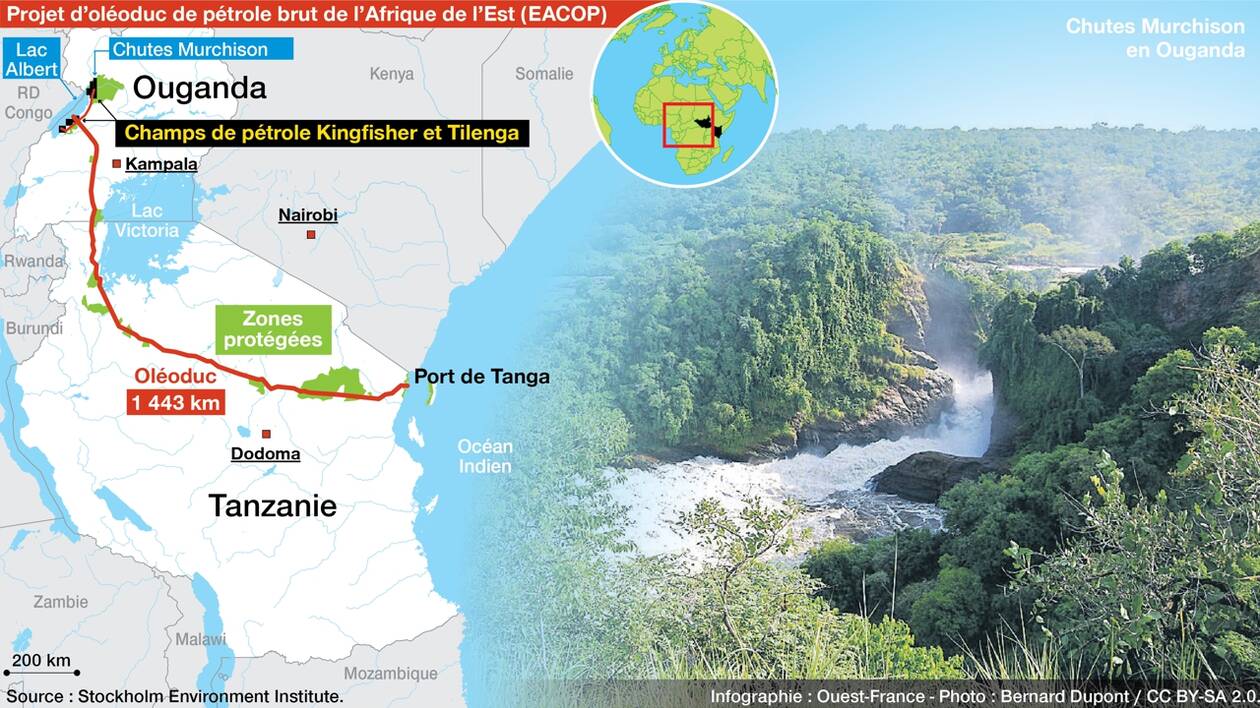
| Uganda | Tilenga | TotalEnergies | CNOOC, UNOC | 2025 (target) | 200,000 bpd (potential by 2030) | Onshore | 2022 | USD 4 Bn |
| Ghana | Pecan Field | Aker Energy Ghana | Ghana National Petroleum, Aker, TRG, Lukoil Oil, Bulk Ship & Trade | 2025 (start), 2027 (peak) | 80,000 bpd | Offshore | Not specified | Not specified |
| Gabon | Cap Lopez LNG Terminal | Perenco | Not specified | 2026 | 700,000 tonnes LNG, 25,000 tonnes LPG | Offshore | Not specified | USD 2 Bn |
Export to Sheets
Note: The data are based on information available in the research documents provided and may be subject to revision.
3. Technological Advances Enabling Deepwater Offshore Operations
The deepwater offshore industry is constantly evolving, driven by the need to exploit ever deeper and harder-to-reach deposits. The technical feats are impressive, making it possible to drill in more than two thousand meters of water and through several kilometers of sedimentary layers.
Innovations in drilling techniques are numerous and have transformed the sector:
- Directional drilling: This technique makes it possible to drill wells at different angles from a single site, efficiently accessing multiple reservoirs and reducing the environmental footprint. It allows several square kilometers to be exploited from a single platform without having to move vertically above each target.
- Automated drilling: AI-powered drilling systems reduce human error, improve safety and optimize efficiency, delivering efficiency gains of up to 20%.
- Rotary steerable systems (RSS): These tools have revolutionized drilling by providing real-time data and greater precision. They allow engineers to adjust the direction of the drill bit while drilling, ensuring better well placement, increasing the success of oil extraction and minimizing costly adjustments.
- Managed pressure drilling (MPD): This technique allows operators to control bottomhole pressure more precisely, which is crucial for preventing blowouts and solving drilling problems. MPD improves safety and efficiency, making complex projects more attractive to investors.
- Extended reach drilling (ERD): ERD makes it possible to drill wells over longer horizontal distances from the drilling site, accessing reservoirs far from the platform. This technique has significantly improved offshore drilling, reducing the need for multiple platforms and lowering surface impact and costs.
- Real-time data analytics: Advances in data analytics and machine learning, combined with downhole sensors, allow operators to collect enormous amounts of data on temperature, pressure and rock formations in real time. This enables informed decisions, optimization of drilling parameters and prediction of potential problems before they escalate.
Deepwater offshore operations depend heavily on specialized infrastructure and platforms because of the extreme depths and harsh marine conditions. Floating platforms are essential for operations at water depths greater than 300 meters. Key types include:
- Floating production, storage and offloading units (FPSOs): These are hull-shaped vessels that produce, process, store and offload oil. Anchored to the seabed, they can operate continuously in ultra-deep waters (up to 3,000 meters) for more than 20 years. FPSOs are particularly favored in remote or deepwater areas because they eliminate the need for costly long-distance pipelines to carry oil to shore. They can be redeployed to new fields once a reservoir is depleted, thereby maximizing the return on investment. Converted FPSOs are often chosen for their cost-effectiveness and shorter delivery times.
- Semi-submersible platforms: These platforms offer increased stability in rough waters and are commonly used for deepwater drilling and production activities.
- Drillships: These mobile vessels offer rapid mobility between drilling sites and hold their position using advanced dynamic positioning systems.
- SPAR platforms: These are vertically moored floating platforms, well suited to production in water depths ranging from 300 to 1,500 meters.
Subsea production systems are sophisticated underwater infrastructure that enables hydrocarbons to be extracted and processed directly from the seabed, considerably minimizing the need for large surface facilities and reducing the environmental footprint of offshore operations. Their key components include subsea wells, wellheads (valve assemblies controlling flow), manifolds (for collecting and distributing fluids), flowlines (subsea pipelines), umbilicals (providing power, communication and hydraulic control) and advanced subsea control systems. These systems are designed to withstand extreme pressures and temperatures and can be operated remotely, improving safety by minimizing personnel exposure to hazardous underwater environments.
The viability and expansion of Africa's deepwater offshore as a "new frontier" depend almost entirely on continued technological innovation and adaptation. The physical conditions of deepwater drilling (extreme depths of up to 3,000 m, with targets at 4,000 m, and hundreds of kilometers offshore) are inherently complex and demanding. The array of technological advances, such as dynamic positioning systems (DPS), advanced blowout preventers (BOPs), specialized drilling fluids, sophisticated subsea production systems, real-time data analytics and autonomous underwater vehicles (AUVs), are transformative elements. Their main function is to improve efficiency, reduce costs, enhance safety and extend access to reserves that were previously inaccessible or uneconomic. For example, FPSOs reduce the need for costly pipelines , and subsea systems minimize the surface footprint and personnel exposure to hazards. This deep reliance on technology implies a significant need for highly skilled labor, specialized engineering expertise and substantial R&D investment, which has direct implications for local content development and the long-term technological autonomy of African nations.
Furthermore, it is observed that the Gulf of Mexico has long served as a "test bed" for technologies that are subsequently deployed in other regions of the world. This suggests that technological advances in deepwater drilling are generally not developed in isolation for African projects, but are instead proven and refined in other mature deepwater basins (such as the Gulf of Mexico or Brazil's Campos Basin) before being applied to African deepwater operations. This process allows for the transfer of proven technologies and operational best practices, which can speed up deployment and reduce some development risks for African projects. While this global technology transfer is beneficial for rapid deployment and risk reduction, it also means that African countries may primarily be recipients rather than innovators of these cutting-edge technologies. To truly leverage the deepwater offshore sector for sustainable development, African nations must move from being mere beneficiaries to being promoters of their own technological capabilities and innovation ecosystems.
4. Economic Opportunities and Investment Dynamics
Deepwater oil and gas projects represent massive investments, often measured in billions of dollars per operation. Globally, companies are expected to invest nearly USD 104 billion in offshore this year, a figure expected to reach nearly USD 140 billion by 2027. Despite the high upfront spending, the average development cost of deepwater fields has almost halved over the past decade, from about USD 14/barrel to USD 8/barrel, thanks to a new, more efficient offshore model in the industry. This reduction in unit cost makes deepwater projects more economically competitive and attractive.
New deepwater discoveries, notably in Namibia, are considered "advantaged resources" because of their low production costs once developed. Major discoveries in Namibia, such as Venus (TotalEnergies) and Mopane (Galp), are expected to generate substantial subsea contracts (more than USD 2.5 billion for Venus). The development of its two main hydrocarbon discoveries is expected to double Namibia's GDP. Among specific investments, the Bonga North deepwater project in Nigeria represents a USD 5 billion investment , and ExxonMobil plans to invest USD 1.5 billion in the Usan field in Nigeria. The Tilenga project in Uganda is estimated at USD 4 billion. Overall, African oil and gas projects offer significant export revenue opportunities and tangible economic gains for society. Sustained high oil prices directly boost government revenues and foreign exchange reserves.
Oil exploration is a major source of revenue in Africa, capable of supporting economies and improving citizens' well-being. The oil and gas industry remains a primary driver of the continent's economic growth and development. Increased deepwater production in Nigeria is expected to stabilize foreign exchange earnings, contribute substantially to government revenues and strengthen national energy security. These projects are expected to create thousands of direct and indirect jobs, stimulate local supply chains and strengthen overall investor confidence in the region. Recent oil discoveries in Namibia could position it among the world's top 10 oil producers by 2035 and potentially double its economy. Mozambique's GDP is expected to increase by 6.5% thanks to gas investments, and Senegal hopes to sustain GDP growth of 8% over the next decade thanks to its upcoming oil and gas projects. Investment in African energy can generate funds that can be reinvested in other high-potential economic sectors, such as agriculture, mining, telecommunications, services and trade, creating a broader ripple effect of opportunities.
Governments in the deepwater "Golden Triangle" regions (e.g., Angola, Nigeria, Ghana, Congo, Equatorial Guinea) are actively using competitive fiscal terms to attract IOC investment. They often opt for a lower "government take" than for onshore operations to offset the increased risk and cost associated with deepwater exploration and production. Attractive fiscal terms include low upfront charges (such as low signature bonuses) and high cost-recovery ceilings (ranging from 60% to 100% of crude oil after royalties), as illustrated by Equatorial Guinea's deepwater production sharing contracts (PSCs). Nigeria has approved strategic incentives, including VAT exemptions on gas and tax credits for new investments in deepwater oil and gas. The Petroleum Industry Act (PIA) of 2021 reformed the legal and fiscal frameworks, simplifying licensing processes and offering clearer investment incentives. Gabon's 2019 Hydrocarbons Code changed fiscal terms and production shares to attract investment, with further revisions planned to strengthen competitiveness in the global deepwater offshore market. Smaller companies, in particular, benefit from mechanisms such as accelerated depreciation of subsea equipment.
There is a paradox between the high cost of projects and the lower unit cost, as well as strategic tax incentives. Deepwater projects are characterized by upfront investments of several billion dollars and "considerable technical and logistical complexity – and high costs." Yet the average development cost
per barrel has almost halved over the past decade. This apparent contradiction reveals a crucial economic dynamic: while the
total capital expenditure for deepwater projects is immense because of their scale and complexity, unit production costs (per barrel) have become more competitive thanks to continuous technological efficiency gains and optimized operating models. This makes the deepwater offshore more attractive, even with its high upfront capital requirements. African governments, understanding this reality, offer "attractive fiscal regimes" and "tax credits" to offset the initial risk and cost. This demonstrates a clear strategic understanding that their "government take" must be carefully balanced against investor profitability in order to attract the necessary foreign direct investment. It suggests fierce global competition for deepwater investment, in which African nations must continually refine their fiscal policies to remain attractive. The reduction in per-barrel costs also makes the deepwater offshore more resilient to oil price fluctuations, potentially ensuring more stable long-term revenue streams for host countries, provided that governance is stable and revenue management is effective. This dynamic underscores the sophistication required to balance national interests with the attraction of global capital.
Despite the economic opportunities, there is a tension between economic diversification and resource dependence. The economic benefits of oil and gas are significant, including GDP growth, foreign exchange earnings and job creation. Revenues can also fund crucial infrastructure and public services. However, there are repeated warnings about the "resource curse" and excessive dependence. The positive economic impacts are conditional on "appropriate" management and use of revenues and require the "right investment." The "resource curse" indicates that an abundance of non-renewable resources can paradoxically lead to lower economic growth, political instability, corruption and the neglect of other productive sectors. A key mechanism is "Dutch disease," where oil exports inflate the value of the national currency, making other exports uncompetitive and hindering diversification. The economic opportunities offered by the deepwater offshore are substantial, but they carry an inherent risk of exacerbating existing vulnerabilities if not managed strategically. The fundamental challenge for African nations is to leverage these deepwater revenues not only for immediate gains, but also to actively promote genuine economic diversification and avoid the pitfalls of resource dependence. This requires strong governance, transparent revenue management and long-term strategic planning that prioritizes investment in human capital and non-extractive industries.
Table 3: Economic Impacts of Deepwater Offshore in Africa: Opportunities vs. Challenges
| Category | Opportunities | Challenges |
|---|---|---|
| Revenue generation | Increased government revenues and foreign exchange reserves | Heavy dependence on resource revenues , volatility of global oil prices |
| GDP growth | Potential to double GDP (e.g., Namibia) , support for economic growth and development | Risk of the "resource curse" (lower economic growth) , "Dutch disease" (negative impact on other sectors) |
| Employment | Creation of thousands of direct and indirect jobs , stimulation of local supply chains | Job creation often exaggerated or temporary , skilled jobs often filled by outside workers , future automation |
| Investment attraction | Increased foreign direct investment (FDI) , greater investor confidence | High upfront project costs , high "above-ground" risks (political, operational) |
| Fiscal policy | Tax incentives and competitive regimes to attract IOCs | Need to strike a balance between government take and investor profitability |
| Economic structure | Potential for economic diversification through reinvestment of revenues , strengthened energy security | Resulting resource dependence , neglect of other productive sectors , vulnerability to external shocks |
| Infrastructure | Potential funding for infrastructure development | Existing infrastructure deficits increasing operating costs |
| Governance | Incentive for transparency and good governance to attract investment | Risk of corruption and mismanagement of funds , weakening of institutions |
5. Environmental and Social Implications
Deepwater offshore activities carry significant environmental risks, particularly in fragile ecosystems. Oil spills are a major concern, with potentially devastating consequences for marine life, ecosystems and coastal communities. Oil on the surface harms aquatic life by blocking sunlight and reducing dissolved oxygen; it destroys the insulating and waterproofing properties of feathers and fur, leading to hypothermia in birds and marine mammals; and ingested oil is highly toxic. Large spills can wipe out livelihoods, particularly for fishing communities. The 2010 Deepwater Horizon incident serves as a stark example of this devastation and its long-term impacts on marine populations.
Seismic surveys, which use air guns to generate seismic waves , are known for their negative effects on marine animals, causing disorientation, behavioral changes and even death. A 2016 incident in South Africa was linked to seismic surveys and a record number of marine animal strandings. Waste discharge is also a problem: exploration and production processes can introduce trace elements (e.g., cadmium, arsenic, mercury, copper, zinc, lead) into surface waters from deep aquifers, which are toxic to aquatic life and humans. The discharge of drilling fluids, air emissions, oily drill cuttings, gas flares and well treatment fluids also contribute to pollution. Finally, although deep-sea mining is specifically cited for its irreversible damage to ocean ecosystems and biodiversity , the principle of seabed disturbance and its impact on fragile ecosystems is highly relevant to deepwater offshore oil drilling. The presence of sensitive marine species such as sea turtles and coral reefs in affected areas raises significant concerns.
Mitigation strategies are being implemented to protect the environment. The industry applies a "dual barrier" philosophy to maintain containment, requiring two independently verified barriers between the hydrocarbon reservoir and the environment at all times. Blowout preventers (BOPs) are the primary safety devices, with advanced versions featuring multiple rams for redundancy and improved control. Casing offshore oil wells with nested steel tubes, cemented to the wellbore walls, together with centralizers, ensures well integrity and prevents leaks. Organizations such as OSRL (Oil Spill Response Limited) provide global industry cooperation for oil spill preparedness and response, offering technical expertise, comprehensive preparedness services, training and 24/7 response capabilities. Regulatory frameworks, such as South Africa's 2022 Marine Oil Pollution Act, formalize the country's commitment to global maritime safety standards, including a tiered spill response system (Tier 1: local, Tier 2: national, Tier 3: international assistance). This law requires the maintenance of response equipment, compliance, regular inspections and drills, and imposes heavy legal and financial penalties for non-compliance. The "polluter pays principle" ensures that responsible parties cover cleanup costs. Environmental impact assessments (EIAs) are legally required for such projects. The industry is developing and adopting environmentally friendly drilling methods, including biodegradable drilling fluids, water recycling systems and low-emission drilling rigs, to reduce environmental impact. Companies such as TotalEnergies aim for low greenhouse gas emissions in projects such as Tilenga and actively support biodiversity programs, including the reintroduction of the black rhinoceros.
The social impacts on local communities are also significant. Large-scale oil projects can lead to land expropriation and the displacement of thousands of families (e.g., 12,000 families for Total's project in Uganda/Tanzania). Coastal communities, particularly those that depend on fishing, express acute fears about the negative impacts of offshore activities on their livelihoods. The local influx of capital and labor associated with oil booms can put heavy pressure on public infrastructure (housing, water, sanitation), potentially leading to higher poverty rates, poor health care, high infant mortality rates, gender and economic inequalities, and crime in host communities. Trace elements introduced during exploration processes can also be toxic to humans. Significant disparities between the wealth generated by the oil industry and the limited benefits perceived by local populations, combined with restricted local job opportunities, can fuel social unrest and resentment. The "resource curse" often manifests itself in social problems and conflicts over resource control and benefit sharing. Many coastal communities have deep spiritual and cultural ties to the ocean, which can be profoundly disrupted by offshore industrial activities, including seismic surveys and drilling.
To mitigate these impacts, local content development initiatives and benefit-sharing mechanisms are being put in place. African nations are increasingly implementing and strengthening local content policies that require greater participation by local companies and professionals in the energy sector. Nigeria's Local Content Act (2010) targets a local content ratio of 70% by 2027 , while Senegal aims for 50% by 2030. When implemented effectively, local content policies can reduce operating costs for companies (by decreasing reliance on expatriate labor), mitigate supply chain risks, ensure knowledge transfer, strengthen national industrial capacity and create jobs. Companies such as Renaissance Africa Energy Holdings are committed to reinvesting a percentage of their revenues in host communities, focusing on education, health care and economic empowerment programs. TotalEnergies emphasizes early stakeholder dialogue and a comprehensive, integrated approach to local development. Such community engagement programs are considered crucial for obtaining and maintaining a "social license to operate." However, despite the promises, job creation by oil and gas projects is often exaggerated, and many of the jobs created are short-lived or are filled by outside workers who have the necessary skills.
Conclusions
Africa's deepwater offshore is proving to be a complex and dynamic energy frontier, essential to the global hydrocarbon supply and to the continent's economic development. The transformation of previously inaccessible resources into viable opportunities is the result of continuous technological progress, which makes it possible to operate in extreme environments with greater efficiency and safety. This reliance on technology underscores the need for African nations not only to welcome foreign investment, but also to develop their own technical and innovation capabilities.
The economic opportunities are considerable, with billions of dollars in investment, substantial government revenues, GDP growth and job creation. However, these benefits are inherently tied to countries' ability to manage the "resource curse" effectively. Without robust governance, greater transparency and strategic revenue management, oil wealth risks exacerbating inequality, corruption and economic dependence rather than fostering sustainable diversification.
The environmental and social implications are equally profound. The risks of oil spills, the impacts of seismic surveys on marine life and the disruption of local communities are major concerns. Although mitigation measures and regulatory frameworks are in place, their rigorous enforcement and the strengthening of local capacity are essential. Local content development and benefit-sharing mechanisms are crucial levers for ensuring that local populations derive tangible benefits from this industry, thereby fostering a lasting "social license to operate."
In sum, Africa's deepwater offshore represents a significant growth opportunity, but its long-term success will depend on the ability of governments and companies to navigate a delicate balance between economic imperatives, technological innovation, and environmental and social responsibility. The way forward requires strategic planning that transcends short-term gains in order to build resilient, diversified economies, while protecting ecosystems and ensuring the well-being of communities.


 Sudan
 Uganda