Oil and Gas in Senegal: Current Status and Future Outlook
Senegal has entered a new economic era with the start of oil and gas production: Sangomar began producing in June 2024 and Greater Tortue Ahmeyim began LNG output in February 2025.
 By the editorial teamPetrole.Africa
Executive Summary
Senegal has entered a new economic era, marked by a decisive turning point with the recent start of oil and gas production. The offshore Sangomar oil field began production in June 2024, already exceeding annual forecasts, while the Greater Tortue Ahmeyim (GTA) gas project began LNG production in February 2025, with the first cargoes exported in April. These major developments are complemented by the Yakaar-Teranga project, whose Final Investment Decision (FID) is expected in 2025, and which is strategically oriented toward domestic consumption and export.
The sector is governed by an evolving and transparent regulatory framework, with PETROSEN playing a central role and the Extractive Industries Transparency Initiative (EITI) ensuring good governance of revenues. Hydrocarbons are expected to significantly boost Gross Domestic Product (GDP), although state revenue forecasts have shown recent variations, underscoring the volatility inherent in commodity markets. Significant challenges remain, notably the management of environmental impacts, in particular methane emissions and the protection of marine ecosystems, as well as the social concerns of fishing communities. The need to maximize local content and diversify the economy is also paramount. The national strategy integrates these resources into the Plan Sénégal Émergent (PSE) and the "Gas-to-Power" vision to ensure energy security and sustainable growth, while seeking to balance hydrocarbon exploitation with energy transition objectives.
1. Introduction: Senegal's Emergence on the Global Energy Stage
Senegal is now positioning itself as an emerging player on the global energy map, a transformation made possible by significant hydrocarbon discoveries off its coast. Between 2014 and 2017, the country revealed major deepwater oil and natural gas deposits, notably the Sangomar field (formerly SNE) in 2014 and the Greater Tortue Ahmeyim (GTA) gas project in 2015. These discoveries quickly propelled Senegal into the ranks of future key players in global energy. The Sangomar field, located about 100 km south of Dakar, is the country's first offshore oil development , while the GTA gas project is a joint effort with Mauritania, straddling their shared maritime border.
The strategic importance of these resources for national economic development is considerable. The exploitation of these deposits is expected to boost the Senegalese economy significantly. This development is seen as a major strategic opportunity to diversify the country's economy, traditionally dependent on sectors such as agriculture, fishing, tourism and phosphates. Beyond simple revenue generation, the aim is to strengthen Senegal's energy independence and stabilize national energy costs, factors essential for sustainable economic growth and improved living conditions for the population.
The rapid transition from "major discoveries (2014-2017)" to the entry into a "new economic phase" and the status of a "future key player" in the global energy sector illustrates a fundamental reorientation of national economic strategy. This accelerated progress toward monetizing the resources, with production starting at Sangomar in June 2024 and at GTA in February 2025 , indicates a deliberate and ambitious approach on the part of the Senegalese government. This speed of implementation suggests recognition of the narrow window of opportunity in the context of the global energy transition. Indeed, these resources are seen not only as a source of revenue, but also as a catalyst for a structural transformation of the economy, moving it beyond its traditional sectors. This long-term vision aims to ensure more robust and diversified development for the country.
2. Reserves and Major Projects: Foundations of Future Production
Senegal has significant oil and gas reserves, which form the basis of its energy ambitions. These resources are at the heart of several major projects that define the sector's current and future landscape.
2.1. Proven Oil and Natural Gas Reserves
For oil, recoverable resources in the Sangomar block (formerly SNE) are estimated at 0.9 billion barrels, including 530 million barrels for the Sangomar field and 330 million barrels for the FAN field. More specifically, the Sangomar field alone holds proven reserves of 630 million barrels.
For natural gas, the Greater Tortue Ahmeyim (GTA) field is estimated to contain approximately 20 TCF (or 530 billion m3) of natural gas, with recoverable reserves of approximately 15 TCF (425 billion m3). The Yakaar-Teranga field is estimated at approximately 15 TCF or even 25 TCF of gas in place according to Kosmos Energy. Nationally, Senegal's gas reserves are assessed at "a little under 1,000 billion m3." However, it is important to note that the figure of 910 billion m3, often cited, is considered by Africa Check to be an estimate rather than proven reserves, which introduces some uncertainty regarding the final figures. The projected recoverable resources for Senegal as a whole are estimated at 560 billion cubic meters of natural gas.
The disparity observed in gas reserve figures, notably for Yakaar-Teranga (between 15 TCF and 25 TCF) and for overall national reserves (910 billion m3 as an estimate versus "a little under 1,000 billion m3"), represents a significant issue. The fact that a source such as Africa Check explicitly stresses that the figure of 910 billion m3 is an "estimate and not proven reserves" is a crucial point. This observation indicates that, although Senegal has considerable gas potential, the exact extent of
proven reserves is still being verified or assessed. Such discrepancies can create uncertainty for potential investors and complicate long-term revenue planning. For the Senegalese government and PETROSEN, it is therefore essential to standardize and transparently communicate proven reserve figures. Any ambiguity can indeed lead to unrealistic public expectations and hinder strategic planning, particularly when seeking financing or negotiating future partnerships.
2.2. The Sangomar Oil Project: Progress, Production Capacity and Achievements
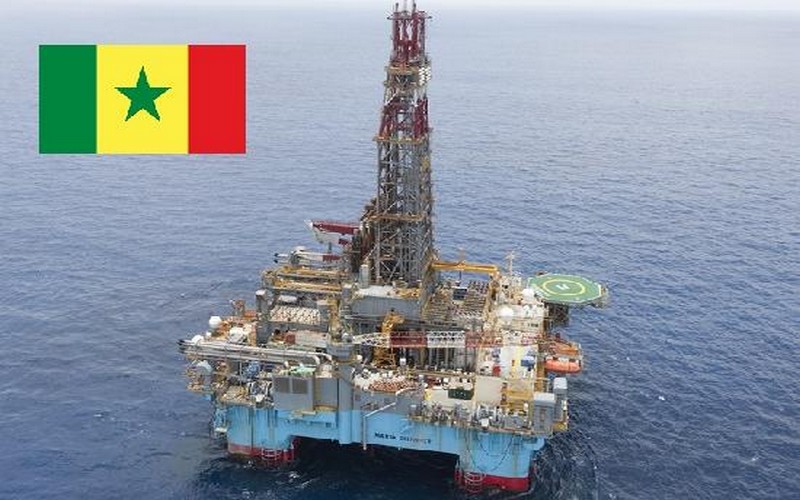
The offshore Sangomar oil field is a major milestone for Senegal. It has been in operation since June 2024, marking the country's official entry into the era of oil production. The Final Investment Decision (FID) for Phase 1 of this project was reached in January 2020. A key element of this development was the conversion of a very large crude carrier (VLCC) into a floating production, storage and offloading unit (FPSO), named Léopold Sédar Senghor, specifically designed to process hydrocarbons and store oil.
In terms of capacity and achievements, the Sangomar project has a daily production target of 100,000 barrels of crude oil. Annual oil production in 2024 was initially expected to reach 15 million barrels , but the field exceeded these targets by producing 16.9 million barrels. As of December 1, 2024, cumulative crude oil production at Sangomar had already reached 14 million barrels. In January 2025, monthly production stood at 3.11 million barrels, of which nearly 93% was destined for export. Overall forecasts for 2025 remain ambitious, with an estimated 30.53 million barrels to be produced. Phase 1 of the project aims to recover approximately 230 million barrels of oil.
The Sangomar project is operated by Woodside Energy, which holds an 82% interest. Senegal's national oil company, PETROSEN, holds an 18% interest in the project. Historically, the Rufisque Offshore, Sangomar Offshore and Sangomar Deep Offshore (RSSD) joint venture included Cairn Energy (40%), Woodside Energy (35%), FAR (15%) and Petrosen (10%). Woodside has since acquired Cairn Energy's stake.
The fact that Sangomar "exceeded its annual forecasts with 16.9 million barrels produced" and reached a cumulative 14 million barrels as early as November 2024 sends a strong positive signal. This early outperformance is of critical importance. It not only validates the success of the project's technical execution, but also suggests that revenue streams for the Senegalese government could materialize more quickly, or in larger initial volumes, than expected. This strengthens the confidence of international investors and provides immediate fiscal space to finance national development programs. Quickly achieving and exceeding production targets helps consolidate Senegal's reputation as a reliable emerging producer, which could attract further foreign direct investment in other sectors or in future phases of hydrocarbon development. It also positions Senegal more firmly in global energy markets.
2.3. The Greater Tortue Ahmeyim (GTA) Gas Project: Operations, LNG Capacity and Timeline
The Greater Tortue Ahmeyim (GTA) project is a central element of Senegal's gas strategy, and it is significant for its cross-border nature. It is a floating liquefied natural gas (LNG) terminal intended for export, located on the maritime border between Senegal and Mauritania and owned by both countries. The Final Investment Decision (FID) for Phase 1 was taken in 2018. The start of operations was expected in early 2025 , and LNG production did indeed begin in February 2025. The first LNG cargo was transferred from the FLNG Gimi to the LNG carrier British Sponsor in April 2025. The second and third cargoes followed in May and early June 2025, and a fourth is currently being loaded, with 3.5 cargoes expected to be delivered in the second quarter.
In terms of capacity, Phase 1 of GTA is designed to produce between 2.5 and 3 million tonnes per annum (mtpa) of LNG , or more precisely 2.7 mtpa. Ultimately, the project aims for production of 10 million tonnes of LNG per year. Phase 2 of the project is planned to double output to 5 mtpa. The field itself contains approximately 20 TCF of natural gas.
The project is being developed by a consortium of partners. BP is the lead operator, holding a 56% interest in the upstream phase and 60% in the midstream phase. Kosmos Energy holds 27% upstream and 30% midstream. PETROSEN, Senegal's national company, participates with 9% upstream and 5% midstream, while the Société Mauritanienne des Hydrocarbures (SMH) holds 8% upstream and 5% midstream. The Gimi FLNG floating unit is owned and operated by Golar LNG, and is leased to the GTA project.
The cross-border nature of the GTA project, shared between Senegal and Mauritania , is a significant aspect. The successful execution of GTA demonstrates the ability of Senegal and Mauritania to collaborate effectively on complex, large-scale energy projects. This sets an important precedent for future regional energy initiatives, fostering stability and the sharing of economic benefits in West Africa. Furthermore, it positions the region as a reliable source of LNG for international markets, particularly Europe. The successful management of a shared resource such as this can strengthen geopolitical stability in the region and improve the overall investment climate by demonstrating a predictable and cooperative framework for resource development, a challenge often encountered in shared offshore basins.
2.4. The Yakaar-Teranga Gas Project: Final Investment Decision (FID) Status and Domestic/Export Potential
The Yakaar-Teranga gas project is another crucial component of Senegal's energy strategy, with a particular focus on domestic supply. The Final Investment Decision (FID) for this project is a highly anticipated milestone, expected in the first quarter of 2025 or mid-2025. Initially, gas production from Yakaar-Teranga was planned for 2024.
The Yakaar-Teranga field is located entirely in Senegalese waters, south of the GTA project. It is recognized as one of the largest gas discoveries of recent years, with Kosmos Energy estimates indicating approximately 25 TCF of gas in place. The project has a dual purpose: to supply gas at a competitive cost to the domestic market, notably for power generation, and to produce LNG volumes for export. Domestic natural gas production is specifically planned to reach 4 million cubic meters per day.
As for partners, Kosmos Energy took over the operator role in 2023 and now holds a 90% interest in the project. PETROSEN holds the remaining 10%. A notable event was BP's withdrawal from the project in 2023, following disagreements with the Senegalese government over the use of the gas. While BP favored export, Senegal insisted on domestic use to fuel its power plants.
BP's withdrawal from the Yakaar-Teranga project, due to a disagreement over the use of the gas (export versus domestic power generation) , is a strong indicator of Senegal's strategic priorities. This event signals a clear policy orientation of the Senegalese government: domestic energy security and industrial development take precedence over immediate export revenues for this specific field. The emphasis on the "Gas-to-Power" strategy is not just a concept, but a non-negotiable policy, even at the price of losing a major international player. This approach reflects a commitment to reducing dependence on imported heavy fuel oil and stabilizing energy costs. While it may deter some export-focused investors, this clear stance could attract partners aligned with Senegal's long-term vision of domestic value addition and energy self-sufficiency. It redefines the risk-reward profile for future investments in Senegal's gas sector, placing emphasis on alignment with national development objectives.
Table 1: Summary of Major Oil and Gas Projects in Senegal
| Project Name | Type of Hydrocarbon | Estimated Reserves | Production Capacity (Target) | Current Status | Timeline (Production Start / FID) | Main Partners (Operator and Key Interests) |
|---|---|---|---|---|---|---|
| Sangomar | Oil (with associated gas) | 0.9 Bn barrels (total RSSD block), including 530 M barrels (Sangomar) and 330 M barrels (FAN). Proven reserves: 630 M barrels. | 100,000 barrels/day. 16.9 M barrels produced in 2024. 30.53 M barrels forecast in 2025. | Operational | June 2024 (production). Phase 1 FID: January 2020. | Woodside Energy (Operator, 82%) , PETROSEN (18%). |
| Greater Tortue Ahmeyim (GTA) | Natural Gas (LNG) | 20 TCF (530 Bn m3). Recoverable reserves: 15 TCF (425 Bn m3). | Phase 1: 2.5-3 mtpa LNG. Long-term target: 10 mtpa LNG. Phase 2: 5 mtpa LNG. | Operational | February 2025 (LNG production). First cargoes: April 2025. Phase 1 FID: 2018. | BP (Operator, 56% upstream, 60% midstream) , Kosmos Energy (27% upstream, 30% midstream) , PETROSEN (9% upstream, 5% midstream) , SMH (Mauritania) (8% upstream, 5% midstream). |
| Yakaar-Teranga | Natural Gas | Approximately 15 TCF or 25 TCF (gas in place). | 4 million m3/day (domestic market). LNG export planned. | FID pending | FID: Q1 2025 or mid-2025. Production originally planned for 2024. | Kosmos Energy (Operator, 90%) , PETROSEN (10%). BP withdrew in 2023. |
Note: TCF = trillion cubic feet; mtpa = million tonnes per annum; bpd = barrels per day; Bn = billion; M = million.
3. Regulatory Framework and Sector Governance
The success and sustainability of Senegal's oil and gas sector rest on a solid regulatory framework and transparent governance principles.
3.1. Evolution of the Legislative Framework (Petroleum and Gas Codes)
Senegal has put in place a constantly evolving legislative framework to govern its hydrocarbons sector. The new Petroleum Code, promulgated by Law No. 2019-03 of February 1, 2019, and its implementing decree (Decree 2020-2061 of October 27, 2020), replaced the previous legislation dating from 1998. In parallel, Law 2020-06 of February 7, 2020, establishing Senegal's Gas Code, sets out the regulations specific to the development of gas resources. This code stresses compliance with standards of quality, safety, and environmental preservation and protection, adopting a sustainable development perspective. In addition, Law No. 2022-09 of April 19, 2022 was specifically adopted to govern the allocation and management of revenues from hydrocarbon exploitation. It is fundamental to recall that Senegal's Constitution, in Article 25-1, affirms that "Natural resources belong to the people. They are used to improve their living conditions" , thus laying the foundations for management oriented toward national well-being.
The rapid succession of new laws, such as the 2019 Petroleum Code, the 2020 Gas Code and the 2022 Revenue Management Law, following the major discoveries between 2014 and 2017, reflects a proactive and adaptable legislative approach on the part of the Senegalese government. This legislative agility suggests a firm determination to establish a robust and modern governance framework before full-scale production is reached. This sends a positive signal to investors, as it reduces regulatory uncertainty and indicates a structured approach to resource management, aimed at avoiding what is often called the "resource curse" observed in other emerging producers. The emphasis on "transparency" and "sustainable development" within these codes reinforces this orientation. A well-defined and continually evolving legal framework is essential to ensure the long-term stability and predictability of the sector, which is vital to attracting sustainable foreign investment and guaranteeing an equitable distribution of benefits.
3.2. The Role of PETROSEN and Public-Private Partnerships
PETROSEN Exploration & Production (EP) is the cornerstone of Senegal's hydrocarbons strategy. As a state-owned company 99% held by the State , PETROSEN EP is responsible for implementing Senegal's oil and gas policy in the upstream segment, playing a central role in the development of these activities. Its missions are broad and cover the entire exploration and production cycle. They include promoting sedimentary basins to potential investors, carrying out prospecting and research activities, drilling and field development, production of liquid and gaseous hydrocarbons, management of infrastructure and authorizations, as well as transport and logistics. PETROSEN EP's strategic objectives are clear: to secure national hydrocarbon production in quantity and quality, to guarantee Senegal's energy supply at competitive costs, and to foster economic development through efficient and responsible resource management.
Major projects such as Sangomar and GTA are concrete examples of successful public-private partnerships, involving PETROSEN alongside major international companies such as Woodside Energy, BP and Kosmos Energy. PETROSEN holds significant interests in these projects: 18% in Sangomar , 9% upstream and 5% midstream in GTA , and 10% in Yakaar-Teranga. Senegal has also expressed its intention to increase its share of Sangomar oil , underscoring a strategy aimed at maximizing national benefits from these operations.
3.3. Transparency and Good Governance Initiatives (EITI)
Transparency and good governance are fundamental pillars of extractive sector management in Senegal. The country is an active member of the Extractive Industries Transparency Initiative (EITI), an international standard designed to improve transparency in the management of revenues from mining, gas and oil resources. In this spirit, Senegal has committed to publishing all of its oil contracts.
The 11th EITI report for 2023 highlights the contribution of the extractive sector, which amounted to 380.03 billion FCFA in 2023, of which 346.19 billion FCFA was allocated to the State budget. More specifically, the hydrocarbons sector contributed 30.65 billion FCFA in 2023, an increase of 5.95 billion FCFA compared with 2022, mainly thanks to payments made by Woodside Energy Senegal and BP Senegal in connection with the GTA project.
Senegal's EITI membership and the publication of its oil contracts are not mere compliance, but a strategic approach aimed at building trust and mitigating the risks often associated with extractive industries. This level of transparency is an essential mechanism for fighting corruption, managing public expectations and ensuring accountability in revenue management. For international investors, it signals a lower-risk environment, as it provides greater clarity on financial flows and regulatory compliance, thereby distinguishing Senegal from other emerging producers. This approach also aligns with global best practices in responsible resource governance. By proactively embracing transparency, the government seeks to obtain and maintain a "social license to operate" for the industry. This can help prevent social unrest and disputes over resource benefits, problems that have plagued other resource-rich nations, thereby contributing to long-term operational stability.
Table 2: Key Players and Their Interests in the Sangomar and GTA Projects
| Project | Current Operator | Partners (Current Interests) | Notes |
|---|---|---|---|
| Sangomar | Woodside Energy | Woodside Energy (82%) , PETROSEN (18%) | Historically, Woodside (35%), Cairn Energy (40%), FAR (15%), PETROSEN (10%). Woodside acquired Cairn's stake. Senegal increased its share. |
| Greater Tortue Ahmeyim (GTA) | BP | BP (Upstream: 56%, Midstream: 60%) , Kosmos Energy (Upstream: 27%, Midstream: 30%) , PETROSEN (Upstream: 9%, Midstream: 5%) , SMH (Mauritania) (Upstream: 8%, Midstream: 5%) | The Gimi FLNG is owned and operated by Golar LNG. |
| Yakaar-Teranga | Kosmos Energy | Kosmos Energy (90%) , PETROSEN (10%) | BP withdrew in 2023 due to disagreements over gas use (export vs. domestic). |
4. Economic Impact and Hydrocarbon Revenue Management
The exploitation of Senegal's oil and gas resources is set to transform its economic landscape, with significant implications for GDP and public finances.
4.1. Expected GDP Contribution and Economic Growth Forecasts
Medium-term forecasts for Senegal, incorporating oil and gas production, projected economic growth of 11.5% in 2023, compared with 5.5% in 2022. The International Monetary Fund (IMF) had anticipated growth accelerating to 10.6% in 2024 and 7.4% in 2025, with non-hydrocarbon growth of around 6%. These projections have begun to materialize: Senegal recorded exceptional year-on-year growth of 12.1% in the first quarter of 2025, a performance mainly attributed to the start of production from the oil and gas fields. The secondary sector, notably extractive activities, posted a spectacular increase of +37%. This momentum also translated into an 81.3% jump in exports of goods and services in the first quarter of 2025, directly linked to hydrocarbon sales. As a result, the current account deficit is expected to narrow in 2025 thanks to the start of this production.
The oil and gas industry is expected to generate substantial revenues, increase exports and strengthen the country's foreign exchange reserves. It should also have a positive impact on GDP, consumption and private investment, with respective average increases of 2.56%, 1.8% and 3.08% over the entire operating period.
The 12.1% GDP growth in the first quarter of 2025, directly attributable to hydrocarbons, contrasts sharply with underlying non-hydrocarbon growth of 3.1%. This divergence highlights the risk of "Dutch disease," in which a booming natural resource sector can overshadow and potentially weaken other sectors by diverting resources (labor, capital) to itself and appreciating the national currency, thereby making other exports less competitive. This situation reinforces the imperative for Senegal to actively pursue economic diversification in order to ensure long-term resilience and avoid excessive dependence on volatile commodity revenues. The challenge for the government is not limited to generating revenues, but extends to allocating them strategically to productive sectors such as health, education and infrastructure (as mentioned in ), which can foster sustainable and broad-based growth beyond the life of the hydrocarbon boom. This requires sound fiscal rules and investment in human capital and non-extractive industries.
4.2. State Revenue Projections and Their Allocation
Revenue sharing from the GTA and Sangomar fields is expected to give the Senegalese State (including PETROSEN) an estimated share of between 52% and 66% of undiscounted profits over the entire operating period. The authorities' initial projections put the overall amount at 576.3 billion FCFA over the period 2025-2027 , broken down as 127.7 billion FCFA in 2025, 205.4 billion FCFA in 2026 and 243.2 billion FCFA in 2027.
However, more recent projections from the Hydrocarbon Revenue Assessment and Forecasting Committee have revised these figures downward. Only 227.22 billion FCFA is now expected over the next three years (2026-2028), with 61.59 billion FCFA in 2026, 91.93 billion FCFA in 2027 and 73.70 billion FCFA in 2028. This revision is directly attributed to recent disruptions in the oil market, notably the fall in crude prices.
Revenues will come from the State's share of production sharing, taxes and duties provided for in the contracts, and dividends paid by PETROSEN. These funds are intended to finance priority capital expenditures identified in the Public Investment Program (PIP), targeting key sectors such as health, education, water and sanitation. They will also be used to cover social-type current expenditures, excluding salaries. In accordance with a new fiscal rule adopted by the authorities, additional revenues generated by oil and gas exports will be set aside in order to sustain the level of public spending during the country's transition to renewable energy.
The notable difference between the initial revenue forecasts (576.3 billion FCFA for 2025-2027) and the downward-revised figures (227.22 billion FCFA for 2026-2028) is a critical point. This divergence underscores the volatility inherent in commodity markets and the considerable challenge this poses for budget planning in resource-dependent economies. The revision, explicitly linked to "recent disruptions in the oil market, notably the fall in crude prices" , demonstrates the direct link between external market conditions and national revenue expectations. This means that initial public expectations , based on more optimistic forecasts, may not be met, which could potentially lead to social tensions or adjustments to development plans. This volatility demands extremely prudent fiscal management, including the establishment of stabilization mechanisms (such as FONSIS) and a strong emphasis on diversifying revenue sources beyond hydrocarbons to ensure fiscal predictability and long-term economic stability. It also highlights the importance of communicating these revised forecasts transparently in order to manage public expectations.
4.3. The Role of the Strategic Investment Sovereign Fund (FONSIS) in Revenue Management
The Fonds Souverain d'Investissements Stratégiques S.A. (FONSIS), created in 2012 , plays a pivotal role in managing future hydrocarbon revenues. It was designed with a dual objective: to act as a "Strategic Fund" to catalyze private-sector investment in Senegal and as a "Sovereign Fund" to manage the State's budget resource surpluses and preserve them for future generations.
FONSIS is actively preparing to fully activate its role as a Sovereign Fund, notably by managing a "Generational Fund" that will be fed by surplus oil and gas revenues in the years to come. FONSIS's adherence to the Santiago Principles and its commitment to promoting good governance, ethics and ESG (environmental, social and governance) principles are guarantees of its mission of responsible stewardship of national wealth.
Table 3: Hydrocarbon Revenue Forecasts for the Senegalese State (2025-2028)
| Year | Initial Forecast (Billion FCFA) | Revised Forecast (Billion FCFA) | Source | Notes |
|---|---|---|---|---|
| 2025 | 127.7 | N/A (revision covers 2026-2028) | Public authorities | The revision applies to subsequent years. |
| 2026 | 205.4 | 61.59 | Public authorities , Hydrocarbon Revenue Assessment and Forecasting Committee | Downward revision due to oil market disruptions and falling crude prices. |
| 2027 | 243.2 | 91.93 | Public authorities , Hydrocarbon Revenue Assessment and Forecasting Committee | Downward revision due to oil market disruptions and falling crude prices. |
| 2028 | N/A | 73.70 | Hydrocarbon Revenue Assessment and Forecasting Committee | New projection for this year. |
| Total (2025-2027) | 576.3 | N/A (different periods) | ||
| Total (2026-2028) | N/A | 227.22 |
5. Challenges and Opportunities for Sustainable Development
Hydrocarbon exploitation in Senegal, though promising, comes with significant challenges, particularly environmental and social ones, which must be managed proactively to ensure truly sustainable development.
5.1. Environmental Challenges: Managing Methane Emissions and Protecting Marine Ecosystems
Managing environmental impacts is a major issue for Senegal's hydrocarbons sector. Oil and gas companies are urged to take urgent preventive measures to reduce future methane emissions, because these emissions could affect the climate, public health, the environment and the competitiveness of projects. A particularly worrying practice is venting, which consists of releasing associated gas directly into the atmosphere without burning it. Unburned methane has a global warming potential 25 times greater than that of CO2 over a 100-year period, making it a major environmental problem. Although Senegal currently emits low levels of methane and shows political will to reduce them , additional efforts are needed. For example, BP expects methane emissions of 1,092 tonnes per year for phase 1 of GTA, provided that all announced environmental measures are correctly implemented. To strengthen this management, it is crucial to tighten regulations, improve data transparency through Measurement, Reporting and Verification (MRV) systems, and build technical skills. PETROSEN is also encouraged to join the Oil and Gas Decarbonization Charter.
Beyond methane emissions, the protection of marine ecosystems is a central concern. Offshore oil and gas exploitation poses proven risks to marine and coastal ecosystems, notably the Saloum Delta, a wetland of paramount economic, ecological and social importance for West Africa. The risks identified include industrial accidents such as explosions and spills (like Deepwater Horizon in the Gulf of Mexico), the inherent toxicity of oil, and oil spills. These activities have already led to the loss of certain fishing grounds and the appearance of new species, directly affecting local communities. To better address these issues, the creation of an Agency dedicated to environmental studies and the carrying out of a Strategic Environmental Assessment of the Oil and Gas Sector are recommended.
The detailed discussion of methane emissions and impacts on marine ecosystems highlights a fundamental tension: that between economic gains and environmental management. While hydrocarbon production brings tangible economic benefits (growth, revenues) , it comes with significant environmental risks, such as methane's powerful impact on global warming and marine pollution. Senegal's stated commitment to sustainable development and its currently low methane emission levels offer an opportunity to set high standards for responsible extraction. However, the identified need for stricter regulations, improved MRV systems and proactive measures indicates that the current framework, though progressive, must be considerably strengthened to truly integrate sustainability and maintain the country's "low-emission" status as production expands. The ability to effectively mitigate environmental impacts, in particular methane emissions, can enhance Senegal's international reputation and potentially secure better market access or more favorable financing terms from environmentally conscious investors and buyers. Failure in this area could lead to reputational damage, regulatory obstacles and reduced competitiveness in a world increasingly focused on climate action.
5.2. Social Impacts: Fishing Community Concerns and Expectation Management
Hydrocarbon exploitation in Senegal raises significant social concerns, particularly among fishing communities. These communities, notably those of Saint-Louis, are fully aware of the potential impacts of oil and gas on their resources and livelihoods. Oil installations have already led to the loss of certain fishing grounds and the appearance of new species, which has had direct financial repercussions and income losses for these populations. A widespread feeling among fishers is that their concerns have not been fully taken into account in decision-making processes. The depletion of fishery resources is, moreover, already a contributing factor to irregular emigration.
At the same time, managing public expectations is a major challenge. Senegal faces the risk of excessive public expectations regarding the benefits of hydrocarbons, which could generate significant political pressure. It is even likely that the direct material benefits brought by the oil sector will remain modest compared with these expectations. To ensure sustainable and responsible exploitation, it is essential to implement effective management of social tensions and to actively promote local participation. Concrete recommendations include fair and prompt compensation of affected communities, the development of viable economic alternatives to artisanal fishing, such as aquaculture, and increased support for the empowerment of women affected by these activities.
The tension between national economic aspirations and the impacts on local communities, particularly fishing communities , represents a classic challenge in resource extraction. The fishing communities' feeling that their concerns are not fully taken into account highlights a gap in the goal of a "more inclusive economy." Effective management of social tensions and the promotion of local participation are not only ethical imperatives, but also operational necessities for project continuity. This requires more than simple compensation; it demands genuine engagement, alternative livelihood programs (such as aquaculture), and assurance that local content policies actually benefit affected communities, and not just large national companies. Failure to adequately address social impacts can lead to significant delays, increased operating costs and serious reputational damage for both the government and the international operating companies. Conversely, successful social integration can create a stable operating environment and foster broader public support for the sector.
5.3. Infrastructure Development and Local Content Issues
Senegal's entry into hydrocarbon exploitation is already having a visible impact on infrastructure development, with numerous projects under way, notably in Dakar. The oil and gas sector is also expected to benefit five other sectors of the national economy.
A key strategic objective for Senegal is to reach 50% local content in the oil and gas industry by 2030. This local content policy is designed not only to increase national participation, but also to stimulate the creation of a hydrocarbon-processing industry, including petrochemicals, fertilizers and refining, thereby bringing significant added value to the economy. Concrete examples of this approach are already visible: support services for the Sangomar project, such as upgrades to the Port of Dakar and the creation of drilling service workshops, employ hundreds of Senegalese workers and engage hundreds of local companies. Hydrocarbon exploitation is also seen as an important source of jobs for young people , and development of the sector is expected to generate wealth and jobs for current and future generations. PETROSEN is actively engaged in promoting and showcasing sedimentary basins to investors, seeking to attract more partnerships that support these local content objectives.
The 50% local content target by 2030 is ambitious and essential for maximizing national economic benefits. This objective is not limited to job creation; it is explicitly linked to the creation of a value-added industry (petrochemicals, fertilizers, refining). This reveals a strategic intention to use the hydrocarbon sector as a driver of broader industrialization and economic diversification, going beyond the mere export of raw commodities. However, achieving such a high target requires considerable investment in skills development, technology transfer and capacity building for local companies, which poses substantial challenges for an emerging producer. Successful local content implementation can create a robust domestic supply chain, reducing import dependence and fostering long-term economic resilience. Conversely, if local capacities are not developed effectively, the target could be missed or lead to inefficiencies, undermining the broader goals of economic transformation. This also implies that international partners must actively support local capacity building, beyond mere contractual obligations.
5.4. Global Price Volatility and Economic Diversification
The volatility of global hydrocarbon prices represents a major structural challenge for Senegal. Revenue prospects are inherently uncertain because of these fluctuations. The downward revision of State revenue forecasts is directly linked to the fall in crude prices on the international market. Historically, crude oil prices have experienced considerable swings, as shown by the significant fluctuations between 1980 and 2007. A rise in global oil prices can even, paradoxically, lead to a decline in real GDP in certain economic contexts.
Faced with this vulnerability, economic diversification is an imperative strategy. It is crucial for Senegal to avoid heavy dependence on natural resources in order to ensure greater resilience to external shocks. The government's strategy explicitly aims to diversify the national economy , recognizing that excessive dependence on a single source of revenue, however lucrative, exposes the country to considerable macroeconomic risks.
The explicit mention of revenue uncertainty due to price volatility highlights the risk inherent in a commodity-dependent economy. This volatility directly affects the government's ability to plan and finance its development programs. It reinforces the strategic imperative to diversify the economy beyond hydrocarbons. The risk of "Dutch disease" is exacerbated by price fluctuations, making it even more critical to invest hydrocarbon revenues wisely in non-extractive sectors in order to build a more resilient economic base. This challenge requires robust fiscal rules and the disciplined use of sovereign funds (such as FONSIS) to smooth revenue fluctuations, save for future generations and invest in sustainable, non-resource-based growth drivers. It also implies the need for prudent management of public spending and debt to avoid excessive indebtedness in the face of potentially fluctuating revenues.
6. Future Outlook and National Energy Strategy
Hydrocarbon exploitation in Senegal is part of a broader strategic vision, shaping the country's energy and economic future.
6.1. Alignment with the Plan Sénégal Émergent (PSE) and National Objectives
Hydrocarbon exploitation is fully integrated into the Plan Sénégal Émergent (PSE) to 2035, which aims to transform the country into an emerging economy. The PSE seeks to guarantee broad and reliable access to cheap energy, with perfect availability in sufficient quantity and quality, and an electricity price among the lowest in the subregion. Oil and gas production is considered a priority lever for sustainable development, economic growth, job creation and investment promotion.
The new 25-year economic and social development plan, under the leadership of President Bassirou Diomaye Faye, places particular emphasis on economic sovereignty and the full valorization of natural resources. This plan sets ambitious objectives, notably universal access to electricity (100%) and national energy self-sufficiency. The integration of hydrocarbons into the PSE and the new 25-year development plan indicates that these resources are seen as an essential catalyst for achieving broader national development goals, rather than an end in themselves. This approach reveals a strategic sequence of development: hydrocarbon revenues and domestic gas are intended to finance and facilitate the achievement of long-term goals such as universal access to electricity, economic diversification and, potentially, a transition to renewable energy. This amounts to a "transition fuel" philosophy, in which gas helps meet immediate energy needs and industrialization goals, while providing capital for future sustainable development. The emphasis on "economic sovereignty" and the "full valorization of its natural resources" suggests a commitment to ensuring that the benefits go to the Senegalese people, for present and future generations. This requires consistent policy implementation across successive administrations to avoid disruptions to long-term plans.
6.2. The "Gas-to-Power" Strategy and Its Role in the Energy Transition
The "Gas-to-Power" strategy is a fundamental pillar of Senegal's energy policy. It aims to use locally produced natural gas for power generation, thereby replacing costly and more polluting heavy fuel oil (HFO), on which the country has historically depended. This approach will contribute not only to energy supply security but also to the reduction of greenhouse gas emissions. Beyond power generation, gas will also be used for industrial consumption, notably for the urea plant being developed by PETROSEN Trading & Services , which will foster local value creation.
Senegal has ambitious energy transition objectives, aiming to reach 82% renewable and sustainable energy in its power generation mix by 2030 (compared with 36% in 2007) , and to maintain a target of 30% renewable energy supply. The energy transition in Senegal is therefore a delicate balancing act between hydrocarbon exploitation and the reduction of methane emissions.
The "Gas-to-Power" strategy is clearly defined, but its role in the broader energy transition deserves close examination. The goal of this strategy is to replace heavy fuel oil for power generation and to supply industry , while targeting 82% renewable energy by 2030. This positions natural gas not as a permanent solution, but as a crucial "transition fuel." It addresses immediate energy security and cost challenges , while providing a more stable and less polluting energy source than heavy fuel oil. It facilitates the gradual integration of a higher share of renewable energy into the power grid. Industrial use of gas (urea plant) reinforces its role in value creation. This pragmatic approach recognizes the need for reliable baseload power during the ramp-up of intermittent renewables. The growing integration of renewable energy can lead to grid stability problems. Consequently, the "Gas-to-Power" strategy implicitly involves significant investment in grid infrastructure and smart grid technologies to manage the fluctuating nature of renewable energy sources, thereby ensuring a stable and resilient electricity system. This dual investment in gas infrastructure and grid modernization is essential to achieving both energy security and the ambitious renewable energy targets.
6.3. Potential for Local Industry and Value Chain Development
Local content is an essential lever for the development of a hydrocarbon-processing industry in Senegal, encompassing petrochemicals, fertilizers and refining. Hydrocarbon exploitation is also seen as a significant source of job creation for young people , contributing to the generation of wealth and opportunities for current and future generations. PETROSEN, as the national company, is actively engaged in promoting and showcasing sedimentary basins to investors, seeking to attract partnerships that support the strengthening of the local value chain.
7. Conclusion and Strategic Recommendations
Senegal stands on the threshold of a major economic transformation, driven by the start of production from its oil and gas resources. The Sangomar and Greater Tortue Ahmeyim (GTA) projects are now operational, and the Yakaar-Teranga project is at the final investment decision stage, promising substantial revenues and a notable improvement in the country's energy security. The regulatory framework is in place, with a clear commitment to transparency, notably through the Extractive Industries Transparency Initiative (EITI).
However, this new era comes with critical challenges that require strategic and proactive management. The volatility of revenue forecasts, directly tied to fluctuations in global commodity prices, calls for heightened fiscal prudence. Environmental impacts, in particular the management of methane emissions and the protection of fragile marine ecosystems, represent a major issue for long-term sustainability. The social concerns of fishing communities, who already feel affected by the loss of their livelihood areas, must be addressed with fairness and inclusiveness. Finally, the need to maximize local content and diversify the economy is essential to avoid the "resource curse" and ensure broad-based, resilient economic growth.
For optimal and sustainable exploitation of these resources, the following strategic recommendations are put forward:
- Prudent and Transparent Fiscal Management: It is imperative to maintain rigorous and transparent management of hydrocarbon revenues. The Strategic Investment Sovereign Fund (FONSIS) must be fully activated for revenue stabilization and intergenerational investment. Realistic and ongoing communication of revenue forecasts to the public is crucial for managing expectations and strengthening trust.
- Robust Mitigation of Environmental Impacts: Strengthening regulations on methane emissions, investing in emission-reduction technologies and putting in place rigorous Measurement, Reporting and Verification (MRV) systems are essential. In-depth strategic environmental assessments must be conducted systematically to protect marine and coastal ecosystems.
- Inclusive and Proactive Social Engagement: Implementing fair and prompt compensation programs for affected communities is paramount. It is also necessary to develop viable economic alternatives, such as aquaculture, and to guarantee meaningful and ongoing participation by local populations in all project-related decision-making processes.
- Accelerated Local Content Development and Economic Diversification: Senegal must accelerate the development of local capacity and infrastructure to reach the target of 50% local content by 2030. This should specifically target the creation of processing industries (petrochemicals, refining) to maximize value added and diversify the economy beyond raw extraction.
- Strategic Energy Integration: The "Gas-to-Power" strategy must be pursued as an essential bridge to a greener economy. This involves simultaneous investment in renewable energy and in strengthening grid infrastructure to ensure a stable, reliable and sustainable energy transition.
- Institutional Capacity Building: It is fundamental to continue strengthening the skills of the tax and petroleum administrations so that they can effectively monitor and secure the sector's tax revenues. In addition, it must be ensured that existing legal and regulatory frameworks are applied rigorously and effectively to guarantee optimal governance of resources.


 Sudan
 Uganda