Oil and Gas in Mozambique: An Overview
Mozambique is poised to become a major global LNG player, with Coral South FLNG already producing. Onshore projects face security, financial and social risks.
 By the editorial teamPetrole.Africa
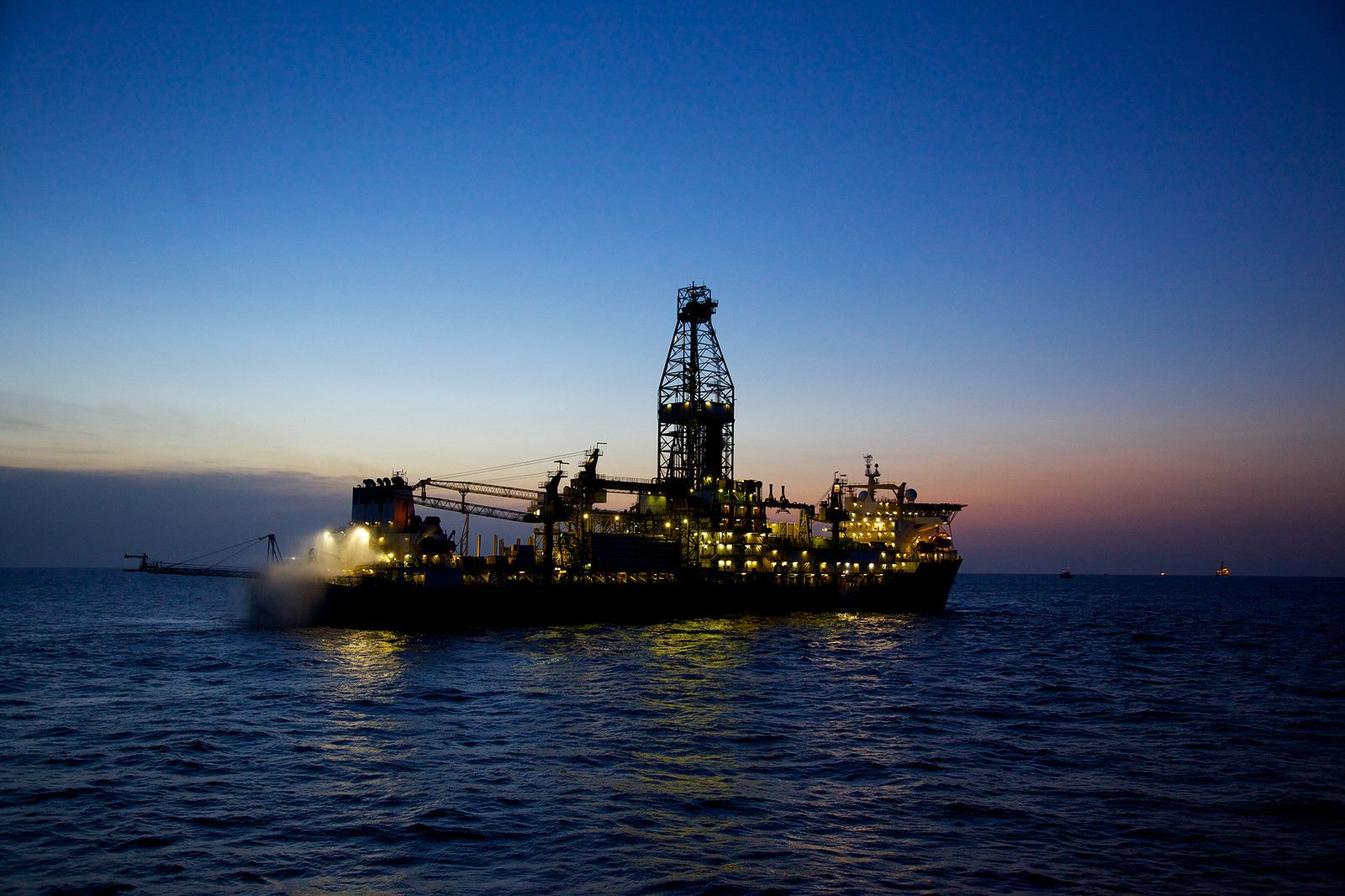
Executive Summary
Mozambique is poised to become a major player in the global liquefied natural gas (LNG) market, capitalizing on its vast hydrocarbon reserves. The country already has an operational floating LNG (FLNG) project, Eni's Coral South, which contributes significantly to export revenues. Two large-scale onshore projects, TotalEnergies' Mozambique LNG and ExxonMobil's Rovuma LNG, are moving toward restart or final investment decision (FID), despite past delays. The sector is a key driver of GDP growth and export earnings.
However, the development of this sector faces multifaceted risks, including the ongoing insurgency in Cabo Delgado province, volatility in the global LNG market, significant social and human rights concerns, and substantial environmental impacts. The Mozambican government is working to adapt its regulatory framework to strengthen state participation and local content, while pursuing broader energy diversification efforts. The substantial financial benefits for the state are expected mainly from the mid-2030s and 2040s, which highlights a period of vulnerability to market prices and the need for prudent fiscal management. Long-term success will depend on lasting security, effective implementation of local content policies and skillful navigation of global market dynamics. Strategic efforts focused on robust security frameworks, transparent community engagement and a balanced approach to local content are essential to ensure inclusive and sustainable development.
1. Introduction: Mozambique's Emergence as a Global Energy Player
Mozambique holds a strategic position in the global energy landscape, thanks to its vast natural gas reserves. The country has proven natural gas reserves estimated at more than 2.8 trillion cubic meters (Tcm) in 2021. The Rovuma Basin, particularly Areas 1 and 4, holds most of these reserves, with approximately 125 Tcf (trillion cubic feet) of proven gas, mainly in deep-basin Paleocene to Oligocene sandstones. This is equivalent to roughly 3.5 trillion cubic meters, or nearly 22 billion barrels of oil equivalent.
The scale of these discoveries fundamentally transforms Mozambique's role, turning it from a regional gas supplier into a potentially dominant global LNG exporter. This shift is not merely an increase in volume, but a qualitative change in its energy identity and geopolitical importance. The planned projects, notably TotalEnergies' Mozambique LNG, could position the country as the world's second-largest LNG producer. This capacity is of strategic importance for diversifying global supply chains, particularly for high-demand markets in Asia and the Middle East, and for Europe, which is seeking alternatives to Russian gas.
The history of petroleum exploration in Mozambique dates back to 1927. Significant gas discoveries were made on the Pande-Temane high (Temane, Pande, Buzi, Inhasorro) before they were considered commercially viable. The Temane field began production in 2004, exporting gas to Secunda in South Africa. The global exploration community turned its attention to Mozambique with the giant gas discovery in the Rovuma Basin in December 2009 by Anadarko, with the Windjammer-1 well in Area 1. Additional major discoveries in 2011-2012 by ENI and Anadarko in Cabo Delgado revealed a gas field containing 7 trillion cubic meters (7 Tcm), identified as the fourth-largest offshore gas project in the world.
2. Natural Gas Reserves and Production Landscape
Mozambique's proven natural gas reserves were estimated at more than 2.8 Tcm in 2021. The Rovuma Basin, particularly Areas 1 and 4, holds the majority of these reserves, with approximately 125 Tcf of proven gas, mainly in deep-basin Paleocene to Oligocene sandstones. Area 1 of the Rovuma Basin, where TotalEnergies' Mozambique LNG project is located, is expected to monetize up to 65 Tcf of recoverable gas resources. In the producing Pande and Temane fields and the undeveloped Inhassoro field, initial gas reserves were 5.15 Tcf in Upper Cretaceous marine sandstones, plus 130 million barrels of light oil at Inhassoro. Although gas is the dominant hydrocarbon, the presence of oil has been indicated in the Ironclad-1 well in the Rovuma Basin and in coastal oil seeps in various basins, suggesting a potential petroleum system. However, oil production was not active in 2024, with further research needed to justify economic exploitation. The Angoche and Zambezi Delta basins also show exploration potential.
The only major development project currently in production since mid-2022 is Eni's Coral South FLNG project, located in Area 4 of the Rovuma Basin. Coral South FLNG has a capacity of 3.4 million tonnes per annum (mtpa). BP has contracted the entire output of Coral Sul for 20 years. This project marked Mozambique's entry as an energy-producing country with LNG export capacity. In April 2025, Coral South FLNG delivered its 100th cargo. Mozambique's annual gas production was approximately 5.338 billion cubic meters in 2022, of which about 3.963 billion cubic meters were exported, mainly to South Africa by pipeline. The remainder is used domestically for industry and power generation.
Analysis of the data reveals a two-tier production pattern that has emerged in Mozambique. On one hand, Eni's Coral South project is operational and located offshore. On the other, the TotalEnergies and ExxonMobil projects are onshore, larger in scale, and have faced security-related suspensions. The offshore nature of Coral South FLNG gives it a significant security advantage, making it less vulnerable to the onshore insurgency in Cabo Delgado. This allowed it to progress and become operational while the onshore projects were under force majeure. This contrast highlights a strategic trade-off between speed to market and security on one side, and long-term scale and impact on the other. FLNG projects, which are smaller and less exposed, can provide immediate and stable revenue streams, strengthening confidence in Mozambique's LNG export capacity. However, onshore projects, although more sensitive to security risks, are essential to realizing the country's full potential as a global LNG power and achieving "second-largest producer" status. The government's revenue projections for 2025-2026, which show a decline , probably reflect the current reliance on stabilized Coral South production, pending the commissioning of the larger-capacity onshore projects.
3. Major LNG Projects: Status, Investment and Timelines
3.1. TotalEnergies' Mozambique LNG (Area 1)
TotalEnergies' Mozambique LNG project represents a $20 billion investment. It includes the development of two gas fields (Golfinho and Atum) in the offshore Area 1 concession and the construction of a two-train liquefaction plant. The plant is designed for an initial production capacity of 13.12 million tonnes per annum (mtpa), expandable to 43 mtpa. This capacity is crucial for positioning Mozambique as a major global LNG exporter.
The project was placed under force majeure in 2021 because of the militant insurgency in Cabo Delgado province, near the project site on the Afungi peninsula. TotalEnergies is planning to resume operations in 2025, with CEO Patrick Pouyanné expecting a restart "this summer" (June 2025 context). In early July 2025, TotalEnergies sent a "notice to proceed" to contractors for site preparation. The project's phased approach aims for a production restart for Train 1 by 2029. However, delays in securing full financing could push completion back to 2029-2030.
The project is backed by $14.9 billion in senior debt financing, the largest in Africa. A crucial $4.7 billion loan from the US Export-Import Bank (EXIM) was re-approved in March 2025, signaling confidence in the project. Nevertheless, approvals from the export credit agencies (ECAs) of the United Kingdom and the Netherlands for an additional $7 billion are still pending, facing political and ethical obstacles related to net-zero commitments and human rights concerns. TotalEnergies holds a 26.5% operating interest in the project. Other key stakeholders include Mitsui & Co. (20% interest) and Mozambique's national oil company, ENH (15% stake). The restart follows improved military coordination by Mozambican forces, supported by regional allies such as Rwanda and SADC, which have stabilized the region, although risks persist. TotalEnergies has implemented enhanced security protocols around the Afungi project site.
3.2. Eni's Coral South and Coral North FLNG Projects (Area 4)
The Coral South FLNG project has been in production since mid-2022, making Mozambique an LNG producer. It has a capacity of 3.4 mtpa and cost approximately $7 billion. The floating liquefaction unit (Coral Sul FLNG) is designed for energy optimization and CO2 emissions reduction. BP has a 20-year purchase agreement for the entire output. The project develops the southern part of the Coral field, with estimated reserves of approximately 500 billion cubic meters. It includes a sustainability plan focused on water, health, education, mangrove restoration and local training for more than 800 people. In April 2025, Coral South FLNG delivered its 100th cargo.
As regards future expansion, a second floating platform, a replica of Coral South (Coral Sul), designated Coral Norte, is planned to increase gas extraction. The Mozambican government approved a $7.2 billion (EUR 6.6 billion) investment for Coral Norte in early April 2025. Production is planned at 3.55 mtpa, with start-up expected in the second half of 2028. This project is expected to generate $23 billion (EUR 20.1 billion) in revenue for Mozambique over 30 years. It also plans to supply 25% of the gas to the domestic market and 100% of the condensates, and to create 1,400 jobs for Mozambicans.
3.3. ExxonMobil's Rovuma LNG (Area 4)
The Rovuma LNG project aims to produce, liquefy and market natural gas from the Mamba complex fields in Area 4 of the Rovuma Basin. It is expected to produce 18 mtpa of LNG. The design was changed in 2021, moving from two large 7.6 mtpa trains to 12 modular electric LNG trains (1.5 mtpa each), because of the market environment and security challenges. This redesign offers greater execution certainty, improved reliability and reduced GHG emissions. The estimated cost of the project is $22 billion (previously $24 billion).
ExxonMobil has postponed its Final Investment Decision (FID) to 2026, after several previous delays. Production is now planned for 2030 (previously 2025, then 2027-2028). The project entered the front-end engineering design (FEED) phase in August 2024, a phase expected to last about 16 months. It is a joint venture involving ExxonMobil (28%), Eni (28%), China National Petroleum Corporation (CNPC) (14%), ADNOC (10%), KOGAS (10%) and Empresa Nacional de Hidrocarbonetos (ENH) (10%). ExxonMobil leads the construction and operation of the LNG facilities, while Eni leads the upstream facilities. The construction phase is expected to create 5,000 local jobs and promote local skills development.
Analysis of the data reveals a complex interplay among security, financing and project timelines. TotalEnergies' project was suspended because of security problems in 2021. ExxonMobil's FID has been postponed several times, partly because of security and market conditions. The re-approval of the US Export-Import Bank loan for TotalEnergies only came after "new security assurances" , but British and Dutch financing is still pending because of concerns over human rights and climate commitments. Security instability translates directly into force majeure declarations, project suspensions and FID delays. This in turn affects investor confidence and the willingness of international financial institutions, particularly those with ESG mandates, to provide funds. The re-approval of the US EXIM loan, despite persistent security risks, underscores a strategic geopolitical interest in Mozambican LNG. However, allegations of human rights violations create a new layer of risk, with the potential to delay crucial European financing and add reputational risk for operators. The success of these megaprojects depends not only on technical feasibility or market demand, but deeply on the stability of the security environment and the ability of the government and companies to resolve social and human rights issues. Persistent security threats and unresolved human rights concerns could lead to prolonged delays, higher costs and potentially discourage new investment.
Another important observation is companies' strategic adaptation in the face of challenges. ExxonMobil has rethought its Rovuma LNG project, moving from large trains to smaller modular units. TotalEnergies has reportedly renegotiated terms with lenders, reducing its equity stake from 25% to 15% (although its operating interest remains 26.5%). The modular design of ExxonMobil's project is a direct response to the "changing market environment and security challenges", aiming for "greater execution certainty, increased operational reliability and reduced greenhouse gas emissions". This allows more flexible scaling and potentially reduces the concentration of personnel at a single site, mitigating security risks. The reduction in TotalEnergies' equity stake, if confirmed for its direct financial contribution, would ease its financial burden and its initial risk exposure. These adaptations demonstrate a strategic response by major energy companies to Mozambique's unique and complex risk profile. They point to a shift toward de-risking projects through design and financial structuring, acknowledging the volatile operating environment. This could set a precedent for future large-scale investments in high-risk regions, emphasizing resilience and adaptability over traditional megaproject execution models.
Table 1: Major LNG Projects in Mozambique: Key Data
| Project Name | Operator | Location (Rovuma Basin) | Estimated Investment (USD) | Capacity (mtpa) | Current Status | FID/Start-up Dates (Planned/Actual) | Key Partners |
|---|---|---|---|---|---|---|---|
| Mozambique LNG | TotalEnergies | Area 1 | 20 billion | 13.12 (expandable to 43) | Restart of operations planned for 2025 | Restart 2025, Train 1 production by 2029 | Mitsui, ENH |
| Coral South FLNG | Eni | Area 4 | 7 billion | 3.4 | Operational since mid-2022 | FID 2017, Start-up mid-2022 | ExxonMobil, CNPC, Galp, KOGAS, ENH |
| Coral North FLNG | Eni | Area 4 | 7.2 billion | 3.55 | Approved April 2025 | Start-up H2 2028 | ExxonMobil, CNPC, Galp, KOGAS, ENH |
| Rovuma LNG | ExxonMobil | Area 4 | 22 billion | 18 | FID postponed to 2026 | FID 2026, Production 2030 | Eni, CNPC, ADNOC, KOGAS, ENH |
This table provides a quick comparative overview of the main LNG projects, allowing stakeholders to assess scale, progress and key players at a glance. It highlights the operational projects, those approaching FID/restart, and their relative contributions to Mozambique's future LNG production, thereby facilitating strategic decision-making.
4. Economic Contribution and Fiscal Framework
The extractive sector's contribution to Mozambique's economy has grown considerably, rising from 1.8% to 10.6% of gross domestic product (GDP) over a decade, an increase of 8.8 percentage points. This growth was driven by coal projects (Moatize), heavy sands (Moma, Pebane, Chibuto), and more recently, the maturing of liquefied natural gas processing at the Coral South field. Real GDP grew by about 5.0% in 2023, compared with 4.2% in 2022, mainly thanks to the extractive industries. GDP is expected to grow by an average of 5.2% between 2024 and 2025, with the extractive sector, particularly gas production, as the main driver. The success of the TotalEnergies project alone could increase Mozambique's GDP by 5.2% per year , and the IMF forecasts a 10% increase in GDP by 2028 thanks to this project.
However, analysis of the data reveals a growth paradox: a high contribution to GDP does not necessarily translate into inclusive development. Despite economic growth, poverty remains high (estimated at 74.5% in 2023), and the employment rate fell from 75.6% in 2019 to 73.6% in 2020, indicating that recent growth has not been inclusive. This divergence suggests a disconnect between macroeconomic growth, driven by capital-intensive projects, and direct benefits for the majority of the population. The "resource curse" phenomenon, where resource wealth does not translate into widespread development, is a significant risk. The absence of a coherent industrial policy for domestic processing of resources means that Mozambique remains a net exporter of raw extractive resources , which limits value creation in the country. Without deliberate policy interventions focused on local value addition, job creation beyond direct project employment and an equitable distribution of revenues, the economic benefits of LNG may not solve the country's poverty and unemployment problems. This could exacerbate social grievances, potentially fueling the insurgency (youth unemployment being a recruitment factor ), creating a vicious circle in which the very resource intended to lift the nation becomes a source of conflict.
Mozambique's revenues from LNG production and export rose by 21.8% in 2024, totaling $91.8 million (EUR 78.1 million). However, the government anticipates a decline in LNG revenues for 2025 (a 13.8% reduction to $79.2 million) and 2026 (a 16.4% reduction to $76.8 million). This decline is attributed to stabilized production (from Coral South, the only project currently in production) combined with less favorable price expectations on the international market. State revenues from LNG include production bonuses, petroleum production tax, royalties and petroleum profits. The government expects to generate $23 billion (EUR 20.1 billion) over 30 years from the Coral Norte project alone. Overall state revenues are expected to rise from EUR 5.56 billion in 2026 to EUR 6.55 billion in 2028.
The petroleum tax regime is governed by Law No. 21/2014 (the Petroleum Law) and Petroleum Tax Law No. 27/2014. Legal entities are subject to general taxes (for example, corporate income tax (IRPC) of 32% on net profits and capital gains, and VAT of 17% on sales, exempt on exports) in addition to specific taxes. A key specific tax is the IPP (indirect petroleum production tax), similar to a royalty, charged at 10% for crude oil and 6% for natural gas. These rates are reduced by 50% when production is intended for the development of local industry. The government offers tax and customs incentives, which vary according to the nature and location of the project. These include deductions for public utility infrastructure, deductions for vocational training and technological modernization, an investment tax credit, and customs duty exemptions on equipment imports.
The Sovereign Wealth Fund has been operational since 2024. Revenues from LNG operations are expected to remain around 0.3% of GDP over the period, reflecting the gradual maturing of production and the Sovereign Wealth Fund's legal framework. Analysis of the revenue data highlights future revenue volatility and a transfer of risk to the state. The current revenue stream depends largely on the single operational FLNG project (Coral South). The anticipated short-term decline underscores vulnerability to international price fluctuations and the limited immediate impact of the gas sector on state coffers until the larger onshore projects come online (2029-2030 for TotalEnergies, 2030 for ExxonMobil). Long-term revenue projections, although substantial, are contingent on future conditions in the global LNG market, which is inherently volatile and prone to oversupply. This structure disproportionately transfers market risk to the Mozambican state. It implies a significant gap between investment and substantial state revenues, creating a budgetary gap that must be managed. The government's ability to absorb market shocks and manage expectations about future wealth is essential. The operational Sovereign Wealth Fund is a mechanism for managing these revenues, but its effectiveness will be tested by the timing and volatility of the flows. This also underscores the importance of the government's push for other revenue sources and economic diversification to avoid excessive dependence on a single, volatile sector.
Table 2: Projected LNG Revenues for the Mozambican Government (2024-2026)
| Year | Total LNG Revenues (USD Million) | Change in % (Year on Year) | Key Contributing Factors |
|---|---|---|---|
| 2024 | 91.8 | +21.8% | Increase in gas exports from Area 4 (Coral South) despite lower international prices. |
| 2025 | 79.2 | -13.8% | Stabilized production (Coral South), less favorable international price expectations. |
| 2026 | 76.8 | -16.4% | Stabilized production (Coral South), less favorable international price expectations. |
This table offers a transparent view of the immediate fiscal outlook, highlighting the current reliance on Coral South and the anticipated decline before the larger projects contribute. It supports national budgeting and financial planning, enabling proactive measures to manage fiscal expectations.
5. Regulatory Environment and Local Content Development
Mozambique's regulatory framework for the oil and gas sector is primarily defined by the Petroleum Law (Law No. 21/2014) and the Petroleum Tax Law (No. 27/2014). A proposed new petroleum law is under review, aiming to strengthen state participation and to improve the predictability and efficiency of petroleum resource management, while encouraging private investment. This proposal aligns with Mozambique's Five-Year Plan, which provides for a gradual expansion of hydrocarbon exploration, including the award of ten new concession areas and an increase in exploration contracts from 7 in 2024 to 16 by 2029. The bill explicitly extends its scope to include carbon capture and storage (CCS) as part of petroleum operations. The term of the exclusive right of development and production is proposed to be reduced from 30 to 25 years, with renewal subject to technical, economic and national interest justifications.
Empresa Nacional de Hidrocarbonetos (ENH) is Mozambique's state-owned national energy company and holds the exclusive rights to petroleum exploration and development. ENH is primarily engaged in upstream activities and participates in five natural gas concessions in the Rovuma Basin (including Area 4 projects such as Coral South and Rovuma LNG, where it holds a 10% interest). The proposed new petroleum law aims to grant a right to a minimum non-dilutable state participation of 40% (exercised through ENH) in concession contracts covering proven and viable areas. This share would be funded by the other concessionaires until production begins.
On local content development, Ministerial Diploma No. 55/2024, published in July 2024, clarifies and establishes the mechanisms for related obligations. Concessionaires must hire a minimum percentage of Mozambicans with the required skills, preferably those residing in the "concession area". Projects such as Coral North are expected to generate 1,400 jobs for Mozambicans , and Rovuma LNG 5,000 local jobs. Concessionaires must also provide scholarships exclusively to Mozambicans, preferably those from the concession area, with at least 40% going to those who have never worked for oil companies. The Coral South project already supports the training of more than 800 people. For goods and services contracts, effective and substantial economic involvement of a Mozambican person is required. Domestic suppliers have a preferential right if their bids match those of foreign suppliers in terms of price, delivery time and quality, or if their final price does not exceed 10% of the foreign average. Technology transfer plans are also mandatory. Concessionaires must submit quarterly reports to the National Petroleum Institute (INP) to demonstrate compliance.
However, there is a notable gap between regulatory intent and the reality of implementation in terms of local content and community relations. The proposed petroleum law and Ministerial Diploma 55/2024 describe robust local content requirements (40% state participation, preferential hiring, scholarships, local partnerships, technology transfer) and community engagement protocols (free and informed consultation, fair compensation). Projects such as Coral North and Rovuma LNG explicitly mention job creation. At the same time, significant criticisms are made about actual implementation: the "government has prioritized the protection of investments over the protection of community rights", "weak" consultation mechanisms, "ineffective" grievance channels, "widespread distrust" and "allegations of human rights violations". More than 1,000 families are awaiting compensation for land acquired for the projects. This gap between progressive legal frameworks and the reality on the ground creates significant social risk. Although the regulations aim to ensure shared prosperity and minimize negative impacts, their ineffective implementation can lead to community resentment, protests and potentially fuel the insurgency (youth unemployment being a recruitment factor ). The long-term sustainability and social license to operate of these projects depend heavily on the ability to bridge this gap. The fact that other concessionaires must fund ENH's 40% participation also raises the cost of entry for foreign investors, which can affect project competitiveness and economics.
6. Critical Challenges and Risks
6.1. Security and Geopolitical Instability
The main security threat is the Islamic State-linked insurgency (ISM) in Cabo Delgado province, which forced TotalEnergies to declare force majeure in 2021 after an attack on Palma. This insurgency has caused significant delays and suspensions, pushing back the timelines of the TotalEnergies (restart in 2025, production in 2029) and ExxonMobil (FID in 2026, production in 2030) projects.
Despite improvements, insurgent activity remains a threat, with sporadic attacks reported in 2024-2025 and an intensification of fighting in June (2025 context). Experts warn that a near-term resumption of LNG-related activities could trigger new attacks. President Chapo acknowledged that "if we wait for Cabo Delgado to be a paradise", force majeure will remain indefinitely , indicating a pragmatic acceptance of persistent risk. Mozambican forces, supported by regional allies such as Rwanda and SADC, have achieved tactical military successes, reducing ISM's territorial ambitions. TotalEnergies has implemented enhanced security protocols around the Afungi project site. The US government's ten-year, $1.2 billion strategy (announced in 2024) to stabilize Mozambique directly supports the LNG projects, aiming to counter Chinese and Russian influence. This geopolitical alignment brings diplomatic support, but also underscores strategic competition in the region.
6.2. Financial and Market Volatility
A projected LNG supply glut by 2026, due to new projects in the United States, Qatar and Russia, could push LNG prices down. This represents a significant economic risk for Mozambique's projects, especially as the bulk of state revenues is expected from the mid-2030s and 2040s and depends on market development. The anticipated reduction in Mozambique's LNG revenues for 2025 and 2026 is partly due to "less favorable prices on the international market" , demonstrating an immediate vulnerability.
Although the US Export-Import Bank re-approved its $4.7 billion loan , securing an additional $7 billion from the export credit agencies of the United Kingdom and the Netherlands remains an obstacle because of their net-zero commitments and their human rights concerns. Delays in these approvals could push project completion back further, adding billions of dollars to costs.
6.3. Social and Human Rights Concerns
Reports indicate that more than 1,000 families are awaiting compensation for land acquired for the projects. Displaced communities face challenges such as hunger and a rising cost of living because of the conflict and isolation. Allegations of human rights violations by Mozambique's defense and security forces on the Afungi peninsula led to a criminal investigation by the Mozambican Human Rights Commission (CNDH) in March 2025. TotalEnergies requested an official investigation in November 2024. Critics accuse the government of prioritizing investment over community rights and companies of downplaying complaints. Despite the extractive sector's contribution to GDP, poverty remains high, and employment rates have fallen. Youth anger over the lack of work is seen as contributing to the insurgency's recruitment. Community consultation and participation mechanisms have been criticized as weak, and grievance channels as ineffective, leading to widespread distrust.
6.4. Environmental Impact
Gas development projects in the Rovuma Basin threaten ecologically valuable marine areas, including coral reefs, seagrass beds and mangroves, which are vital habitats for diverse marine life. The combined impact of all planned deepwater projects could be devastating because of chemical, physical and noise pollution, physical damage and invasive species from ships' ballast water. A report titled "True Risk" by the Fair Finance Coalition Southern Africa and Justiça Ambiental argues that the projects' environmental impact assessments (EIAs) are inadequate, flawed and used to "validate damaging developments". It suggests there is not enough knowledge about the region's ecological value or the full impacts of deepwater gas development to accurately predict or prevent irreversible ecological damage. The report also raises concerns that the Coral South FLNG project underestimates its air pollution levels and greenhouse gas (GHG) emissions. If the LNG produced by the four projects were burned, the resulting GHG emissions would consume at least 7.5% of the remaining global carbon budget for a very high probability of staying below 1.5 °C of global warming. The "True Risk" report recommends an immediate moratorium on the four gas projects, in application of the precautionary principle, until a thorough understanding of the ecological value and projected impacts is obtained.
Analysis of these challenges reveals a complex, interconnected web of risks, where a failure in one area can exacerbate another, creating a multiplier effect that can seriously undermine project viability and long-term national development. For example, security concerns delay projects, which affects financing and increases costs. Allegations of human rights violations by security forces affect the social license and European financing. The lack of inclusive growth contributes to the insurgency. Environmental concerns raise ethical questions for financiers and can potentially delay projects. A purely military solution to security, without addressing the underlying community concerns, is unlikely to ensure lasting stability for large-scale investments. The "high-risk, high-reward" nature of these projects demands a comprehensive approach that integrates ESG (environmental, social and governance) factors as essential operational components, and not just as compliance checkboxes.
7. The Broader Energy Sector and Economic Diversification
Mozambique's energy landscape is currently dominated by hydropower, which accounts for more than 80% of electricity generation. The Cahora Bassa dam on the Zambezi River is a crucial energy source with an installed capacity of 2,075 MW, supplying Mozambique and the Southern African region. Mozambique is a net exporter of electricity. Thermal generation from diesel or natural gas also contributes to the grid. Gas-based power generation is expected to increase significantly, and is projected to supply 44% of total energy production over the next decade, with plans for new gas-fired thermal plants such as Temane (400 MW). Coal resources also hold significant potential for power generation.
Despite having the highest power generation potential in Southern Africa (187 GW from coal, hydropower, gas and wind, excluding solar) , only about 51% of the population had access to electricity in 2024. This is due to an underdeveloped power distribution network and bureaucracy. Mozambique's Just Energy Transition Plan (published in 2024) sets the goal of further increasing renewable energy generation capacity and achieving universal access to electricity by 2030. The plan aims to invest $80 billion of public and private funds by 2030 to move to a mix of renewable energy and natural gas. There is interest in developing solar, wind and biomass resources. The country commissioned its first utility-scale solar plant in 2017.
Analysis of Mozambique's energy situation highlights the "transition fuel" dilemma and infrastructure imperatives. Mozambique has abundant hydropower and ambitious renewable energy targets (universal access by 2030, $80 billion of investment in renewables and gas by 2030). Yet natural gas is expected to supply 44% of total energy production over the next decade , and LNG is seen as a "transition fuel" globally. This points to a strategic tension: while Mozambique aims for a green transition and universal access, it simultaneously relies heavily on natural gas, both for export and for domestic power generation. The vast gas reserves and the significant investments already made position gas as a dominant, albeit transitional, energy source. The underdeveloped distribution network means that even with abundant generation capacity, access remains a challenge, requiring major investment in transmission infrastructure (for example, the CESUL backbone network ). Mozambique's energy future is a complex interplay between exploiting its massive gas reserves for export revenues and simultaneously trying to electrify its population and shift to renewables domestically. The "transition fuel" concept for LNG exports is a global market reality, but for Mozambique, gas also serves as an essential domestic energy source to meet rapidly growing demand and reduce reliance on hydropower alone. The challenge is to ensure that gas revenues are effectively channeled into developing the necessary infrastructure (for gas and renewables) and promoting diversification to avoid the long-term economic vulnerability of a single-commodity economy.
President Chapo has stressed the need to diversify the economy into other industries to create jobs, acknowledging that "many people think growth means development, but that is not true". This diversification is crucial given the young population and the link between lack of work and insurgency recruitment. The current reliance on exporting raw extractive resources highlights the absence of a coherent industrial policy for domestic processing. The Rovuma LNG project aims to provide Mozambique with associated LPG, improving energy access for local communities. TotalEnergies is expanding its renewable energy portfolio in Africa, with strategic investments in solar and green hydrogen projects, in line with a multi-energy strategy. TotalEnergies also sells distributed solar solutions to low-income communities through its service stations. Eni's Coral South project includes a sustainability plan with local development initiatives.
8. Conclusion and Strategic Outlook
Mozambique is at a pivotal moment, possessing world-class natural gas reserves (125 Tcf in the Rovuma Basin, a 7 Tcm discovery) that position it to become a major LNG exporter, potentially the second largest in the world. Eni's operational Coral South FLNG project (3.4 mtpa) has already established Mozambique as an LNG producer, laying the groundwork for larger projects. The anticipated restart of TotalEnergies' Mozambique LNG ($20 billion, 13 to 43 mtpa capacity) and the progress of ExxonMobil's Rovuma LNG ($22 billion, 18 mtpa) demonstrate strong industry commitment and international financial support (for example, the $4.7 billion US Export-Import Bank loan).
However, this potential is offset by significant inherent risks. The persistent, albeit contained, insurgency in Cabo Delgado remains a threat capable of disrupting operations and discouraging investment. Vulnerability to global LNG price volatility and the projected supply glut in the mid-2020s, combined with the delayed nature of state revenues, pose fiscal challenges. Critical issues of community displacement, inadequate compensation, allegations of human rights violations and a lack of inclusive growth threaten the social license and long-term stability. Finally, deepwater gas development presents serious ecological risks, compounded by concerns over flawed environmental impact assessments and significant greenhouse gas emissions.
The key factors for sustainable development and long-term success in the sector include lasting security through effective counter-insurgency efforts and the resolution of the socio-economic causes of the conflict, such as youth unemployment. Robust governance and transparency are essential, notably through effective implementation of the petroleum law, management of revenues via the Sovereign Wealth Fund, and transparent community engagement to ensure an equitable distribution of benefits and maintain the social license. Economic diversification, beyond dependence on raw resource exports, by fostering local value addition, the development of other industries and investment in human capital, is crucial to avoid the "resource curse" and ensure widespread development. Finally, a balanced energy transition, with strategic investments in domestic gas for power generation and industrial use, alongside accelerated development of renewable energy sources, is vital to achieving universal access to electricity and a resilient energy mix.
Recommendations
To navigate Mozambique's complex oil and gas landscape and maximize opportunities while mitigating risks, the following recommendations are made for investors, government bodies and industry operators:
- Strengthen security and integrated socio-economic development: Operators and the government should maintain and strengthen security measures around project sites, but above all, they must address the root causes of insecurity, notably youth unemployment and poverty. This means investing in community development programs that go beyond compensation, focusing on creating sustainable economic opportunities and improving basic services for local populations. A purely military approach cannot guarantee long-term stability without resolving the underlying social grievances.
- Improve transparency and community engagement: It is imperative to establish truly free and informed community consultation mechanisms, as well as effective and accessible grievance channels. Companies and the government must ensure that compensation processes are fair, timely and transparent, addressing delays and allegations of human rights violations with the utmost diligence. A strong social license is as crucial as physical security for project viability.
- Rigorously implement local content policies: The government should ensure that the new local content regulations are enforced strictly but pragmatically, focusing on developing genuine local capacity and creating added value. This includes targeted vocational training programs, meaningful partnerships with Mozambican companies and concrete technology transfers. Companies should be incentivized to invest in local human capital beyond the minimum requirements.
- Diversify state revenue sources: Given LNG price volatility and the fact that substantial state revenues are expected in the longer term, the government should actively pursue economic diversification. This means developing other productive sectors, improving the business environment for SMEs and strengthening non-hydrocarbon revenue collection capacity. The Sovereign Wealth Fund must be managed prudently to cushion market shocks and finance strategic investments in sustainable development.
- Adopt high environmental and social standards: Operators and regulators must commit to the strictest environmental standards, going beyond environmental impact assessments deemed insufficient. This includes in-depth ecological research, the implementation of robust mitigation measures for pollution and GHG emissions, and the exploration of carbon capture and storage solutions. Compliance with "do no harm" principles is essential for Mozambique's international reputation and access to responsible financing.
- Develop integrated domestic energy infrastructure: Gas revenues should be reinvested in improving the power distribution network and developing gas-fired power plants to meet national energy needs. At the same time, accelerating investment in renewable energy is crucial to achieving universal access to electricity by 2030 and to building a resilient, diversified energy portfolio, reducing dependence on a single source.


 Sudan
 Uganda