Oil and Gas in Mauritania: Current Status and Future Prospects
Mauritania is shifting from minimal oil output to a gas-led strategy built on GTA, BirAllah and green hydrogen. A look at projects, regulation, economic impact, risks and investment opportunities.
 By the editorial teamPetrole.Africa
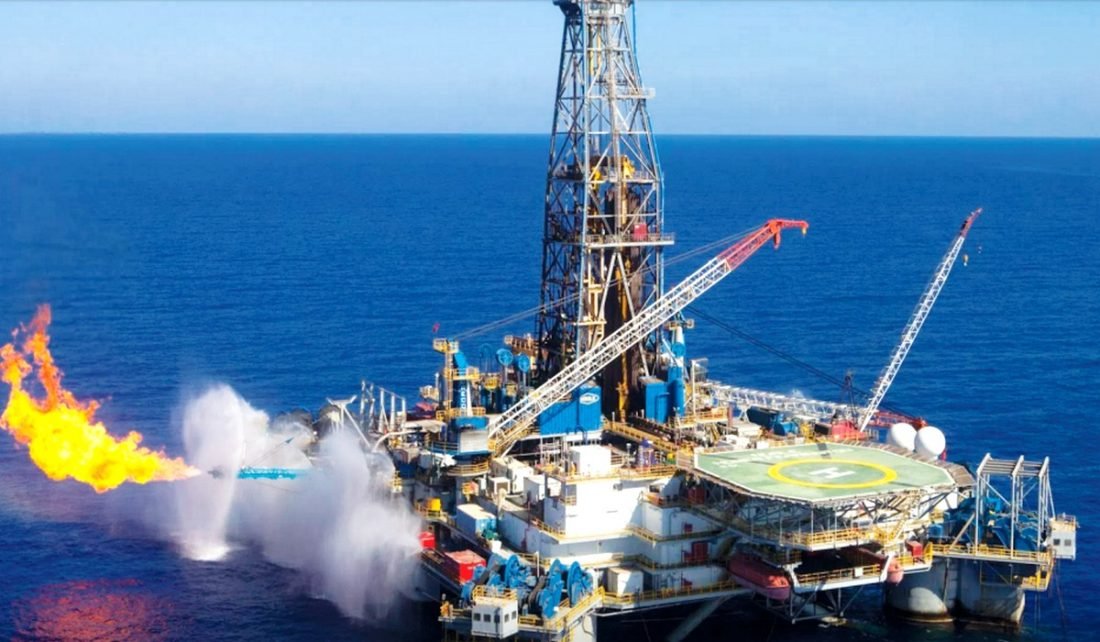
Mauritania, a West African country, is at a pivotal moment in its energy development. Historically dependent on imports to meet its energy needs, the nation is now poised to transform its economic landscape thanks to major natural gas discoveries. While oil has played a limited and declining role, natural gas is emerging as a central pillar of its energy strategy, with major projects under development and bold ambitions in green hydrogen. This in-depth analysis examines the current state of Mauritania's oil and gas sector, its flagship projects, the regulatory framework that governs it, its socio-economic impact, and the challenges, risks and investment opportunities taking shape for the future.
I. Energy Context and Hydrocarbon Potential
Mauritania's energy landscape is undergoing a profound transformation, marked by a historical dependence on imports and a new era of gas abundance.
A. Oil: A Historical Role, Minimal Current Production
Mauritania's oil sector enjoyed a brief period of production, but its role is now marginal. The country's proven oil reserves were estimated at 20 million barrels in 2016, ranking it 83rd worldwide. The discovery of the Chinguetti field in 2001 was an important milestone, opening the way to offshore exploration.
However, oil production has been minimal or has stopped altogether in recent years. In 2016, production stood at 4,836 barrels per day (bpd). Crude oil production nevertheless ceased in 2017 following the decommissioning of the Chinguetti field. More recent data from January 2023 indicate production of 0 barrels per day , a trend confirmed by the EIA with 0 Mb/d for 2024. Mauritania's oil consumption was 17,000 bpd in 2016, resulting in a daily deficit of 12,164 bpd. The country imported 1.9 million tonnes of petroleum products in 2022 and remains almost entirely dependent on imports for its energy. The country's only refinery, in Nouadhibou, operates well below capacity and even ceased operations in 2000 , underscoring the shortcomings in domestic refining.
The government is encouraging the development of the onshore oil and gas sector, notably in the Taoudenni Basin, where indicators suggest the presence of reserves, although the wells drilled so far have not yet produced convincing results.
The available data show that oil is not, and is not expected to be, a significant driver of the Mauritanian economy or its energy sector in the future. Production is virtually nonexistent, and the country relies heavily on imports for its domestic consumption. This situation contrasts sharply with the promising outlook for natural gas, pointing to a decisive shift in strategic focus.
B. Gas Potential: A Rising Star
Mauritania's natural gas potential is considered transformative. While 2017 data reported 1 trillion cubic feet (Tcf) of proven gas reserves , more recent discoveries have considerably increased these estimates. The BirAllah field, for example, is estimated to hold 80 Tcf of gas on its own , even surpassing the GTA field. Total gas reserves are estimated at 1,400 billion cubic meters (about 50 Tcf) , and the Greater Tortue Ahmeyim (GTA) field holds around 15 Tcf. The "Hmeimim" field is estimated at more than 450 billion cubic meters.
With these vast reserves, Mauritania is set to become a major player in the global gas industry and a leading producer in Africa. Experts estimate that it could become the third-largest gas exporter on the African continent, after Nigeria and Algeria.
This spectacular increase in gas reserve estimates, in stark contrast to earlier figures, signals a fundamental reassessment of Mauritania's gas potential. It is not mere incremental growth, but a paradigm shift in the understanding of the country's resource wealth. This "renaissance" in gas reserves means that Mauritania's position in the global energy market has been fundamentally improved. It transforms the country from a minor player into a potentially dominant regional exporter, attracting considerable international interest and investment.
Here is an overview of the main gas fields discovered:
- BirAllah field: Discovered in 2015 , it holds approximately 80 Tcf of gas. It is considered a world-class deposit in terms of volume and quality, with a low CO2 content. Mauritania's contract with BP for its development expired in May 2024, and the government is actively seeking new development partners.
- Hmeimim field: Considered one of the largest shared fields in the world, with reserves estimated at more than 450 billion cubic meters of gas. It is being developed by BP and Kosmos Energy.
- Banda field: Discovered in 2002 , it has recoverable reserves estimated at 1.2 Tcf. Initially considered decommissioned , recent efforts aim to revive it. Although a New Fortress Energy LNG terminal project based on Banda was presumed abandoned in August 2023 , Mauritania recently signed a contract with the Taqa Arabia Co. Gas Consortium to develop the Banda field , indicating renewed interest in monetizing it.
The following table summarizes Mauritania's proven oil and gas reserves:
Table 1: Proven Oil and Gas Reserves in Mauritania (Key Estimates)
| Resource | Estimated Reserves (Units) | Reference Year / Notes | Source(s) |
|---|---|---|---|
| Oil | 20 million barrels | Proven (2016) | |
| Natural Gas (Proven) | 1 Tcf | Proven (2017) | |
| Natural Gas (BirAllah) | 80 Tcf | Estimated | |
| Natural Gas (GTA) | ~15 Tcf | Estimated | |
| Natural Gas (Hmeimim) | 450 billion m³ | Estimated | |
| Natural Gas (Banda) | 1.2 Tcf | Estimated recoverable | |
| Natural Gas (Total) | 1,400 billion m³ (~50 Tcf) | Estimated |
The following table illustrates key oil production and consumption statistics, highlighting the dependence on imports:
Table 2: Key Oil Production and Consumption Statistics (2016-2024)
| Indicator | 2016 (bpd) | 2017 (bpd) | Jan 2023 (bpd) | 2024 (Mb/d) | Notes | Source(s) |
|---|---|---|---|---|---|---|
| Oil Production | 4,836 | 0 | 0 | 0 | Production halted after Chinguetti | |
| Oil Consumption | 17,000 | N/A | N/A | N/A | Heavily import-dependent | |
| Daily Deficit | -12,164 | N/A | N/A | N/A | ||
| Imports (petroleum products) | N/A | N/A | N/A | 1.9 Mt (2022) |
II. Major Gas Development Projects
Gas projects are at the heart of Mauritania's energy strategy, with the cross-border GTA project leading the way and the BirAllah field offering considerable potential.
A. Greater Tortue Ahmeyim (GTA) Project
The Greater Tortue Ahmeyim (GTA) project is an offshore liquefied natural gas (LNG) project located on the maritime border between Mauritania and Senegal, in waters up to 2 km deep, making it the deepest offshore project in Africa to date. Total gas resources in the field are estimated at approximately 15 Tcf.
The project is jointly developed by BP, which is the operator with a 56% stake, Kosmos Energy (27%), the Société des Pétroles du Sénégal (Petrosen, 10%) and the Société Mauritanienne des Hydrocarbures (SMHPM, 7%).
The project reached an important milestone with the secure start of gas flow from the wells to its floating production, storage and offloading (FPSO) vessel in January 2025, marking the start of the next commissioning phase. The FLNG Gimi vessel arrived on site in January 2024 , and Golar LNG's FLNG Gimi unit reached its commercial operations date (COD) on July 10, 2025, under a 20-year lease and operate agreement. Phase 1 is expected to produce approximately 2.3 million tonnes of LNG per annum (mtpa) , with plans to reach 2.7 mtpa. The FPSO is designed to process more than 500 million cubic feet of gas per day.
Phase 2 of the project is currently in the front-end engineering design (FEED) stage, with first gas expected in 2026. The final investment decision (FID) for Phase 2 was initially expected in late 2022 or early 2023 and is now planned for 2025. It is expected to have a capacity of 2.5 to 3 mtpa and will use a gravity-based structure (GBS).
The GTA project is expected to generate approximately $19 billion in revenue for the Mauritanian government over the next three decades. It has already created more than 3,000 local jobs during the construction phase and is expected to generate 500 direct jobs during operations. The project also includes social investment programs focused on community health, economic development, environmental awareness and education, including an apprentice training program.
The successful commissioning of Phase 1 of the GTA project, despite the significant challenges encountered (financial, technological, environmental and governance-related) , demonstrates the project's resilience and the commitment of its partners and host governments. This achievement significantly de-risks the project, turning projected revenues into a tangible reality. It signals Mauritania's emergence as a credible LNG exporter, strengthening investor confidence for future phases and other initiatives.
B. BirAllah Gas Field
The BirAllah field, discovered in 2015 by Kosmos Energy, is estimated to hold between 50 and 80 Tcf of gas. It is considered a world-class deposit because of its volume, its high-quality reservoir properties and its low carbon dioxide content.
In May 2024, the Mauritanian government chose not to renew BP's contract for the development of BirAllah, despite BP's interest in extending it for additional feasibility studies. Mauritania is now actively seeking a new development partner for the project , with the aim of directly initiating development work. The final investment decision (FID) was planned for 2025, with production start-up in 2028.
The BirAllah field has the potential to become a stand-alone LNG hub, promising to significantly boost the Mauritanian economy and strengthen its status as a gas producer. Initial estimates suggest it could produce up to 4 billion cubic feet of gas per day and up to 10 million tonnes of liquefied natural gas per year.
The government's decision not to renew BP's contract for BirAllah and to actively seek new partners for a field of such magnitude is a strong signal. This approach does not indicate a failure of the project, but rather a deliberate strategic move. It suggests that Mauritania is confident in the value of the field and aims to secure more favorable terms, potentially faster development or greater national participation. This proactive approach by the Mauritanian government, probably led by the Ministry of Petroleum, Energy and Mines and SMHPM, reflects a more assertive stance in managing its natural resources. While it introduces a temporary period of uncertainty regarding the new partner and the FID, it also represents a significant opportunity for other international oil companies (IOCs) to gain access to a world-class asset under potentially revised terms. It underscores Mauritania's commitment to maximizing national benefits from its hydrocarbon wealth.
C. Other Initiatives and Exploration Projects
Beyond the GTA and BirAllah projects, Mauritania is pursuing other exploration and development initiatives. The Banda gas field, discovered in 2002 , was initially considered decommissioned. However, the Société Mauritanienne des Hydrocarbures (SMH) is actively seeking new investors for this field. Although a New Fortress Energy LNG terminal project based on Banda was presumed abandoned in August 2023 , Mauritania recently signed a contract with the Taqa Arabia Co. Gas Consortium to develop the Banda field , indicating renewed efforts to monetize its estimated 1.2 Tcf of recoverable reserves.
Interest in Mauritanian offshore energy has exploded since 2014. Three major global oil and gas companies are exploring opportunities, and 22 offshore blocks remain open for negotiation. The government is open to unsolicited bids and is preparing to auction 15 offshore blocks. In 2024, Mauritania also signed an agreement with PGS to acquire seismic data for exploration in onshore and offshore basins.
Despite the attention given to GTA and BirAllah, the ongoing efforts to revive Banda and the availability of numerous offshore blocks signal a broader and sustained commitment to hydrocarbon exploration and development. The government's openness to unsolicited bids and to acquiring new data points to a proactive approach to attracting further investment. Mauritania is not putting all its eggs in one basket. The renewed interest in Banda and the active promotion of new exploration blocks suggest a strategy to build a diversified gas portfolio, ensuring long-term production and revenue streams. This sustained exploration momentum, combined with the government's active engagement, strengthens the overall attractiveness of Mauritania's energy sector for international investors.
The following table presents the major gas projects in Mauritania:
Table 3: Major Gas Projects in Mauritania: Reserves and Current Status
| Project / Field | Estimated Reserves (Units) | Key Partners | Current Status | Source(s) |
|---|---|---|---|---|
| Greater Tortue Ahmeyim (GTA) | ~15 Tcf | BP (operator), Kosmos Energy, Petrosen, SMHPM | Phase 1: Gas flow started (Jan 2025), COD (July 2025). Phase 2: FID planned 2025. | |
| BirAllah | 50-80 Tcf | Formerly BP, Kosmos Energy. Seeking new partners. | BP contract not renewed (May 2024). Active search for a new partner. FID planned 2025, production 2028. | |
| Hmeimim | 450 billion m³ | BP, Kosmos Energy | Under development. | |
| Banda | 1.2 Tcf | SMH, Taqa Arabia Co. Gas Consortium | Revival efforts under way, contract signed with Taqa Arabia. |
III. Regulatory and Institutional Framework and Infrastructure
The development of Mauritania's energy sector is supported by an evolving institutional and legislative framework, as well as by strategic infrastructure investments.
A. Governance and Key Institutions
The Ministry of Petroleum, Energy and Mines (MPME) is the central government body responsible for developing and implementing government policy in the oil, energy and mining sectors. Its responsibilities include defining national policy on crude hydrocarbons, promoting exploration, managing prospective areas, developing resources, and overseeing the production, import, export, transport, storage and marketing of hydrocarbons. It is also responsible for defining and implementing mining policy and promoting geological research.
The Société Mauritanienne des Hydrocarbures (SMHPM), often referred to as SMH, is the national oil company. It aspires to be an integrated, technically excellent, high-performing and committed national oil company, acting ethically and responsibly in the exploration, production and development of hydrocarbon resources for the benefit of the Mauritanian nation. SMHPM holds a stake in all licensed blocks and is a key partner in the GTA project. Its downstream department manages the storage and delivery of petroleum products in the southern zone, with depots in Nouakchott.
B. Legislation and Sector Policies
The Mauritanian State, as owner of the hydrocarbon deposits, promotes their discovery and production under Law No. 2010-033 of July 20, 2010 on hydrocarbons. Exploration and production contracts (PSCs) are signed, authorizing contractors to conduct petroleum operations on an exclusive basis within defined areas. These contracts define petroleum costs and the duration of exploration and production authorizations. In 2022, Mauritania concluded a PSC with BP and Kosmos Energy for the BirAllah gas field, valid for 30 months, with the Mauritanian government retaining a 29% stake.
On environmental regulation, Mauritania has adopted a draft decree establishing rules on gas flaring and venting, in accordance with Hydrocarbons Law 2010-033, which prohibits flaring except under specific exemptions. Exemptions are permitted only in emergency situations or for operations defined in environmental impact assessments (EIAs) and environmental management programs. This reflects a commitment to aligning with global sustainable energy trends.
Local content policies are also a priority. The Mauritanian government prioritizes local involvement in projects, notably around the port of N'Diago. The promotion of local expertise is ongoing , and the GTA project generated more than 3,000 local jobs during construction and engaged around 300 local companies. Airswift, an international workforce provider, is the leading provider in the country and the exclusive workforce solutions provider for the Tortue project and ExxonMobil, recruiting technical specialists and offering training programs.
The existence of a specific hydrocarbons law, the detailed responsibilities of the MPME and SMHPM, and the recent gas flaring decree indicate an evolution toward a more mature and sophisticated regulatory framework. The emphasis on environmental regulations and local content demonstrates a commitment to responsible resource development and to maximizing in-country value added. This creates a more predictable and potentially more advantageous operating environment for the State and international partners, fostering long-term sustainability.
C. Oil and Gas Infrastructure
Mauritania's refining and storage capacities are limited. The only refinery, in Nouadhibou, operates well below capacity and ceased operations in 2000. The government aims to build a new refinery and to expand petroleum product storage capacity in Nouakchott by 150,000 metric tons (MT), as well as to rehabilitate the existing 300,000 MT storage capacity in Nouadhibou. A project to expand the Nouakchott port depot began in June 2022, increasing its capacity by 38% by the end of 2023.
The development of port infrastructure is crucial for exports and imports. The port city of Nouadhibou is targeted to become a regional hub because of growing oil activity. It has two berths for general cargo, an iron ore terminal and a tanker berth. The port of Nouakchott, which handles 96% of Mauritania's imports and exports , is undergoing a significant expansion, including a new container and oil terminal under a 30-year concession agreement. The first phase of the container terminal began operations in April 2022.
Mauritania's refined petroleum product transport sector faces substantial gaps. The World Bank is supporting a project to analyze the current transport sector and develop a master plan for its improvement, including recommendations for regulations and approaches to encourage private investment. The development of a midstream operation, including a gas-fired power plant with a capacity of 180 MW under an independent power producer (IPP) agreement, is a priority.
Although inadequate infrastructure has historically been a challenge , it is now a major area of active development and a significant investment opportunity. The strategic focus on turning Nouadhibou into a regional hub and expanding the capacity of the port of Nouakchott is essential to effectively monetizing gas exports and supporting broader industrial growth. This indicates that the government is aware of these bottlenecks and is actively working to create the physical foundations needed for its energy ambitions.
IV. Economic and Social Impact of the Sector
The extractive sector is a major economic driver for Mauritania, with gas revenue projections that could transform the country's financial and social landscape.
A. Macroeconomic Contribution
The extractive sector is a cornerstone of the Mauritanian economy, accounting for 18.91% of GDP and 76.28% of total exports in 2023. Mining (iron ore, gold, copper) currently dominates this sector.
The GTA project alone is expected to generate $19 billion in revenue for the government over the next three decades. Gas production is expected to generate approximately $500 million in annual revenue between 2024 and 2051. This additional revenue is expected to reduce the budget deficit to 2% of GDP in 2024 and 1.6% in 2025.
The available data underscore the immense revenue potential of gas, particularly from the GTA project. The projections of $19 billion over 30 years and $500 million per year are substantial figures relative to Mauritania's current GDP. This represents a major change for public finances. The start of gas production marks a significant transformation of Mauritania's fiscal landscape. This new revenue offers an unprecedented opportunity to reduce budget deficits, finance public investment and potentially accelerate structural transformation, moving away from an excessive dependence on traditional extractive industries. The challenge will be to ensure transparent and efficient management of these funds in order to avoid "Dutch disease" and maximize the benefits for broad-based development.
The following table illustrates the economic contribution of the extractive sector in Mauritania:
Table 4: Economic Contribution of the Extractive Sector in Mauritania (2023)
| Economic Indicator | Percentage (%) | Source(s) |
|---|---|---|
| Contribution to GDP | 18.91% | |
| Contribution to Exports | 76.28% | |
| Contribution to Government Revenue | 22.73% | |
| Contribution to Employment | 5.83% |
B. Employment and Skills Development
The GTA project generated more than 3,000 local jobs during construction and is expected to create 500 direct jobs during operations. The extractive sector accounted for 5.83% of employment in 2023. Airswift, an international workforce provider, recruits technical specialists for various roles (engineering, geosciences, operations, HSE, quality control) for oil and gas projects in Mauritania.
The GTA project includes a multimillion-dollar social investment program focused on community health, economic development, environmental awareness and education. An apprentice training program aims to develop local talent, with 47 apprentice technicians being prepared to become offshore operators. The Nouakchott port project also supports vocational training, with students making uniforms for the terminal.
The emphasis on local job creation, vocational training and the presence of specialized workforce providers indicates a recognition that the energy sector's impact goes beyond direct revenue. The World Bank's DREAM project also supports institutional capacity building and workforce development, including for women. Mauritania is actively pursuing a strategy to ensure that the benefits of its energy sector translate into human capital development and broader social improvement. This emphasis on local content and skills transfer is crucial to building a sustainable domestic industry, reducing high youth unemployment and preventing the "resource curse" by fostering a skilled workforce capable of contributing to economic diversification.
C. Economic Diversification Strategy
Mauritania's growth model is largely based on extractive resources, with a declining share of manufacturing in GDP and a contraction in agriculture. This overreliance makes the economy vulnerable to commodity price fluctuations and climate shocks. The risk of "Dutch disease" is recognized.
To accelerate structural transformation and avoid "Dutch disease," Mauritania must redirect gas revenues toward diversifying the economy, developing local value chains and infrastructure, improving the business climate, strengthening human capital and accelerating digitalization. The government is further encouraging the development of its onshore oil and gas sector and aims to expand the petrochemical and green hydrogen industries.
The awareness of "Dutch disease" and the explicit strategies to redirect gas revenues toward diversification demonstrate a proactive approach to managing the potential pitfalls of a resource boom. The emphasis on developing local value chains, infrastructure and human capital, alongside the promotion of petrochemicals and green hydrogen, points to a multi-pronged strategy. Mauritania is not simply celebrating its new gas wealth, but strategically planning to use it as a catalyst for broader economic transformation. This forward-looking approach, if successfully implemented, could mitigate the historical challenges of resource-dependent economies and build a more resilient and diversified economic base over the long term.
V. Challenges, Risks and Investment Opportunities
Mauritania's path to energy prosperity is strewn with challenges and risks, but also with promising investment opportunities.
A. Major Challenges and Risks
Mauritania's GDP growth is considerably exposed to fluctuations in global mineral commodity prices , and its economy is vulnerable to changes in commodity prices. The GTA project has faced significant delays due to the COVID-19 pandemic, technical problems and contractor withdrawals , highlighting the complexity of megaprojects. Delays in the launch of GTA remain a major risk to economic forecasts.
The deteriorating security situation in the Sahel could lead to an influx of refugees and discourage foreign direct investment. Regional instability is a general risk. Poor governance, including high levels of corruption and the absence of insolvency procedures, can discourage domestic and foreign investment. Challenges persist in the business environment. Finally, Mauritania is vulnerable to climate shocks, which threaten agricultural productivity and infrastructure, exacerbating poverty.
Several sources identify a range of systemic risks for Mauritania, beyond the energy sector alone. These include economic factors (commodity price volatility, project delays), governance (corruption), social factors (poverty, unemployment) and environmental factors (climate shocks, fish stocks). While the energy sector offers immense opportunities, investors and policymakers must recognize and address these underlying systemic risks. The success of Mauritania's energy ambitions is tied to its ability to manage these broader challenges, requiring strong governance, diversification strategies and resilience-building measures. The description of Mauritania as a "fragile state" underscores the need for a holistic approach to development.
B. Investment Opportunities and Future Outlook
The Mauritanian government is preparing to auction 15 offshore blocks and is open to unsolicited bids. This means continuing opportunities for new entrants in hydrocarbon exploration.
Mauritania intends to generate electricity on a large scale from gas to supply its mining hubs (SNIM, SOMELEC, Kinross Gold Corporation) with reliable, low-cost power. This transition to cleaner, natural gas-based power generation aligns with global sustainable energy trends.
The country has an ambitious green hydrogen strategy, aiming for 1.5% of the global hydrogen market and 1% of the global green steel market by 2050. Key projects include the $40 billion AMAN project (30 GW of solar and wind power, 1.7 million tonnes of green hydrogen per year) and Chariot's Nour project (10 GW). The country has adopted a green hydrogen law and is supported by the World Bank's DREAM project.
Mauritania is actively positioning itself as a regional energy hub, particularly in renewable energy and natural gas. The MSGBC Oil, Gas & Power event, held in Nouakchott, demonstrates this ambition.
The simultaneous and aggressive pursuit of natural gas development (GTA, BirAllah, Banda) and a highly ambitious green hydrogen strategy (AMAN, Nour, Green Hydrogen Law) is a striking feature of Mauritanian energy policy. The plan to use gas for domestic power generation, particularly for energy-intensive mining operations, suggests a pragmatic approach in which gas serves as a "transition fuel" and a revenue generator. Mauritania is not choosing between fossil fuels and renewables, but is pursuing a dual-track energy transition. Gas provides immediate energy security and generates revenue for national development, potentially financing the massive investments needed for green hydrogen. This integrated strategy aims to maximize both short-term economic gains and long-term leadership in sustainable energy, positioning Mauritania as a unique investment destination in the evolving global energy landscape.
The following table presents Mauritania's strategic green hydrogen projects:
Table 5: Strategic Green Hydrogen Projects in Mauritania: Capacities and Targets
| Project / Initiative | Key Partners | Capacity / Target | Current Status / Timeline | Source(s) |
|---|---|---|---|---|
| National Green Hydrogen Strategy | MPME, AFRY | 1.5% share of global H2 market, 1% share of global green steel market by 2050. Annual production 20.1 Mt H2. | 2021 Roadmap | |
| AMAN Project | CWP Global | 30 GW (solar/wind) for electrolyzers, 1.7 Mt H2/year. | Flagship project, $40 billion. | |
| Nour Project | Chariot | 10 GW | Key initiative | |
| Megaton Moon | GreenGo | N/A | Key initiative | |
| Green Hydrogen Law | Government | Favorable legislative framework for investment. | Recently approved | |
| DREAM Project | World Bank | Implementation of the H2 law, investment support. | Approved (March 2025) |
VI. Energy Strategy and Long-Term Vision
Mauritania is pursuing an ambitious energy strategy, aimed at ensuring its energy security and positioning itself as a major player in the global energy transition.
A. National Ambitions
Mauritania aims for universal access to electricity in urban areas and to double the current rate in rural areas by 2024, with nationwide universal access by 2030. It also targets 100% access to LPG in urban areas and 50% in rural areas by 2030 for clean cooking.
Mauritania's energy vision rests on the synergy between the gas, power and mining subsectors. The country intends to generate electricity on a large scale from gas to supply its mining hubs with reliable, low-cost power , thereby improving energy security and supporting industrial growth.
The explicit mention of the synergy between gas, power and mining, along with the goal of universal energy access, points to a holistic national energy strategy. Using domestic gas for power generation, particularly for energy-intensive industries such as mining, is a strategic move to reduce import dependence, lower operating costs for key economic sectors and facilitate industrialization. Mauritania is not merely developing an export-oriented gas sector; it is using its gas resources to meet basic domestic energy needs and industrial development. This integrated approach underscores a commitment to using resource wealth for internal growth and stability, rather than for external revenue alone.
B. Green Hydrogen Roadmap
Mauritania published a strategic roadmap in 2021 to advance the low-carbon hydrogen industry. It sets an ambitious goal of securing up to 1.5% of the global hydrogen market and reaching up to 1% of the global green steel market by 2050, with hydrogen production projected to reach 20.1 million tonnes per year.
The recently approved green hydrogen law is expected to be a major catalyst, stimulating investment. Mauritania is launching four green hydrogen projects with a combined potential of 85 GW. The flagship AMAN project, in partnership with CWP Global, aims to produce 30 GW of solar and wind power, which could make Mauritania one of the world's leading producers. Other key initiatives include Chariot's Nour project and GreenGo's Megaton Moon. The World Bank's DREAM project will implement the green hydrogen law and attract private investment.
The detailed roadmap, the ambitious targets, the specific project names with massive capacities (AMAN, Nour) and the pioneering green hydrogen law demonstrate that green hydrogen is not a mere distant aspiration, but a concrete and actively pursued strategy. The World Bank's support further validates the seriousness of the undertaking. Mauritania is positioning itself as a global leader in the emerging green hydrogen economy, leveraging its exceptional renewable energy resources (solar, wind). This commitment reflects a long-term strategic vision for sustainable development, aimed at diversifying beyond fossil fuels, attracting massive foreign investment, creating significant jobs and achieving substantial GDP growth. This makes Mauritania a compelling case study for the energy transition in resource-rich developing countries.
The expected economic and social spillovers from the hydrogen sector are considerable. The green hydrogen roadmap is expected to significantly boost the Mauritanian economy, with projections indicating GDP growth of 40 to 50% by 2030 and 50 to 60% by 2035. Job creation is a central priority, with the potential to reduce national unemployment by nearly a third by 2035. The project also promises to improve local energy security and provide desalinated water.
Conclusion and Strategic Recommendations
Mauritania stands at a critical crossroads, poised to leverage its vast natural gas resources, primarily through the now-operational GTA project and the strategically important BirAllah field, to drive unprecedented economic growth and national development. At the same time, the nation is carving out a pioneering role in the global green hydrogen market, supported by ambitious targets and a favorable legislative framework. While significant opportunities abound, challenges such as economic diversification, infrastructure development, governance and regional security risks persist.
To maximize the benefits of the hydrocarbon sector and ensure a sustainable energy transition, the following strategic recommendations are put forward:
- Maximize the value of gas: Ensure transparent and efficient management of gas revenues, allocating a substantial share to non-extractive sectors in order to foster diversification and avoid "Dutch disease." Pursue proactive engagement in the development of BirAllah to secure optimal partnerships and accelerate production.
- Invest in infrastructure and local content: Prioritize and accelerate investment in refining, storage and transport infrastructure to improve domestic value added and reduce import dependence. Strengthen local content policies, with an emphasis on skills development and technology transfer to ensure widespread employment and build a sustainable domestic energy industry.
- Accelerate green hydrogen development: Maintain momentum in implementing the green hydrogen law, attract more private investment and develop the necessary infrastructure. Foster international partnerships to leverage expertise and financing for large-scale projects.
- Strengthen governance and the business environment: Continue reforms aimed at improving governance, fighting corruption and strengthening the overall business climate in order to attract and retain foreign direct investment across all sectors.
- Improve resilience: Develop strategies to mitigate risks related to commodity price volatility, the impacts of climate change and regional geopolitical tensions, thereby ensuring long-term stability and sustainable growth.


 Sudan
 Uganda