Oil and Gas in Equatorial Guinea: Current Situation, Challenges and Future Outlook
Equatorial Guinea is one of sub-Saharan Africa's leading oil producers, but production is declining. This report reviews the sector, its challenges and the gas-led strategy for its future.
 By the editorial teamPetrole.Africa
Introduction
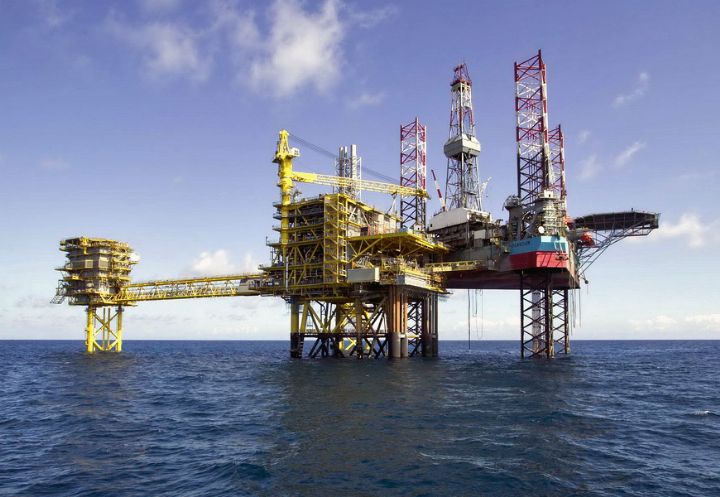
Equatorial Guinea, a small Central African nation, has established itself as one of the leading oil producers in sub-Saharan Africa. Its hydrocarbons sector has been the backbone of its economy, transforming the country and propelling it to upper-middle-income status as early as 2004. This report provides a comprehensive overview of this strategic sector, examining its current situation, the challenges it faces and the strategic initiatives being implemented to ensure its future viability and contribute to broader economic development.
I. Economic Context and Dependence on Hydrocarbons
Impact of the Oil and Gas Sector on GDP, Tax Revenue and Exports
Equatorial Guinea's economy is characterized by an extreme dependence on its oil and gas industry. In 2015, the sector accounted for more than 60% of gross domestic product (GDP), 80% of tax revenue and 86% of exports. More recent data for 2023 indicate that the hydrocarbons sector still contributes 39% of GDP, 76% of total exports and about 86% of government revenue. Another source puts this contribution even higher, at 95% of exports and 90% of total revenue in 2023. This deep dependence means that fluctuations in hydrocarbon activity translate directly into significant economic changes. For example, an 8.9% decline in hydrocarbon activity in 2015 led to a 7.5% decrease in overall GDP.
In 2023, the economy entered a recession, with real GDP contracting by 5.7%. This recession is mainly attributable to oil's contribution to GDP, which fell by 12.8%, and to a 26.7% drop in net exports. The impact on public finances was particularly severe, with oil tax revenue plunging by 59% in 2023. This economic vulnerability and fiscal pressure are exacerbated by the decline in global oil prices, forcing the government to turn to external borrowing and its reserves to meet its deficit financing needs. The situation underscores the urgency of fiscal reforms and revenue diversification.
Evolution of Economic Dependence and the Challenges of Diversification
Prolonged dependence on oil and gas has created a major challenge for the country's economic diversification. Despite the substantial wealth generated during the boom years, when GDP per capita reached $50,240 in 2005 , the benefits did not translate into widespread development. The hydrocarbons sector, capital-intensive by nature, offers few employment opportunities, which contributes to high poverty rates (76.8% in 2006, according to the latest available data) and pronounced income inequality. This situation has led to a prolonged recession since 2016, wiping out notable economic gains and undermining social progress.
The government faces a structural challenge in mobilizing non-oil revenue, owing to an ineffective tax policy, a weak tax administration and a large informal sector. The public debt-to-GDP ratio rose from 34.6% in 2022 to 42.1% in 2023 , further limiting fiscal room for maneuver. Weak institutions and a regulatory environment that is not conducive to private sector development, characterized by barriers to entry, discriminatory regulations, legal uncertainty, limited access to credit and inadequate digitalization of public services, pose high operational risks for businesses. This situation, in which considerable wealth has not led to widespread prosperity, highlights the fundamental governance and wealth-distribution challenges that complicate economic diversification and inclusive growth.
Table 1: Economic Dependence on Hydrocarbons (Key Indicators)
| Indicator | 2015 | 2023 (or latest available data) | Source |
|---|---|---|---|
| Hydrocarbons' Share of GDP | >60% | 39% | |
| Hydrocarbons' Share of Tax Revenue | 80% | 86% / 90% | |
| Hydrocarbons' Share of Exports | 86% | 76% / 95% | |
| GDP Growth Rate | -7.5% | -5.7% | |
| Change in Oil Tax Revenue | N/A | -59% (2023) | |
| Public Debt-to-GDP Ratio | N/A | 42.1% (2023) |
II. Hydrocarbon Reserves and Production
A. Crude Oil
History of Proven Reserves and Production Trends, with a Focus on the Recent Decline
Equatorial Guinea held 1.1 billion barrels of proven crude oil reserves in January 2017 , a figure that remained constant through 2021. While this indicates a significant resource base, the country has experienced a structural decline in oil production since its peak. Production of oil and other liquids reached a peak of 375,000 barrels per day (bpd) in 2005 , with other sources citing a peak of 360.5 thousand bpd in 2005 or 328.690 thousand bpd in 2004. This peak was largely driven by the ExxonMobil-operated Zafiro field, which reached 280,000 bpd in 2004.
However, production has fallen significantly since then. In 2016, average production had dropped to 244,000 bpd , with Zafiro output declining to 82,000 bpd. The decline has accelerated in recent years: from 120.78 thousand bpd in 2022 to 88.21 thousand bpd in 2023 , a drop of 26.97%. Another source reports 54.881 thousand bpd in December 2023, down from 81.295 thousand bpd in December 2022. This consistent downward trend, observed across multiple data points, underscores the maturity of existing fields and the urgent need for new discoveries and enhanced recovery techniques. The rapid decline in production, particularly from Zafiro, the country's largest field, is the main cause of the economic recession and of the government's aggressive efforts to attract new investment and launch new licensing rounds.
B. Natural Gas
Proven Reserves and Production Growth
Equatorial Guinea held 1.3 trillion cubic feet (Tcf) of proven natural gas reserves in January 2017 , representing approximately 0.019% of the world total. At 2017 consumption levels, these reserves equate to about 30.9 times its annual consumption, suggesting a gas reserve life of roughly 31 years.
Dry natural gas production grew rapidly in the past, rising from 0.7 billion cubic feet (Bcf) in 2001 to 219 Bcf in 2016 , and showing a remarkable change of 3,445% between 2000 and 2022. However, recent data indicate a slight decline, with production of 0.222 quadrillion Btu in 2023, down from 0.254 quadrillion Btu in 2022. In cubic meters, marketed production was 7,103 million cubic meters (Cub m mn) in December 2023, a decrease from 8,104.735 Cub m mn in December 2022. The all-time peak in marketed production was 8,409.014 Cub m mn in 2013.
Domestic Consumption and LNG Export Dynamics
Domestic natural gas consumption grew at a slower pace, rising from 1 Bcf in 2001 to a peak of 57 Bcf in 2011, before declining to 42 Bcf in 2016. In 2017, consumption was 42,072 million cubic feet (MMcf) per year. Natural gas makes up a dominant share of the country's energy supply, at 83.5% in 2022 , and its use in power generation increased by 541% between 2000 and 2022. A significant portion (54%) of total final natural gas consumption goes to non-energy uses.
Equatorial Guinea is a net exporter of natural gas , with 152 Bcf of LNG exported in 2016, mainly to Asia-Pacific (88 Bcf) and the Middle East (42 Bcf), with India as the main destination (49 Bcf). The country operates one LNG plant, Punta Europa (EG LNG), on Bioko Island, commissioned in 2007 and supplied by the Alba field. Plans for a second LNG train, intended to use gas from Equatorial Guinea, Cameroon and Nigeria, have evolved, with Ophir Energy now focusing on the Fortuna floating LNG (FLNG) project.
The natural gas sector, despite a slight recent decline in production, represents the main path for the country's hydrocarbon future. Its substantial reserves and export capacity stand in sharp contrast to the decline in oil. Gas's pivotal role in domestic energy supply and power generation reinforces its strategic importance. The government's commitment to the "Gas Mega Hub" initiative and forecasts of increased gas production by 2025 clearly point to a strategic reorientation toward gas monetization as the main driver of future hydrocarbon revenue and economic stability.
Table 2: Crude Oil Production in Equatorial Guinea (2000-2023)
| Year | Production (Thousand Barrels per Day) | Source |
|---|---|---|
| 2004 | 328.690 | |
| 2005 | 375 / 360.50 | |
| 2016 | 244 | |
| 2022 | 118.38 / 81.295 | |
| 2023 | 88.21 / 88.13 / 54.881 |
Note: Variations may exist between sources for the same year, reflecting different data collection or reporting methodologies. The downward trend is nonetheless consistent.
Table 3: Natural Gas Production in Equatorial Guinea (2000-2023)
| Year | Production (Quadrillion Btu) | Production (Million Cubic Meters) | Source |
|---|---|---|---|
| 2013 | N/A | 8,409.014 | |
| 2015 | ~0.297 (296,646 MMcf) | N/A | |
| 2016 | ~0.226 (219 Bcf) | N/A | |
| 2017 | 0.259 | N/A | |
| 2022 | 0.254 | 8,104.735 | |
| 2023 | 0.222 | 7,103.000 |
Note: Conversions from MMcf/Bcf to quadrillion Btu are approximate, for unit consistency.
III. Regulatory Framework and Key Players
A. Governance and Legislation
Role of the Ministry of Mines and Hydrocarbons and the Hydrocarbons Law
The Ministry of Mines and Hydrocarbons (MMIE), headquartered in Malabo and headed by Minister Don Antonio Oburu Ondo since 2023 , is the primary regulatory and administrative body of Equatorial Guinea's oil industry. The fundamental legal framework is Hydrocarbons Law No. 08/2006. This law stipulates that all hydrocarbon deposits, whether onshore, in territorial waters or offshore, are the exclusive property of the State. The State retains all exploitation rights and may conduct petroleum operations through its national companies or in association with contractors. The MMIE is responsible for formulating, regulating and monitoring petroleum policy, as well as negotiating, signing and executing all contracts with international oil companies (IOCs).
The law also requires that all petroleum operations be conducted prudently, using the best technical and scientific practices, and in strict compliance with safety, environmental protection and biodiversity conservation. In particular, the flaring of associated natural gas is prohibited, except in exceptional cases justified by technical, economic, financial or environmental reasons, with the Ministry retaining sole discretion over authorization and potential compensation. This legal framework, which establishes strong state authority and clear guidelines on environmental management, aims to maximize national benefits while encouraging responsible practices, notably by favoring gas monetization over flaring.
Recent Reforms to Attract Investment (e.g., Decree No. 100/2024)
In response to declining production and the need to revitalize the sector, the government has undertaken a series of reforms to strengthen its appeal to foreign investors. These include the approval of new competitive tax laws and expected revisions to production sharing contracts (PSCs). A significant recent development is Decree No. 100/2024, which introduces specific regulations for the enforcement of court decisions against oil companies. The decree aims to strengthen investor confidence by ensuring procedural consistency, fairness and legal certainty, with a special procedure designed to minimize economic disruption from aggressive enforcement actions. The process involves mandatory procedural steps, government oversight and approval, and, ultimately, the Presidency of the Republic has the final say on enforcement through an administrative decree.
The government is also working to simplify access to hydrocarbon data through a new multi-client 3D seismic acquisition initiative and a multi-client data strategy, giving investors access to high-quality geological information. In addition, efforts are under way to ease the banking restrictions imposed by the Bank of Central African States, with plans for exceptions for major operators and service companies. These targeted reforms aim to improve the business climate in Equatorial Guinea by directly addressing investors' concerns about legal certainty and operational challenges. However, the centralization of decision-making power, in particular the Presidency's final authority over judicial enforcement, may be viewed differently by investors, some seeing it as a guarantee of stability and others as a potential source of political discretion.
B. Operating Companies and Infrastructure
Role and Initiatives of GEPetrol, the National Oil Company
GEPetrol, created in 2001 and operational since 2002 , is Equatorial Guinea's national oil company. Its main responsibilities include managing the State's shareholder participation in Production Sharing Contracts (PSCs), acting as agent for the sale of the State's share of hydrocarbons, and promoting new exploration areas for licensing. GEPetrol also has a mandate to participate, alone or in partnership with other national or foreign companies, in exploration and production activities both domestically and abroad.
A significant recent development is GEPetrol's takeover, in June 2024, of operatorship of Block B, which includes the vital Zafiro field, from ExxonMobil. This move marks a strategic shift toward greater national control and direct involvement in production. GEPetrol immediately launched a multi-phase development plan for Zafiro: Phase 1 (well reconnection) is expected to begin in early 2025, Phase 2 will focus on production and cost optimization, and Phase 3 will involve a full redevelopment of the field starting in 2025. To support this effort, GEPetrol awarded Petrofac a five-year technical services contract worth $350 million in April 2024. GEPetrol's transition to a direct operator role in such a crucial field demonstrates a firm commitment to strengthening national capacity and to direct intervention to stabilize and increase production from key mature assets, positioning GEPetrol as a central player in the country's hydrocarbon future.
Presence and Activities of International Oil Companies
Historically, American companies have dominated crude oil production in Equatorial Guinea, although European and Chinese companies have begun to play a role. Major international oil companies (IOCs) such as ExxonMobil (former operator of Zafiro), Chevron, Marathon Oil and Trident Energy hold significant interests in the country.
Recent activities include Chevron's signing of new Production Sharing Contracts (PSCs) for blocks EG-06 and EG-11 in 2024, reinforcing its existing interests in the Alen, Aseng and Yolanda fields. VAALCO Energy is also preparing a drilling program and field development for Block P, which contains the Venus field development opportunity. Although some analysts suggest that the majors could divest from aging assets in Equatorial Guinea, as in Angola , the continued signing of new PSCs and active drilling campaigns by other international players indicate persistent interest in the country's hydrocarbons sector. This suggests that the government's "open door" policy and its efforts to attract new investment are bearing fruit, even if the profile of the dominant IOCs may change.
Key Players and Projects in the Midstream Segment (Transport and Storage)
The midstream market in Equatorial Guinea is characterized by a fairly consolidated structure, with the presence of global and local players, including Saipem S.P.A., Maritime Developments Ltd., Sociedad Nacional de G.E., Equatorial Guinea of Petroleum and Marathon Oil Company.
Key infrastructure projects are under way to strengthen the country's midstream capacity. The Bioko Oil Terminal project, a 7.5-million-barrel storage facility at Punta Europa, aims to become the largest storage facility in West Africa and a regional trading and distribution hub. The government has signed a $500 million development and financing agreement with Saudi Arabia's Arabian Energy for this project.
In refining, Equatorial Guinea currently lacks domestic capacity and imports all of its petroleum products. However, plans are advancing for a new oil refinery with the Chinese company SupeZet, aimed at processing domestic crude for local consumption, reducing imports and creating jobs. This project is in addition to the previously announced Bata refinery with China Railway Construction Corporation, expected to process 20,000 bpd. These strategic investments in midstream and downstream infrastructure aim to add value to crude oil domestically, strengthen energy security by reducing dependence on fuel imports and position Equatorial Guinea as a regional energy hub. This expansion is essential for diversifying the economy within the energy sector itself and capturing more economic spillovers.
Table 4: Major Oil and Gas Fields and Associated Operators
| Field Name | Main Hydrocarbon | Key Operators (Past/Present) | Status/Notes |
|---|---|---|---|
| Zafiro | Oil, Natural Gas | ExxonMobil (Past), GEPetrol (Current) | Largest oil field, production declining, multi-phase redevelopment plan by GEPetrol |
| Alba | Natural Gas, Condensate | Marathon Oil (Partner), Chevron (Noble Energy affiliate) | Key gas field, supplies EG LNG, Phase II of the Gas Mega Hub |
| Ceiba | Oil | Triton (Past), Trident Energy (Current) | Second-largest oil field, recent infill drilling |
| Aseng | Natural Gas | Chevron (Partner) | Phase III of the Gas Mega Hub |
| Yolanda | Natural Gas | Chevron (Partner) | Gas Mega Hub initiative |
| Fortuna | Natural Gas | Ophir Energy (Former focus) | FLNG project, refocused efforts |
| Block P (Venus) | Oil | VAALCO Energy (Operator) | Drilling program planned |
| Block EG-06, EG-11 | Oil/Gas | Chevron | New PSCs signed in 2024, exploration programs |
| Block EG-31, EG-18 | Oil/Gas | Africa Oil Corp | New PSCs awarded |
| Block EG-23, EG-01 | Oil/Gas | Panoro Energy | New PSCs awarded |
| Block EG-08 | Oil/Gas | Antler Global | New PSC awarded |
| Block H, 02 | Oil/Gas | Atlas Oranto Petroleum (Former), PanAtlantic Energy (Former) | To be offered in the 2025 licensing round |
IV. Challenges and Opportunities
A. Major Challenges
Structural Production Decline in Mature Fields
The most pressing challenge is the structural decline in crude oil production, mainly from mature fields such as Zafiro. This decline has been going on for more than a decade, with production falling from peaks of over 300,000 bpd in the mid-2000s to under 90,000 bpd in 2023. This trend is expected to continue, with hydrocarbon output forecast to fall by 6.3% in 2024. The prospect that major international oil companies may divest from aging assets in Equatorial Guinea, as in Angola , presents a significant risk of an investment shortfall if new players do not fill the void. This scenario would aggravate the production decline and make the success of new licensing rounds, and the ability of national companies or small independents to take over, even more crucial.
Economic Instability, Fiscal Challenges and the Business Environment
Extreme economic dependence on hydrocarbons has plunged the country into a prolonged recession. Fiscal challenges are considerable, marked by heavy reliance on oil revenue, weak non-oil revenue mobilization and growing debt. Institutional weaknesses, an ineffective tax policy, a deficient tax administration and a large informal sector hamper growth. The regulatory environment is not sufficiently business-friendly, with barriers to entry, legal uncertainty, limited access to credit and inadequate digitalization of public services, leading to high operational risks.
Although the government promotes an "open door" policy and fiscal reforms , external analyses point to the absence of significant hydrocarbons sector reforms, local content rigidities and obstacles to companies' exit. This gap between stated intentions and the perceived reality, or implementation challenges, can undermine investor confidence and hold back diversification efforts. Systemic governance problems and a difficult business climate undermine efforts to attract sustainable investment and diversify the economy, creating a paradox that must be resolved for long-term growth.
A Changing Regional and Global Context
Equatorial Guinea's challenges, such as declining reserves and high production costs, are part of a broader trend affecting oil producers in the Gulf of Guinea. This places the country in a competitive environment for the limited investment available in the region. In addition, the global energy transition context, with the IEA's "Net Zero by 2050" roadmap and growing pressure for sustainability, puts pressure on fossil fuel investment. Equatorial Guinea is trying to adapt by presenting gas as a "transition fuel" and an "energy of the future". Finally, political instability and security concerns in the Gulf of Guinea region pose external risks that can deter investment and complicate operations.
B. Opportunities and Future Outlook
Gas Monetization and the "Gas Mega Hub" Initiative
Natural gas represents a major strategic opportunity for Equatorial Guinea. With proven reserves that could last about 31 years at current consumption levels , the country is well positioned to capitalize on its gas resources. The "Gas Mega Hub" initiative is at the heart of this strategy, aiming to make Equatorial Guinea a regional hub for gas processing and export. This initiative involves cross-border collaborations with Cameroon (Yoyo-Yolanda fields) and Nigeria (Gulf of Guinea pipeline project) to monetize gas at the Punta Europa facilities.
Specific projects are under way, such as the monetization of Alen gas (580 Bcf), Alba tail gas (825 Bcf) and Aseng gas (~1 Tcf). These projects are crucial to reversing the slight recent decline in gas production and are expected to boost gas output by 2025. The vision of the Minister of Mines and Hydrocarbons, Antonio Oburu Ondo, that "gas is not only a transition fuel for us – it will also be the energy of the future" , underscores the long-term importance of this resource for the country's energy security and economic stability.
Revitalizing Oil Exploration and Production
Despite the production decline in mature fields, the government is actively engaged in efforts to revitalize the oil sector. A major licensing round is planned for 2025/2026, offering new exploration and production opportunities. Production Sharing Contracts (PSCs) have already been awarded to companies such as Africa Oil Corp, Chevron, Panoro Energy and Antler Global.
A key element of this strategy is GEPetrol's multi-phase development plan for the Zafiro field, following the takeover of operatorship from ExxonMobil in June 2024. This plan includes well reconnection, production optimization and a full redevelopment of the field. In addition, a new multi-client seismic acquisition initiative is under way to provide investors with high-quality geological data. Operators are also planning drilling campaigns between 2024 and 2027. These proactive measures aim to attract new capital and reverse the downward trend in oil production.
Development of the Midstream and Downstream Segments
Developing midstream and downstream infrastructure represents a significant opportunity for Equatorial Guinea to add value to its hydrocarbons and strengthen its energy security. The Bioko Oil Terminal project, a 7.5-million-barrel storage facility, aims to become a major trading and distribution hub in West Africa.
In addition, concrete plans are in place to develop the country's refining capacity. A memorandum of understanding has been signed with the Chinese company SupeZet for the construction of a new oil refinery, intended to process Equatoguinean crude for domestic consumption, reduce import dependence and create jobs. This project is in addition to the Bata refinery, with a capacity of 20,000 bpd, developed in collaboration with China Railway Construction Corporation. These investments in the energy value chain aim to strengthen the country's industrial base and support long-term economic diversification.
Economic Diversification Strategy Beyond Hydrocarbons
Equatorial Guinea recognizes the urgent need for a new development model to create new engines of growth and jobs. The World Bank has proposed a detailed roadmap for sustainable and inclusive growth, focused on human capital development, an enabling environment for the private sector, and stronger institutions and governance.
Priority actions include reducing fiscal instability by establishing a stabilization fund and improving the transparency of the sovereign wealth fund. It is also crucial to improve public finance management by increasing non-oil revenue, rationalizing tax exemptions and simplifying tax procedures. Strengthening governance through the full operationalization of the Anti-Corruption Commission and improving statistical capacity are also essential. Finally, investing in human capital, notably primary education, skills development for economic diversification, stronger public health and the adoption of social protection measures, is fundamental to inclusive growth that benefits the entire population. This long-term strategy is vital to overcoming the "resource curse" and ensuring economic resilience beyond the hydrocarbon cycle.
Conclusion
The review of Equatorial Guinea's oil and gas sector reveals a complex dynamic, marked by a structural decline in oil production and pronounced economic dependence. The country has seen a significant fall in crude oil production, particularly from mature fields such as Zafiro, which has directly contributed to an economic recession and heavy fiscal pressure. This situation is aggravated by systemic governance challenges, an unfavorable business environment and the need to diversify a historically single-commodity economy.
However, promising prospects are emerging, mainly centered on natural gas monetization. The country's substantial gas reserves and the strategic "Gas Mega Hub" initiative, which aims to develop gas monetization projects and regional collaborations, position gas as the main driver of future growth in the hydrocarbons sector. At the same time, the government is actively engaged in revitalizing oil exploration and production through new licensing rounds and the increased involvement of the national oil company GEPetrol in the operatorship of key fields. The development of midstream and downstream infrastructure, notably oil terminal and refinery projects, aims to add value locally and strengthen energy security.
In short, Equatorial Guinea stands at a critical crossroads. The way forward requires a sustained commitment to structural reforms, transparent governance and strategic investment to fully tap its gas potential while fostering a truly diversified and inclusive economy. It is through this multidimensional approach that the country can secure long-term economic stability and sustainable development for its citizens.


 Sudan
 Uganda