The African Oil and Gas Refining Landscape: Challenges, Opportunities and Strategic Pathways to Energy Self-Sufficiency
Africa holds over 125 billion barrels of proven oil reserves and 620 trillion cubic feet of gas, yet imports more than 80% of its refined products. This paradox defines its refining sector.
 By the editorial teamPetrole.Africa
I. Executive Summary
Africa's oil and gas refining sector presents a notable paradox. Despite considerable proven reserves, exceeding 125 billion barrels of oil and 620 trillion cubic feet of natural gas , the continent is critically dependent on imports of refined petroleum products. Currently, more than 80% of these products are imported , and only about a quarter of African crude oil production is refined locally. This situation creates a structural "refining deficit" that prevents Africa from fully capitalizing on its resources.
The continent's total active distillation capacity stands at around 3 million barrels per day (bpd), spread across 48 refineries. However, operational efficiency is low, with African refineries running on average at a little over half of their capacity, well below the global average of 75%.
Major ongoing and upcoming projects are poised to transform this landscape. Notable developments include the Dangote refinery in Nigeria (650,000 bpd ), the Lobito refinery in Angola (200,000 bpd ), and the planned rehabilitation of the SAPREF refinery in South Africa (targeting 600,000 bpd ). These initiatives are expected to increase African refining capacity by 33% by 2030, reaching a total of 2.4 million bpd , in line with the continent's ambitions to meet growing demand for petroleum products, which is expected to rise by 50% by 2050.
The main challenges hindering the sector's growth include widespread aging infrastructure and chronic underinvestment, leading to operational inefficiencies and frequent shutdowns, as seen in Nigeria's state-owned refineries and Ghana's Tema refinery. Instability of crude oil supply, often exacerbated by pipeline vandalism and theft, particularly in Nigeria, further constrains operations. Regulatory and fiscal uncertainty, characterized by inconsistent policies and volatile fuel subsidy regimes, discourages crucial investment. Intense competition from more efficient imported refined products is also a major obstacle. Underlying these problems, persistent governance and corruption challenges, together with the rising costs of environmental compliance and the enforcement of evolving standards, weigh on the sector. Finally, critical skills shortages and gaps in human capital development remain a bottleneck to sustainable growth.
Despite these challenges, substantial opportunities exist. Sharply rising domestic and regional demand for petroleum products represents a promising market. The sector offers a path to economic diversification and value addition by going beyond crude exports to include petrochemicals and other derivatives. This expansion promises significant job creation and fosters the development of local content through targeted policies. Improved refining capacity directly contributes to greater energy security and reduced import dependence. Regional integration initiatives, such as the African Continental Free Trade Area (AfCFTA), can facilitate cross-border energy projects. The growing role of private-sector investment and modular refineries, combined with innovative financing mechanisms such as the African Energy Bank (AEB) and the support of Afreximbank, are crucial enablers. In addition, the adoption of technological advances, including AI and advanced distillation processes, can significantly improve efficiency and sustainability.
To fully realize its potential, Africa's refining sector requires a multidimensional strategic approach. This involves attracting and sustaining long-term investment through stable and transparent regulatory frameworks. Modernizing existing infrastructure and effective project management for new builds are paramount. Securing crude oil supply and promoting a competitive market environment are also essential. At the same time, a strong emphasis must be placed on human capital development, skills transfer and robust local content policies to ensure that the economic benefits are retained on the continent. Finally, compliance with and enforcement of rigorous environmental and safety standards, as well as the promotion of regional regulatory harmonization, will be indispensable to building a resilient, sustainable and equitable refining industry that supports Africa's broader industrialization and energy independence goals.
II. Introduction
Developing a robust national oil and gas refining sector is of paramount importance for African nations that aspire to genuine economic independence and sustainable development. By processing crude oil on their own territory, countries can significantly reduce their dependence on costly imports of refined products, thereby preserving foreign currency, creating jobs along the value chain, strengthening local industries and retaining greater economic value within their borders. This strategic shift can lead to lower fuel costs for consumers and industries, strengthen national energy security by reducing exposure to global supply shocks, and catalyze broader infrastructure development.
Despite substantial crude oil reserves, Africa faces a critical "refining deficit." The continent has been a net importer of petroleum products since 2005, and its imports are now three times higher than its exports. This structural imbalance means that Africa is largely unable to fully benefit from its own oil resources, exporting crude at lower prices and re-importing refined products at a higher cost. This situation not only represents a significant economic leakage but also undermines the continent's energy sovereignty.
Historical Background of Oil and Gas Refining in Africa
Oil exploration in Africa began during the colonial period in the early 20th century. Early activities, such as those conducted by Shell D'Arcy on the Nigerian coast in the early 1900s, were driven by the search for energy sources by companies of the colonial powers. The discovery of significant oil deposits often coincided with the independence period of many African states, entrusting the management of these vast natural resources to newly formed post-colonial governments.
Oil production began slowly in the late 1950s – in Angola in 1955, in Algeria and Gabon in 1957, and in Libya in 1961 – but it quickly became the main commodity for many producers in the 1960s and 1970s. The oil boom of the 1970s, spurred by events such as the Yom Kippur War and the Arab oil embargo, turned these countries into essential allies for Western nations and companies, quadrupling their oil revenues.
The first African refineries were established in Algiers (CFP/Total) and Durban (Socony/Mobil) in 1954. The majority of the 48 refineries built up to 2004 were built in the 1970s and 1980s, reflecting a period of initial industrialization efforts.
The Legacy of Colonial Extraction and Its Lasting Impact on Value Chains
Historical analysis reveals a deep structural pattern in which Africa has primarily served as a supplier of raw materials, a legacy that continues to shape its oil and gas sector. Oil exploration began during the colonial period, and the discovery of vast reserves coincided with the independence of many African states, entrusting the management of these resources to post-colonial governments. The colonial project relied on agricultural production for the colonial powers, and the discovery of oil simply shifted this mono-economy toward oil extraction.
This historical dynamic has led to a situation in which Africa's substantial oil wealth is largely exported to be processed elsewhere and then re-imported in the form of refined products. This means that added value, jobs and economic opportunities are generated outside the continent. The current "refining deficit," in which only a quarter of African crude oil is refined locally, is not a mere contemporary inefficiency but the continuation of an economic model inherited from the colonial period. This pattern of structural dependence perpetuates economic vulnerability and hinders full economic transformation despite the abundance of resources. The challenge is therefore not limited to building refineries but involves a fundamental overhaul of a deeply rooted economic paradigm. This historical perspective is essential to understanding the persistent systemic problems in the sector, such as the underinvestment in refining capacity by international players that have historically focused on upstream extraction for export.
III. Current Landscape of Oil and Gas Refining in Africa
Overview of Existing Refining Capacity on the Continent
African refining capacity is expected to reach a total of 2.4 million barrels per day (bpd) by 2030, representing a 33% increase. However, in 2020, Africa's oil production was only two-thirds of its 2008 level, and only a quarter of the continent's crude oil production is refined in Africa. This highlights a significant underuse of its own resources. On average, African refineries run at a little over half of their installed capacity, which is considerably below the global average of 75%. In 2021, the total reported refining capacity for Africa was 3,219 thousand barrels per day (mbd).
Geographic Distribution and Regional Disparities in Refining Infrastructure
The main refining hubs on the continent are currently concentrated in North Africa (Algeria, Egypt), Nigeria and South Africa. This concentration reflects historical industrial development in these regions.
Notable disparities exist between regions. North Africa, for example, accounts for about a third of crude exports but a larger share (65%) of refined product exports, suggesting a more developed and active downstream sector. By contrast, West Africa, although responsible for nearly two-thirds of crude exports, contributes only 33% of product exports, underscoring its primary role as a crude exporter.
A major challenge is that many refineries in sub-Saharan Africa remain idle. This is the case for the large facilities in Nigeria (the Port Harcourt, Kaduna and Warri refineries), South Africa (Engen), Ghana (Tema Oil refinery), Zambia (Indeni) and Cameroon (SONARA). This widespread inactivity contributes heavily to the continent's dependence on imports.
Main Operational Refineries and Their Capacities by Country (2024/2025)
The following table provides an overview of the main operational and under-construction refineries in Africa, with their capacities and status through 2024-2027.
| Country | Refinery Name | Current/Planned Capacity (bpd) | Status | Key Dates (Launch/Restart/Completion) | Main Operator/Owner |
|---|---|---|---|---|---|
| Nigeria | Dangote Refinery | 650,000 | Operational (ramping up) | Launched in January 2024 | Dangote Group |
| Nigeria | Port Harcourt Refinery | 210,000 (60k old, 150k new) | Under rehabilitation (partially operational) | Old unit restarted in Dec. 2024 (70% capacity) | Nigerian National Petroleum Corporation (NNPC) |
| Nigeria | Warri Refinery | 125,000 | Operational (60% capacity) | Restarted in Dec. 2024 | NNPC |
| Nigeria | BINL Refinery (Ondo State) | 500,000 (100k phase 1) | Planned (MoU July 2025) | Phase 1 within 48 months | Backbone Infrastructure Nigeria Limited (BINL) |
| South Africa | SAPREF Refinery | 600,000 (target) | Under rehabilitation | Acquired by CEF in 2024, rehabilitation plans in 2025 | Central Energy Fund (CEF) |
| South Africa | Natref Refinery | 108,000 | Operational | - | Sasol (64%), TotalEnergies (36%) |
| South Africa | Astron Energy Refinery | 100,000 | Operational | Restarted in May 2023 | Astron Energy |
| Angola | Lobito Refinery | 200,000 | Under construction | FEED completed 2023, start-up targeted 2027 | Sonangol |
| Angola | Cabinda Refinery | 30,000 (phase 1, expandable to 60k) | Under construction | Commercial start-up 2025 | Gemcorp |
| Angola | Soyo Refinery | 150,000 | Under construction | Completion targeted 2025 | Quantem Consortium |
| Angola | Luanda Refinery | 55,000 | Operational | - | Sonangol |
| Egypt | Mastorod Refinery | 165,000 | Operational | - | Egyptian Refining Company (ERC) |
| Egypt | Alexandria MIDOR Refinery | 160,000 (after expansion) | Operational (expanding) | Expansion to 160k bpd | Midoil Refining & Petrochemicals Company Ltd. |
| Egypt | Cairo Mostorod Refinery | 142,000 | Operational | Inaugurated in Sept. 2020 | Egyptian Refining Company (ERC) |
| Egypt | El Nasr Refinery | 132,000 | Operational | - | Nasr Oil |
| Egypt | Alexandria El Mex Refinery | 117,000 | Operational | - | Egyptian General Petroleum Corporation |
| Algeria | Skikda Refinery | 356,500 | Operational | - | Sonatrach |
| Algeria | Arzew Refinery | 81,000 | Operational | - | Sonatrach |
| Algeria | Hassi Messaoud Refinery | 23,000 (current), 112,000 (planned) | Operational (new one under construction) | New plant planned for 2024/2027 | Sonatrach |
| Ghana | Tema Oil Refinery (TOR) | 45,000 | Closed (awaiting rehabilitation) | Closed since 2019 | Tema Oil Refinery (TOR) |
| Ghana | Sentuo Oil Refinery (SORL) | 120,000 | Operational (phase 2 completed) | Phase 2 completed in Jan. 2024 | Sentuo Oil Refinery (SORL) |
| Uganda | Uganda Oil Refinery | 60,000 | Under development | Alpha MBM partnership in April 2025 | Uganda National Oil Corporation (UNOC) |
| Côte d'Ivoire | Abidjan Refinery (SIR) | 68,000 - 70,000 | Operational | - | Société Ivoirienne de Raffinage (SIR) |
| Kenya | Mombasa Refinery (KPRL) | 70,000 - 90,000 | Operational | - | Kenya Petroleum Refineries Ltd (KPRL) |
| Libya | Ras Lanouf | 220,000 | Operational | - | - |
| Niger | Zinder Refinery | 20,000 | Operational | - | - |
| Senegal | SAR Refinery | 27,000 | Operational | - | SAR (Société Africaine de Raffinage) |
| Sudan | Khartoum Refinery | 100,000 | Operational | - | - |
| Eritrea | Assab Refinery | 14,500 | Operational | - | - |
| Gabon | Sogara Refinery | 21,000 | Operational | - | Sogara |
| Congo | Pointe Noire Refinery | 21,000 | Operational | - | - |
| Cameroon | Limbo Refinery | 42,000 | Operational | - | - |
| Zambia | Ndola Refinery | 23,750 | Operational | - | - |
| Namibia/Botswana | Joint refinery | 60,000 - 100,000 | Planned | Feasibility studies under way, start-up expected early 2026 | Governments of Namibia and Botswana |
Note: Capacities may vary slightly depending on sources and definitions (nameplate, operational, etc.). "Closed" or "offline" refineries are not included in this list of "operational" refineries but are mentioned in the text where their status is relevant to the current context.
The Paradox of Resource Abundance and Import Dependence
The data reveal a fundamental paradox in Africa: despite considerable oil and gas reserves, the continent remains heavily dependent on imports of refined petroleum products. This is not merely an economic inefficiency but a deep strategic vulnerability. African nations are exporting jobs, value and their energy security by not processing their own crude oil.
Historically, Nigeria, Africa's top crude producer, relied massively on fuel imports, a situation that is only now beginning to change with the arrival of the Dangote refinery. Similarly, South Africa, one of the continent's wealthiest economies, imports more than 60% of its fuel needs because of the shutdown of its refineries. This dependence is exacerbated by limited refining capacity, aging infrastructure and operational challenges that hinder local production.
This pattern resembles a "resource curse," in which governance problems go hand in hand with a fundamental disconnect between upstream production and downstream value creation. The challenge is not simply to build new refineries but to overcome a deeply entrenched structural dependence on imports. Recent developments in Nigeria, with the Dangote refinery, suggest a potential, though difficult, path to reversing this long-standing paradox. However, they also underscore how deeply rooted import dependence has become across the continent. This situation highlights the urgency of strategic investment in downstream refining infrastructure to capture the full economic benefits of Africa's hydrocarbon wealth.
IV. Major Projects and Future Outlook
Africa's refining sector is on the verge of a significant transformation, driven by large-scale projects and heightened regional ambitions. These initiatives aim to close the continent's refining deficit and strengthen its energy autonomy.
Detailed Analysis of Significant New Refinery Projects and Expansions
Several African countries are investing heavily in new refining capacity or the rehabilitation of existing facilities:
- Nigeria:
- Dangote Refinery: This colossal 650,000 bpd facility is the largest single-train refinery in Africa. Launched in January 2024, it is actively progressing toward full operational capacity. In March 2025, it began importing crude from Brazil and Equatorial Guinea, and discussions are under way with Senegal and Libya to secure additional supplies. The refinery began producing diesel and jet fuel in 2024 and is expected to play a major role in stabilizing the oil trade in West Africa. Its operations have already turned Nigeria into a net exporter of petroleum products , with the ambition of processing 100% Nigerian crude by the end of 2025. Sunbeth Energies signed a landmark agreement for the nationwide distribution of Dangote's refined products. It is worth noting that the Nigerian National Petroleum Company Limited (NNPC Ltd) ended its exclusive purchase agreement with Dangote in October 2024 to foster competition in the market.
- Port Harcourt Refinery: This 210,000 bpd complex is the subject of an extensive rehabilitation program. The old 60,000 bpd facility resumed production in December 2024 and is operating at 70% of its capacity after a decade-long shutdown due to underinvestment. A new 150,000 bpd unit is planned as part of this program.
- Warri Refinery: With a nameplate capacity of 125,000 bpd, this facility resumed crude oil processing in December 2024 after ten years of shutdown, and is currently operating at 60% of its capacity. Efforts are under way to bring it to full operational capacity, with maintenance scheduled and announced in February 2025.
- BINL Refinery (Ondo State): A new 500,000 bpd refinery is planned with an estimated investment of $15 billion. The memorandum of understanding is expected to be signed in July 2025. The project will be implemented in phases, with the first 100,000 bpd unit to be completed within 48 months. It aims to supply the domestic market, provide feedstock to local industries and produce finished products for export.
- Angola:
- Lobito Refinery: This 200,000 bpd project is progressing, with the engineering firm KBR having secured a project management contract in 2024. The front-end engineering design (FEED) stage was completed in 2023, with a start-up date planned for 2027. This facility is expected to increase Angola's refining capacity by 200%.
- Cabinda Refinery: Commercial operations are expected to begin in 2025, initially adding 30,000 bpd to the market. It has the potential to expand to 60,000 bpd in future phases.
- Soyo Refinery: This project, designed to process 150,000 bpd, is expected to be completed in 2025, having received an investment of $3.5 million from the Quantem consortium.
- South Africa:
- SAPREF Refinery: Following its acquisition by the state-owned Central Energy Fund in 2024, plans were announced in 2025 to rehabilitate the facility, targeting a substantial capacity of 600,000 bpd.
- Uganda:
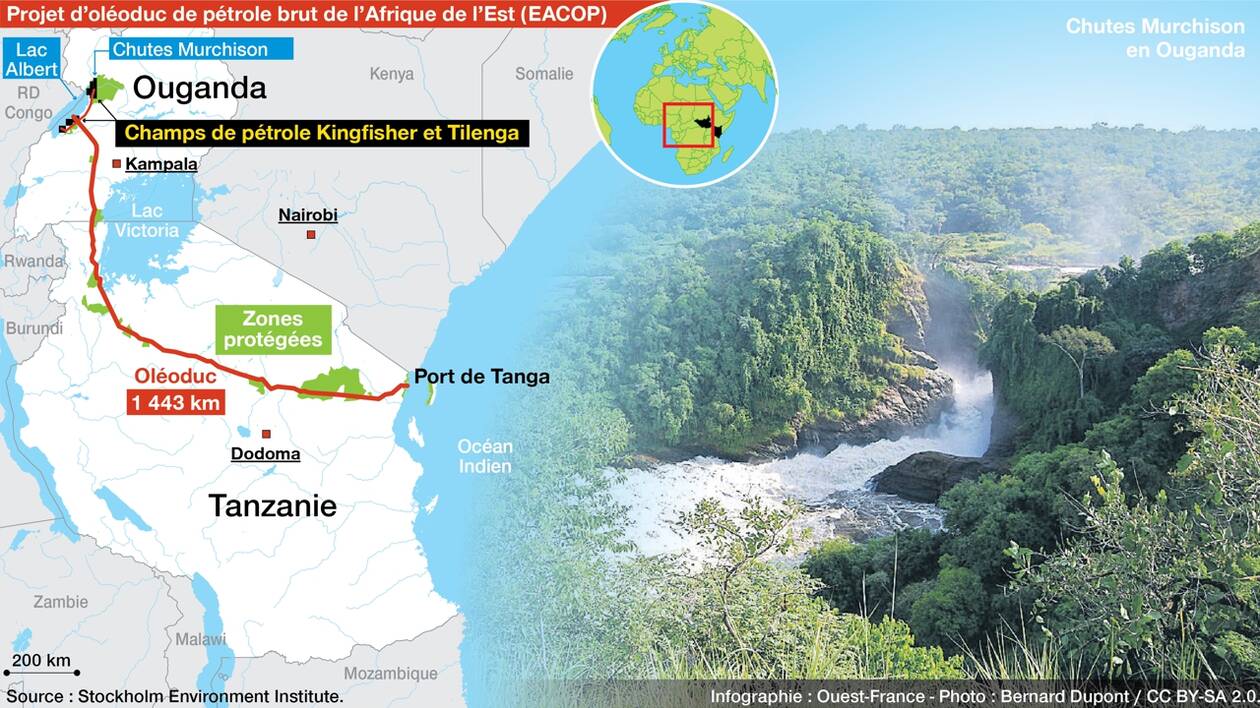
- Uganda Oil Refinery: A $4 billion project targeting a capacity of 60,000 bpd. The Uganda National Oil Corporation (UNOC) contracted the private investment firm Alpha MBM Investments as lead partner in April 2025. This refinery will support upcoming oil projects such as Kingfisher and Tilenga, which are expected to come on stream in 2025.
- Ghana:
- Sentuo Oil Refinery: Phase 2 of this 120,000 bpd refinery was due to be completed in January 2024, aiming to operate at about 5 million tonnes per year, thereby doubling Ghana's refining capacity.
- Namibia/Botswana:
- A landmark energy collaboration is under way with plans for a jointly owned oil refinery with an initial capacity ranging from 60,000 to 100,000 bpd. Feasibility studies are in progress, and the groundbreaking is planned for early 2026. In parallel, Dangote is also planning to build large fuel storage tanks in Walvis Bay, Namibia, with a capacity of at least 1.6 million barrels of gasoline and diesel, strategically positioning itself to serve Botswana, Zambia, Zimbabwe and parts of the Democratic Republic of the Congo.
Projected Growth in Refining Capacity and Throughput by 2030 and Beyond
African refinery throughput is expected to increase by 33% by 2030, reaching a total capacity of 2.4 million bpd. This growth is in line with the continent's ambition to meet its growing demand for petroleum products, which is expected to rise by 50% by 2050. Current projections indicate that African oil demand will rise from 4.1 million bpd to 5.3 million bpd by 2040, underscoring the urgency of self-sufficient refining systems. Globally, OPEC forecasts that long-term oil demand will grow by 18.5% to reach 123 million bpd by 2050, with Africa, India and the Middle East as the main drivers of this demand growth.
The Strategic Shift Toward Regional Energy Hubs and Export Potential
Current developments in Africa's refining sector point to a significant strategic shift. The new mega-refineries, such as Dangote's, are not intended solely for domestic consumption but are explicitly designed to serve regional markets (West Africa, Southern Africa) and even global exports. The Dangote refinery is already exporting jet fuel to Saudi Aramco and gasoline to Asia. The BINL refinery project in Nigeria also targets exports. At the same time, Namibia is being considered as a regional hub for Southern Africa, with plans to build large-scale fuel storage facilities that could serve several landlocked countries.
This evolution represents a strategic pivot, moving from simply addressing domestic deficits to positioning key African nations as regional energy powers. The goal is no longer just self-sufficiency but becoming net exporters of refined products. This would capture greater added value, boost foreign currency reserves and strengthen energy security across the continent. This transition has considerable geopolitical and economic implications, as it could alter global trade flows and reduce Africa's historic role as a crude exporter. The success of these projects will depend on the ability to overcome crude supply instability and to foster cross-border trade agreements and robust infrastructure, such as pipelines and storage facilities, to enable efficient distribution across the continent.
V. Challenges Facing the African Refining Sector
The oil and gas refining sector in Africa faces a multitude of complex challenges that hinder its full realization and its contribution to the continent's economic development. These obstacles are often interconnected, creating a difficult environment for growth and efficiency.
The "Refining Deficit": Persistent Dependence on Imported Refined Products Despite Crude Oil Wealth
Despite the abundance of its crude oil reserves, only a quarter of Africa's crude oil production is refined on the continent. This results in Africa's growing dependence on petroleum product imports, with the continent having been a net importer since 2005 and imports now three times higher than exports. South Africa, although one of the wealthiest countries in Africa, relies on oil imports for 60% of its fuel demand and is expected to import nearly 16 million tonnes of petroleum products in 2025. Although Nigeria, historically Africa's largest fuel importer, is seeing its imports decline thanks to the Dangote refinery's operations, it has long faced heavy import dependence.
Aging Infrastructure and Underinvestment
Africa's downstream and midstream oil supply infrastructure is largely aging and suffers from a chronic lack of investment, outdated policy frameworks and shortcomings in regional, national and urban energy planning compared with other regions of the world. Many parts of Africa lack adequate infrastructure, face logistical bottlenecks and are forced to depend on imports of refined products. For example, East and Southern Africa collectively have only three operating refineries. Public infrastructure, in particular, is severely affected by these challenges, often lacking proper maintenance, modernization and investment. Nigeria's oil infrastructure, including pipelines and storage facilities, is 40 to 50 years old, which exacerbates operational problems.
Operational Inefficiencies and Frequent Shutdowns
On average, African refineries run at a little over half of their installed capacity, in stark contrast to the global average of 75%. This low utilization rate contributes largely to the refining deficit. Nigeria's state-owned refineries (Port Harcourt, Warri, Kaduna) have a documented history of chronic underperformance, operating well below capacity because of poor maintenance, aging infrastructure, corruption and mismanagement. The Port Harcourt refinery, for example, was shut down for more than a decade because of underinvestment and maintenance problems. Similarly, the Warri refinery was out of service for a decade.
The Tema Oil Refinery (TOR) in Ghana has been idle since 2019, mainly because of dilapidated infrastructure, accumulated debts and insufficient crude supplies. In addition, its original hydrocracking unit was not designed to process Ghana's light, sweet crude oil, which resulted in the production of low-quality residual fuels even when it was operational. In South Africa, major refineries such as Sapref and Engen have been shut down due to a combination of underinvestment and accidents. These frequent, often unplanned, refinery shutdowns lead to severe shortages of essential products such as LPG and bitumen, causing industrial crises that affect sectors such as automotive manufacturing and road construction, with the potential for significant job losses.
Crude Oil Supply Instability
The success of major projects like the Dangote refinery depends heavily on the stability of crude production in countries like Nigeria. However, pipeline vandalism, widespread crude theft and falling domestic production have consistently constrained feedstock availability. Nigeria, for example, is reported to have lost more than 150,000 barrels of crude oil per day, or $6 billion a year, to crude oil theft alone. High transportation costs, exacerbated by inadequate and fragmented transport networks, further increase operating costs and disrupt the continuity of refinery supply.
Regulatory and Fiscal Uncertainty
The regulatory landscape in Africa is often characterized by complexity, fragmentation, inconsistency and a propensity for sudden changes. This unpredictability discourages long-term investment. Frequent and abrupt changes in subsidy policies and tax regimes create significant market instability and operational delays. The periodic removal and reinstatement of fuel subsidies in Nigeria is a prime example, generating great unpredictability for industry players. These implicit fuel subsidies also have a substantial negative impact on national fiscal positions. The continued regulation of fuel prices in many sub-Saharan African countries stifles competition, encourages inefficiency and distorts market signals.
Competition from Imported Refined Products
African refineries face intense competition from the global market, which is characterized by larger, more efficient refineries operating at lower refining margins and often in overcapacity. The availability of cheaper imported refined products, often benefiting from economies of scale, discourages investment in local refining and can make locally produced products less price-competitive. Although the Dangote refinery in Nigeria is succeeding in displacing international imports of clean products in West Africa, competition remains fierce, with major global trading houses such as Vitol, BP and Trafigura still securing significant offtake agreements.
Governance and Corruption Issues
Poorly managed, corruption-tainted supply chain management systems within state-owned enterprises significantly undermine economic efficiency, negatively affecting employment and overall economic growth in African nations. Corruption and systemic inefficiency are frequently cited as the main reasons for the chronic underperformance and failure of state-owned refineries, particularly in Nigeria. Widespread corruption in Africa is a major obstacle to the effective development and enforcement of local content policies, with small local businesses often disadvantaged if they cannot or will not pay bribes. The misappropriation of public funds, combined with dubious awards of oil blocks and production rights to certain individuals, has clearly hindered overall economic growth on the continent.
Environmental Compliance Costs and Enforcement of Standards
Environmental regulations generally require polluting facilities to undertake pollution-reduction activities, which can impose significant additional costs on companies, potentially increasing operating expenses by 15 to 25%. Many African countries face inadequate regulatory frameworks, negligible compliance monitoring and weak enforcement mechanisms, resulting in widespread negative environmental impacts from industrial operations. The weak enforcement of anti-flaring laws in Nigeria, for example, has allowed oil companies to continue this environmentally harmful practice.
Skills Shortages and Gaps in Human Capital Development
Despite the significant job-creation potential of the oil and gas sector, the extractive industry as a whole employs less than 1% of Africa's total workforce. There is a persistent and significant skills shortage in the African oil and gas sector, particularly for highly specialized technical personnel, evident at all levels and across various countries. This shortage is a particular challenge for countries trying to implement strict local content rules. Many African nations also face limited technological capacity, insufficient local expertise and a lack of strategic frameworks to effectively integrate innovation into nationalization efforts.
The Vicious Circle of Underperformance and Political Instability
The challenges facing Africa's refining sector are not isolated problems but form a complex, interconnected "vicious circle." Aging infrastructure, frequent shutdowns and low utilization rates are primarily attributed to underinvestment, mismanagement and corruption. At the same time, regulatory and fiscal uncertainty, including erratic subsidy policies , are identified as deterrents to private investment and sources of market unpredictability. This combination then leads to continued import dependence , which in turn reduces the economic incentive for domestic refining, thereby perpetuating the cycle of underdevelopment.
Breaking this cycle requires a holistic and coordinated approach. It must prioritize robust governance and the implementation of consistent and transparent policies as foundational elements. These structural reforms are essential to attract and retain the sustainable investment needed to modernize infrastructure, improve operational performance and ultimately achieve energy self-sufficiency, rather than relying solely on technical solutions or one-off large-scale projects.
VI. Opportunities and Growth Drivers
Despite the considerable challenges, Africa's refining sector is rich in opportunities which, if seized strategically, can transform the continent's energy landscape.
Growing Domestic and Regional Demand for Petroleum Products
African oil demand is expected to increase significantly, from 4.1 million bpd to 5.3 million bpd by 2040. This is in line with broader projections that demand for petroleum products will grow by 50% over the next decade and by 50% by 2050. Transport is the largest segment (70% of total demand) and the fastest-growing (+1.8% annual growth over the past two decades) for petroleum products in Africa. This sustained demand provides a strong market incentive to increase refining capacity. Africa's overall energy consumption is expected to double over the next decade as its population and economies continue to grow rapidly.
Economic Diversification and Value Addition
Investing in national refining and related petrochemical industries (such as plastics, chemicals and fertilizers) offers a significant opportunity for industrialization and comprehensive economic transformation, enabling African economies to move beyond their traditional role as crude exporters. Developing a robust petrochemical industry can fundamentally diversify African economies, reducing their heavy dependence on a single commodity (oil) and creating a more resilient economic structure.
Job Creation and Local Content Development
Setting up and operating national refineries can generate a wide range of job opportunities at different skill levels, from engineers and technicians to construction workers and administrative staff. It also stimulates growth in related industries such as transport, logistics and various service sectors, thereby amplifying overall employment. The planned BINL refinery in Nigeria, for example, is explicitly positioned to boost job creation and economic activity at the state and local levels.
Local content policies (LCPs) are designed to maximize the socio-economic benefits of resource exploitation by promoting local participation across the industry value chain, ensuring that a significant share of the economic value is retained in the country. Nigeria's Nigerian Oil and Gas Industry Content Development (NOGICD) Act mandates priority for Nigerian products, services and jobs, with an ambitious target of reaching 70% local content by 2027.
Improved Energy Security and Reduced Import Dependence
Processing crude oil domestically is a transformative step toward economic independence and a significant improvement in national energy security by reducing dependence on volatile foreign imports. The Dangote refinery has already demonstrated this potential by turning Nigeria into a net exporter of petroleum products , resulting in substantial reductions in oil import costs (estimated at $10-12 billion a year for Nigeria ). Angola aims to increase its refining capacity to 445,000 bpd and cut its imports of petroleum derivatives by 14% by 2026.
Regional Integration and Cross-Border Cooperation
The African Continental Free Trade Area (AfCFTA) Agreement, ratified by more than 48 countries, creates a platform for cross-border energy projects by removing trade barriers and harmonizing investment policies. This regional integration can support investment in regional refining and related infrastructure. Initiatives such as the planned joint refinery between Namibia and Botswana illustrate this trend, aiming to serve not only the two countries but also neighboring landlocked nations such as Zimbabwe and Zambia, thus creating a regional export hub. Regional regulatory harmonization, promoted by organizations such as the African Refiners and Distributors Association (ARDA), is essential to facilitate interregional trade and minimize supply chain risks.
Growing Role of Private Investment and Modular Refineries
Private-sector participation can introduce the competition, innovation and efficiency that state-owned enterprises have lacked. The Dangote refinery, a $20 billion private project, is a telling example. Government support for modular refineries, if properly regulated and incentivized, can help bridge the supply gap and reduce import dependence. Nigeria has issued licenses for modular refineries, aiming to boost refining capacity and downstream growth.
Innovative Financing Mechanisms
The launch of the African Energy Bank (AEB) in June 2025, with initial capital of $5 billion, is positioned to catalyze change in Africa's energy sector. Established by the African Petroleum Producers Organization (APPO) in partnership with Afreximbank, the AEB aims to mobilize capital for upstream, midstream and downstream energy projects, addressing a continental investment gap estimated at $50 billion a year. Afreximbank has already provided more than $4 billion in financial support to the Dangote refinery.
Technological Advances and Sustainability
Technology investments in the refining sector enable the integration of renewable feedstocks, advanced distillation processes and digitalized operations based on artificial intelligence (AI). Co-processing various feedstocks, including biomass, with traditional fossil feedstocks via hydrotreating can produce low-carbon-intensity fuels. AI can optimize operating parameters, improve productivity and profitability, and provide real-time analytics for predictive maintenance. The adoption of cleaner fuels with reduced sulfur levels is also a priority, with initiatives such as the ARDA AFRI Fuels roadmap targeting harmonized fuel specifications at 10 ppm sulfur by 2030.
Potential for Industrialization and Regional Self-Sufficiency
Opportunities in Africa's refining sector are closely tied to the continent's ability to turn its hydrocarbon wealth into sustainable economic dynamism. By investing in modern refineries and related industries, Africa can not only meet its own growing demand for refined products but also become a major player in the global petrochemicals market. This involves diversifying beyond simple crude exports to engage in more lucrative segments of the value chain. The ability to produce cleaner fuels and essential petrochemicals locally will reduce import dependence, create skilled and unskilled jobs, and stimulate growth in ancillary sectors such as logistics and manufacturing.
Realizing these opportunities will depend on a stable investment environment, consistent regulatory frameworks and the active promotion of public-private partnerships. Furthermore, developing local skills and adopting cutting-edge technologies will be essential to ensure that African refineries are competitive and sustainable over the long term. Successful implementation of these strategies will allow Africa to move from the status of a mere raw material supplier to that of a refining and petrochemical production hub, thereby strengthening its role on the global energy stage and contributing significantly to its socio-economic development.
VII. Conclusions and Strategic Recommendations
The analysis of Africa's oil and gas refining sector reveals a fundamental paradox: a continent rich in resources, yet heavily dependent on imports of refined products. This "refining deficit" is the symptom of an inherited economic model, in which added value and job creation largely occur outside Africa. The challenges are many and interconnected, ranging from aging infrastructure and chronic underinvestment to operational inefficiencies, crude supply instability, regulatory and fiscal uncertainty, fierce import competition, governance and corruption problems, environmental compliance costs and skills gaps. These factors reinforce one another, creating a vicious circle of underperformance.
However, the continent is at an inflection point. Domestic and regional demand for petroleum products is growing strongly, offering a captive market. The opportunities for economic diversification, job creation and strengthened energy security are immense. The emergence of large-scale projects, growing private-sector interest and the establishment of innovative financing mechanisms such as the African Energy Bank signal transformative potential. The implementation of local content policies and the adoption of advanced technologies can also play a crucial role.
To turn this potential into reality and break the cycle of dependence, the following strategic recommendations are essential:
- Establish Stable and Transparent Regulatory Frameworks: African governments must commit to creating predictable and consistent regulatory environments. This includes streamlining licensing processes, stabilizing fiscal policies and eliminating abrupt changes in fuel subsidy regimes. Regional regulatory harmonization, as promoted by ARDA, is crucial to facilitate cross-border trade and attract large-scale investment.
- Prioritize Investment in Modernization and New Capacity: Concerted efforts are needed to attract capital for the rehabilitation of existing refineries and the construction of new, modern facilities. This involves addressing the root causes of underinvestment, including perceived risks related to governance and political stability. The support of the African Energy Bank and multilateral financial institutions is vital to close the financing gap.
- Strengthen Crude Supply Security: To ensure the optimal operation of refineries, it is imperative to resolve the problems of crude supply instability, notably oil theft and pipeline vandalism. This requires enhanced security measures, rigorous law enforcement and greater collaboration between upstream producers and downstream refineries.
- Develop Human Capital and Local Content: Investing in training and skills development for local technical and management personnel is fundamental. Local content policies must be realistically designed and effectively enforced to maximize the participation of African businesses and workers across the entire refining value chain. This will ensure that economic benefits are retained on the continent and that dependence on foreign expertise is reduced.
- Improve Operational Efficiency and Competitiveness: African refineries must improve their utilization rates and efficiency to compete with imports. This means implementing better management practices, adopting advanced technologies (such as AI for process optimization and predictive maintenance) and promoting a competitive market environment that encourages innovation and performance.
- Adhere to Environmental and Safety Standards: Rigorous enforcement of environmental and safety regulations is crucial not only for public health and environmental protection but also for attracting responsible investment. Stronger monitoring and enforcement mechanisms are needed to ensure compliance and reduce the negative impacts of refining operations.
- Promote Economic Diversification Beyond Fuel Refining: Encouraging investment in downstream petrochemical industries, such as fertilizer and plastics production, can unlock significant added value and diversify African economies, making them more resilient to crude oil price fluctuations.
By adopting a strategic and coordinated approach, Africa can transform its oil and gas refining sector, moving from a state of dependence to one of energy self-sufficiency and regional industrial power. This will require sustained political commitment, targeted investment and effective collaboration among governments, the private sector and communities.


 Sudan
 Uganda